
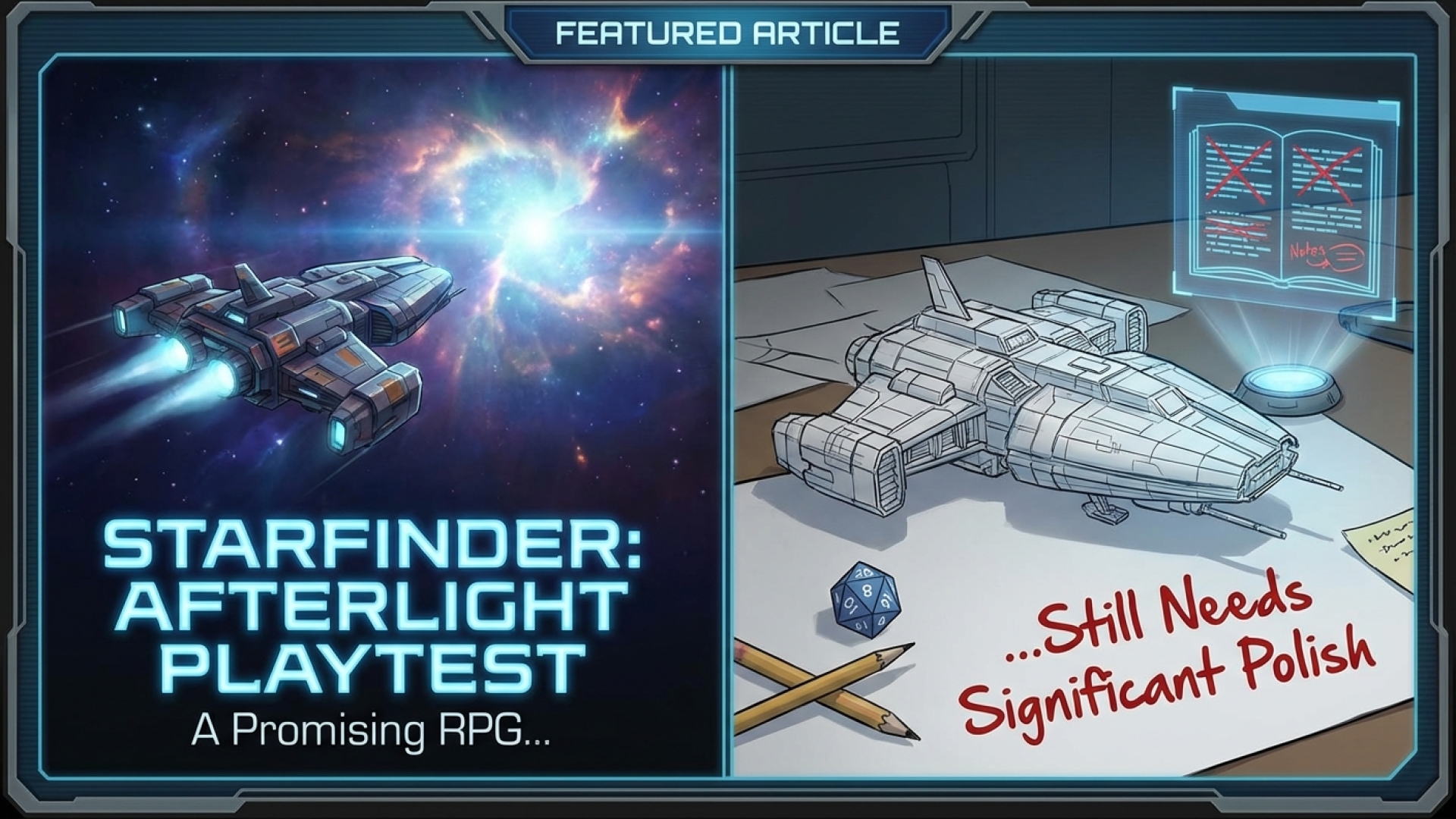
At Digital Tech Explorer, we are always on the lookout for digital innovations that bridge the gap between traditional gaming and modern software execution. One title that has captured my attention recently is Starfinder: Afterlight. For those of us deep into the PC games scene, this project offers the closest experience to a fully-realized Pathfinder 2e videogame we’ve seen since indie gems like Dawnsbury Days. While it technically utilizes the Starfinder 2e ruleset, the fundamental coding and logic remain remarkably consistent with its Pathfinder counterpart, providing a robust framework for tactical enthusiasts.
Captivating Visuals and Renowned Voice Acting
The visual presentation of Starfinder: Afterlight immediately captivates, signaling that fledgling studio Epictellers is aiming for a high-production-value debut. As a storyteller, I find the narrative potential here immense, especially with the recruitment of top-tier industry talent. The cast features the likes of Neil Newbon (Astarion in Baldur’s Gate 3) and Roger Clark (Arthur Morgan in Red Dead Redemption 2), bringing a level of professional polish rarely seen in early-access titles from new developers.
The game possesses an undeniable charm from the digital onset. While the software still requires some optimization, the hand-drawn cutscenes evoke the feeling of a Paizo rulebook brought to life. This offers a refreshing alternative to the generic assets often found in lower-budget 2024 releases. Characters boast lively artwork, and the environments feature a cel-shaded, “Wildstar-esque” aesthetic that highlights the skill of the Epictellers art team.

Robust Combat Mechanics: A Familiar Strength
From a technical standpoint, the translation of the Pathfinder and Starfinder 2e tabletop systems into digital code is impressive. The combat mechanics in Starfinder: Afterlight accurately reflect their TTRPG counterparts, specifically the “three-action” economy. This system grants characters three distinct actions per turn, applying a stacking penalty for repeat attacks. This logic forces players to prioritize strategic positioning over brute force—a hallmark of high-level gaming strategy.
In this digital environment, simply attacking three times is rarely the optimal path. The software rewards tactical movement, flanking, and utility skills. For example, the character Preach demonstrates superior efficiency by combining a laser pistol shot with a spell that forces a saving throw, effectively bypassing the multiple attack penalty through clever mechanical interaction.
| Feature | Implementation Status |
|---|---|
| Action Economy | Full Three-Action System |
| Ruleset | Starfinder 2e (Pathfinder 2e Compatible) |
| Art Style | Hand-drawn / Cel-shaded |
| Voice Acting | Professional (A-list Talent) |
Areas for Combat System Enhancement
While the foundational architecture is strong, Starfinder: Afterlight—currently in its early development phase—is missing several key actions that define the tabletop experience. Essential mechanics like “Demoralize,” various athletics-based maneuvers (grappling, disarming), and “Creating a Diversion” are not yet implemented. For the game to truly succeed as a deep RPG, these elements are vital to distinguish low-level combat from more simplistic alternatives on the market.
These missing actions are not just “flavor”; they are essential components of the Starfinder 2e strategic depth. Without them, players lose the compelling tactical alternatives that make the system stand out among its contemporaries.

The Urgent Need for a Comprehensive Tutorial
One of the biggest hurdles for any complex software is the user onboarding process. Currently, Starfinder: Afterlight offers minimal explanation of its intricate mechanics. While veterans of Paizo’s tabletop systems will navigate the UI with ease, newcomers may find the learning curve daunting. A robust, interactive tutorial is an absolute necessity for the final release.
Take the flanking mechanic as an example. In the current build, flanking requires positioning an enemy between two threatening allies to apply the “Off-Guard” condition. This reduces the enemy’s Armor Class (AC) by -2, which technically translates to a 10% higher chance to hit and critically hit. However, this critical data is buried within tooltips rather than being introduced through the UI. As we often discuss here at Digital Tech Explorer, clear UX/UI design is what separates a niche tool from a mainstream success.
Initial Hope and Future Prospects
Overall, my time with Starfinder: Afterlight leaves me cautiously optimistic. The art direction, voice acting, and core mechanical logic show immense promise. It is a testament to how digital innovation can breathe new life into traditional tabletop stories.
However, for the RPG elements to reach their full potential, Epictellers must focus on the “developer” side of the equation: implementing comprehensive tutorials, adding the missing tactical actions, and refining the character customization interface. I look forward to seeing how these features evolve before the public demo scheduled for this summer. Stay tuned to Digital Tech Explorer for more updates on this and other emerging tech trends in the gaming world.