
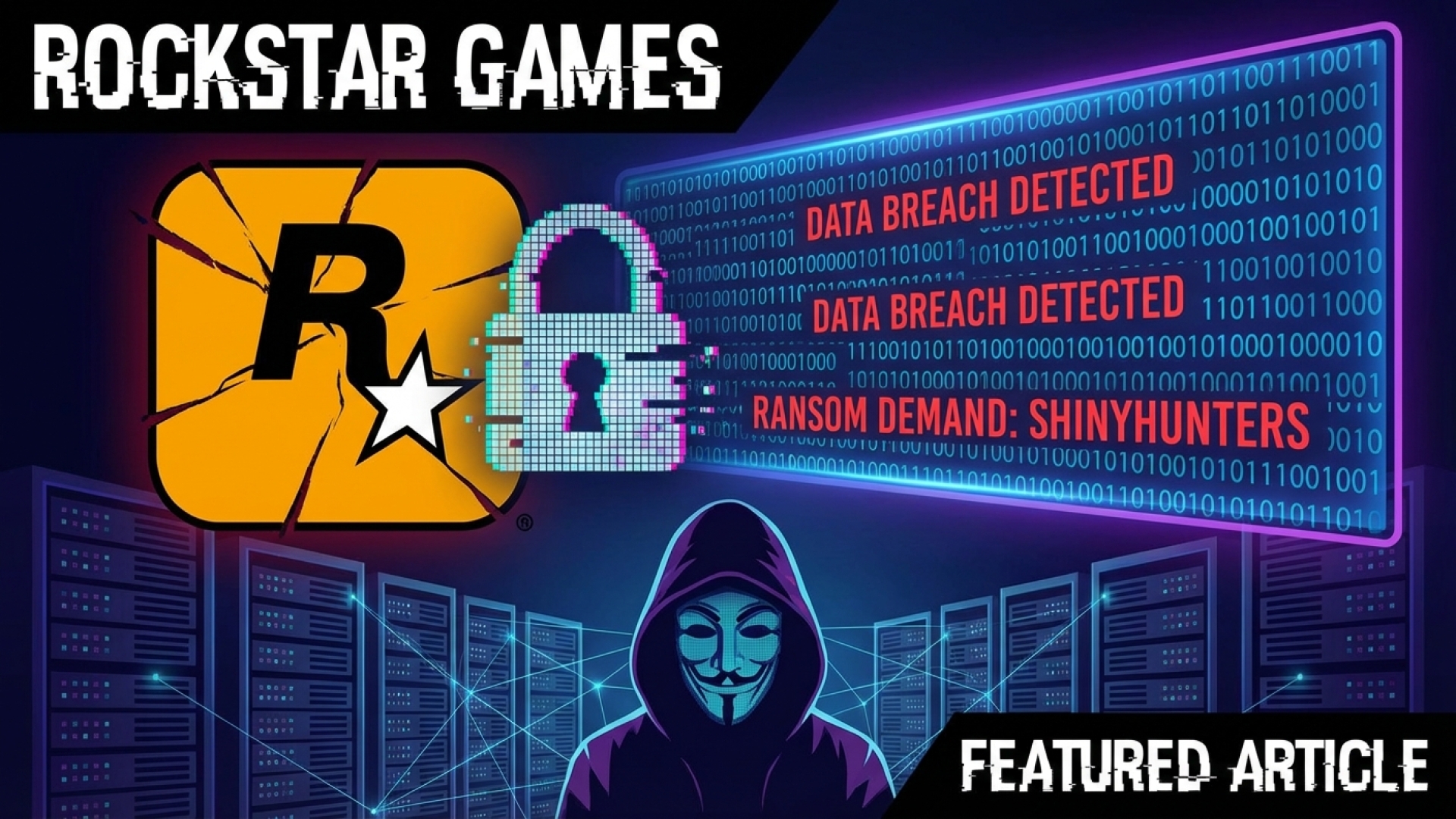
The digital frontier is once again proving to be a high-stakes environment for even the biggest players in the industry. As reported by The Cybersec Guru and further detailed by Kotaku, Rockstar Games has found itself in the crosshairs of a sophisticated security breach. The hacking collective known as ShinyHunters has claimed responsibility, issuing a public ransom demand that threatens the exposure of sensitive company data.
In a statement addressed to the media, a spokesperson for Rockstar Games attempted to downplay the severity of the situation, stating: “We can confirm that a limited amount of non-material company information was accessed in connection with a third-party data breach. This incident has no impact on our organization or our players.” However, at Digital Tech Explorer, we know that “non-material” can often be a corporate euphemism for data that, while not affecting immediate gameplay, could still pose long-term risks to development pipelines or internal workflows.
The Technical Breakdown: How the Breach Occurred
For those tracking gaming security trends, the method of this attack is particularly revealing. ShinyHunters asserts that they gained entry through Rockstar’s outsourced Snowflake cloud storage system. Rather than a direct frontal assault on Rockstar’s servers, the group exploited a vulnerability in Anodot, a third-party analytics tool.
The sequence of the breach is a textbook example of modern supply-chain vulnerability:
| Step | Breach Phase | Description |
|---|---|---|
| 1 | Initial Compromise | Attackers exploited a vulnerability within Anodot, a third-party analytics tool. |
| 2 | Token Theft | Authentication tokens were harvested from the compromised Anodot environment. |
| 3 | Unauthorized Access | Using stolen tokens, attackers bypassed standard security to enter Snowflake instances. |
| 4 | Data Persistence | The group claims to have held access for an extended period before detection. |
By leveraging authentication tokens, the group essentially walked through the front door as an authorized party, highlighting the critical need for robust token management and zero-trust architectures in hardware and software integration.
The Ransom Demand and Potential Fallout
The narrative took a sharper turn when ShinyHunters posted a direct ultimatum. “Your Snowflake instances were compromised thanks to Anodot.com. Pay or leak,” the group declared. They have set a hard deadline for April 14, 2026, warning that a failure to comply would lead to the release of data and “several annoying (digital) problems” for the studio.
As TechTalesLeo, I’ve seen these stories play out before. While Rockstar claims the data is “non-material,” the psychological pressure of a leak during the high-stakes lead-up to future PC games and console releases is a classic hacker tactic. Whether this is a bluff or a legitimate threat to the studio’s digital infrastructure remains to be seen.
A Story Still Unfolding
At Digital Tech Explorer, we will continue to monitor the situation as the April deadline approaches. This incident serves as a stark reminder to developers and tech enthusiasts alike that security is only as strong as the weakest link in the supply chain. For more updates on this breach and other tech news, stay tuned to our latest reports.
Disclaimer: All content on Digital Tech Explorer is for informational and entertainment purposes only. We do not provide financial or legal advice. Some of the links on Digital Tech Explorer are affiliate links. This means we may earn a commission if you click through and make a purchase, at no additional cost to you.