
The Science of Depth: Electronic Parallax Barrier
The heart of the Abxylute 3D One is its “electronic parallax barrier technology.” As TechTalesLeo, I’ve tracked the evolution of 3D from the early 3DS days to high-end 4K resolution monitors, and the tech here is surprisingly mature. Similar to the Acer Predator SpatialLabs systems, the 3D One utilizes eye-tracking cameras embedded in the top bezel to adjust the image in real-time. This ensures that as you move, the 3D effect follows your gaze, maintaining a sense of depth that feels more sophisticated than the static 3D of yesteryear.
Native Support vs. The “AI” 3D Gamble
Software is the lifeblood of any 2024 release. Currently, the Abxylute 3D One boasts native support for 46 titles. This curated list includes heavy hitters like *Baldur’s Gate 3*, *Death Stranding*, and *Hogwarts Legacy*. In these titles, the depth is intentional and often breathtaking. However, for the rest of your Steam library, Abxylute offers an “AI 3D” mode. While AI acceleration is a buzzword we hear often at Digital Tech Explorer, its implementation here is hit-or-miss. The algorithm frequently struggles to distinguish foreground UI elements from background environments, leading to “ghosting” or depth distortion that can make non-supported games difficult to play. If a title isn’t on the official compatibility list, your mileage will vary significantly.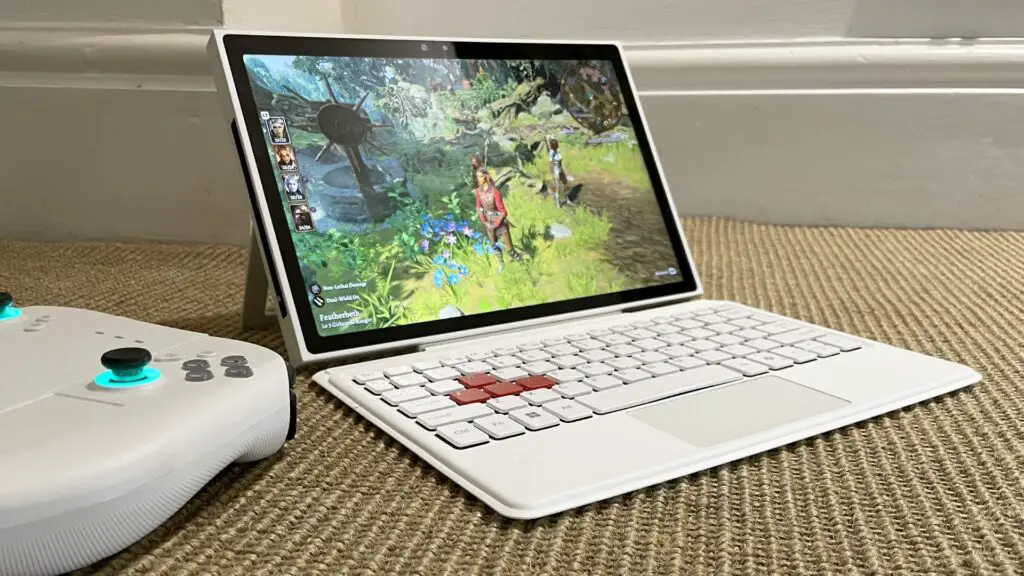
Technical Specifications
| Component | Specification |
|---|---|
| Processor | Intel Core Ultra 7 258V (Lunar Lake) |
| Memory | 32 GB LPDDR5x |
| Display | 10.95-inch IPS, 2560 x 1600 (Glasses-Free 3D) |
| Storage | 1 TB PCIe 4.0 NVMe SSD |
| Graphics | Intel Arc Graphics (Integrated) |
| Battery | Approx. 1 hour (Heavy Gaming) |
Performance: The High Cost of the Third Dimension
Pushing pixels in 3D is a monumental task for any GPU. The Abxylute 3D One features a 2.5K resolution screen, and here is the catch: to maintain the 3D interlacing, you must play at the native 1600p resolution. Lowering the resolution breaks the 3D effect entirely. In 3D mode, the Intel Lunar Lake chip is essentially rendering two separate 2.5K frames simultaneously. In our testing with *Baldur’s Gate 3*, the performance dip was palpable. While the game runs smoothly in 2D at 1600p with High settings, toggling 3D dropped the frame rate into the mid-20s. Even with XeSS enabled, the 3D experience often felt “choppy” compared to the fluid 2D output. Furthermore, Abxylute cautions against updating GPU drivers, as the current version is specially tuned for 3D stability—a potential red flag for users who want the latest optimizations for new PC games.“Rendering two 1600p frames simultaneously is a massive ask for an integrated GPU, making the 3D experience a luxury that comes with a performance tax.” — TechTalesLeo
Design, Portability, and “The Desktop Problem”
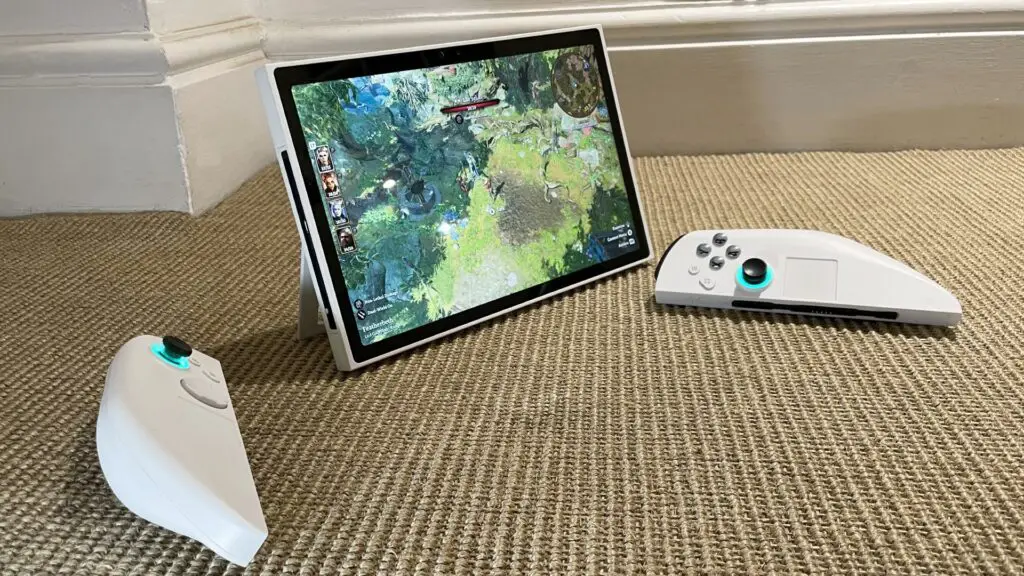
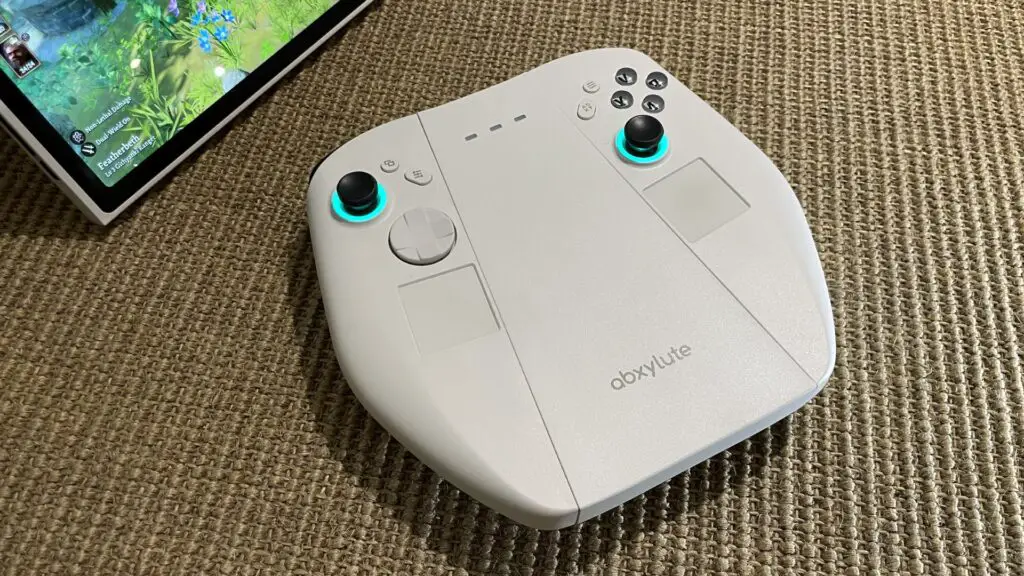
At Digital Tech Explorer, we value portability in handhelds, but the Abxylute 3D One is a giant. Measuring nearly 15 inches across, it pushes the definition of “handheld.” While the modular design is clever—featuring detachable hall-effect controllers and a kickstand—the sheer size makes it more of a portable workstation than a “play on the bus” device. The battery life also struggles under the weight of the hardware. Expect roughly one hour of gameplay in 3D mode at native resolution. Even with a 25,000 mAh external power bank, you’re looking at only 2.5 hours of total playtime. This raises the question: at a price point of $1,599, would a high-end gaming laptop serve you better? For that investment, you could easily secure a machine with a dedicated RTX GPU that offers significantly more raw power and longevity.