
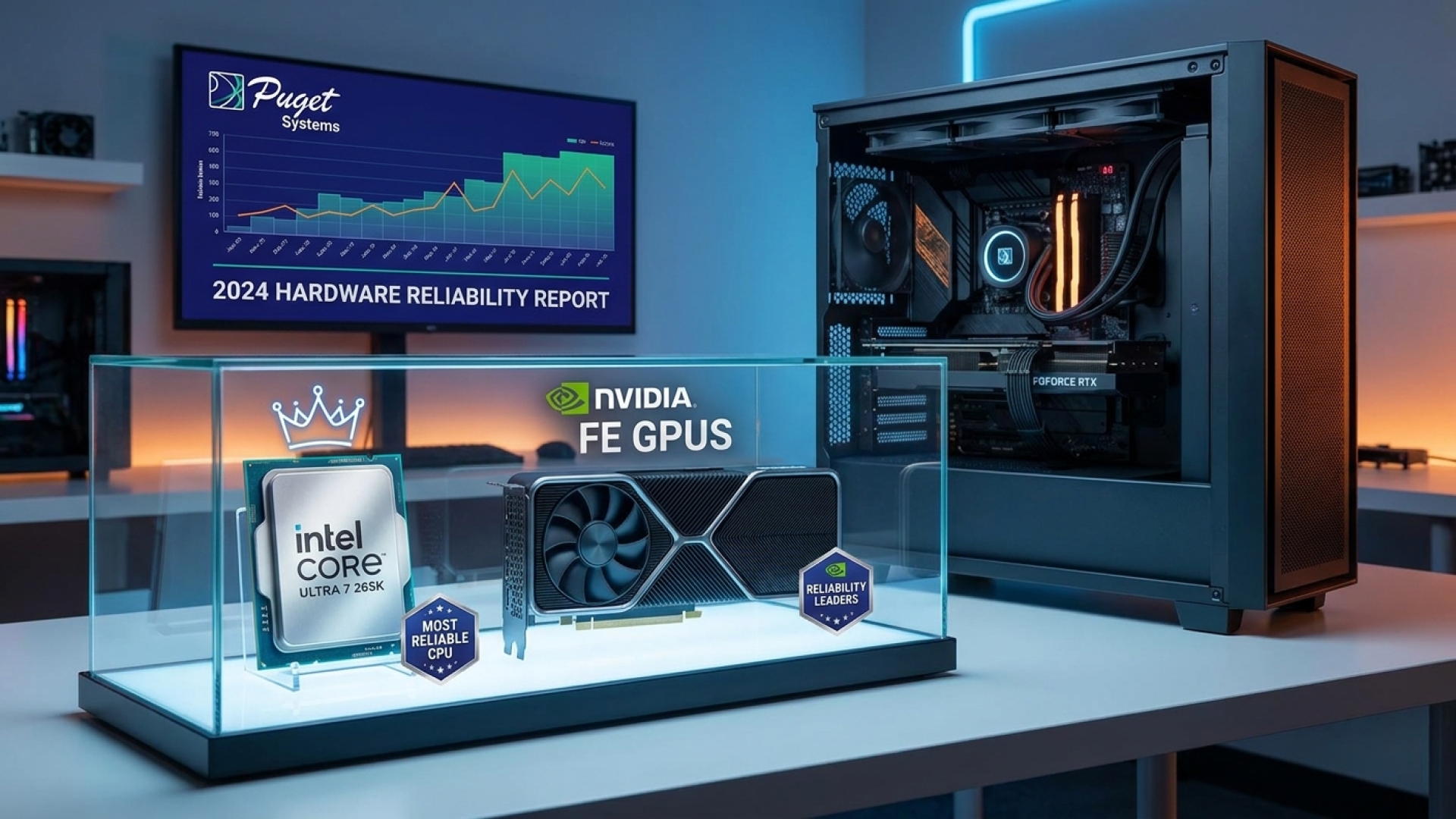
In the ever-evolving landscape of PC hardware, reliability is the silent pulse of a great system. Here at Digital Tech Explorer, we know that whether you’re a developer compiling thousands of lines of code or a gamer chasing 4K frames, the last thing you want is a hardware failure. Custom computer powerhouse Puget Systems recently pulled back the curtain on this very issue, releasing its Most Reliable Hardware of 2025 report. The findings offer a fascinating look at which components are truly built to last in an era of pushing performance boundaries.
Intel’s Path to Redemption: The Core Ultra 7 265K
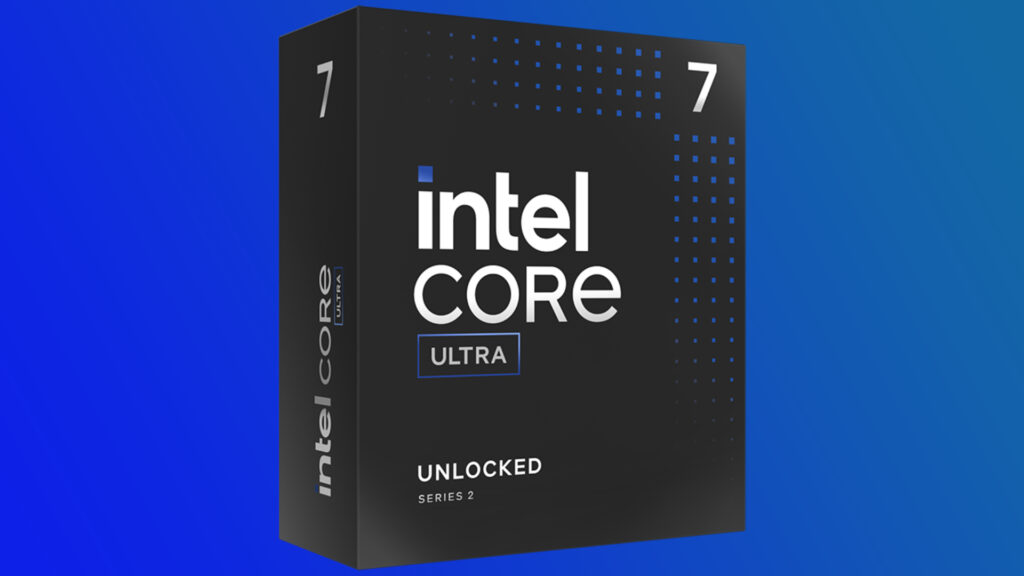
If you’ve been following tech news over the last year, you know Intel has faced some turbulence regarding AI-accelerated stability and microcode issues on older generations. However, the 2025 data suggests a major turning point. The Intel Core Ultra 7 265K has been crowned the most reliable individual chip overall, sporting a remarkably low 0.77% failure rate.
This “Arrow Lake” generation chip is proving to be a dark horse. While enthusiasts often flock to the flagship GPU-pairing beasts like the Core Ultra 9, the Ultra 7 265K offers a sweet spot of performance and resilience. Our analysis at Digital Tech Explorer suggests that the combination of refined power delivery and mature microcode updates for the LGA 1851 platform has finally provided the stability professional creators and developers crave.
AMD and the Battle of the Sockets
AMD’s story in 2025 is a tale of two architectures. Their Ryzen X3D processors—the darlings of the gaming community—showcased strong reliability with a 1.51% failure rate. Interestingly, this outperformed the standard 9000-series chips in Puget Systems’ testing environment.
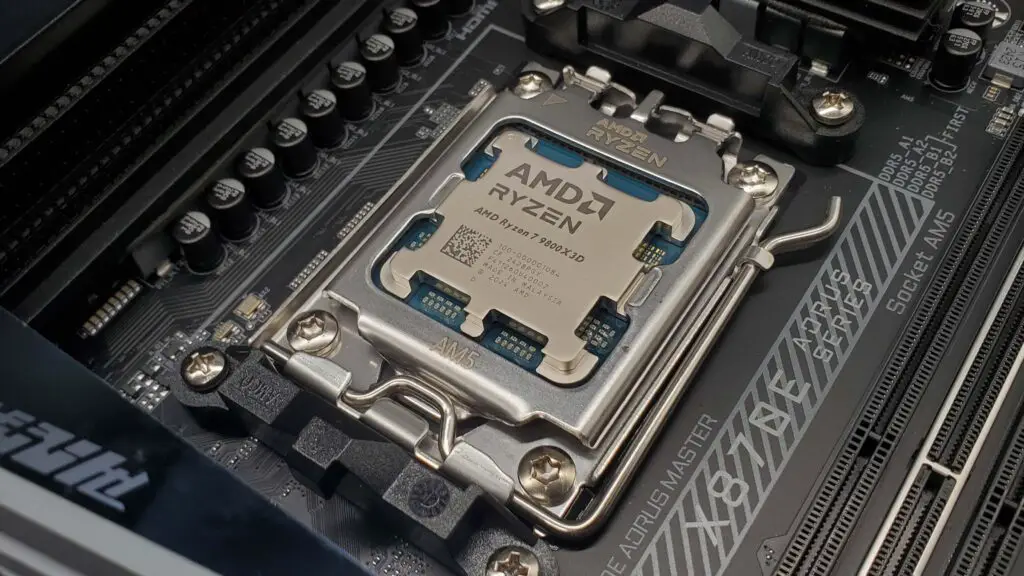
However, it hasn’t been all smooth sailing for Team Red. Reports of hardware failures involving chips like the Ryzen 7 9800X3D have circulated recently. TechTalesLeo notes that these issues are frequently linked to motherboard manufacturing defects rather than inherent flaws in the silicon itself. It serves as a vital reminder for our readers: your system is only as strong as its weakest link.
Nvidia’s Founders Edition: The Gold Standard for GPUs
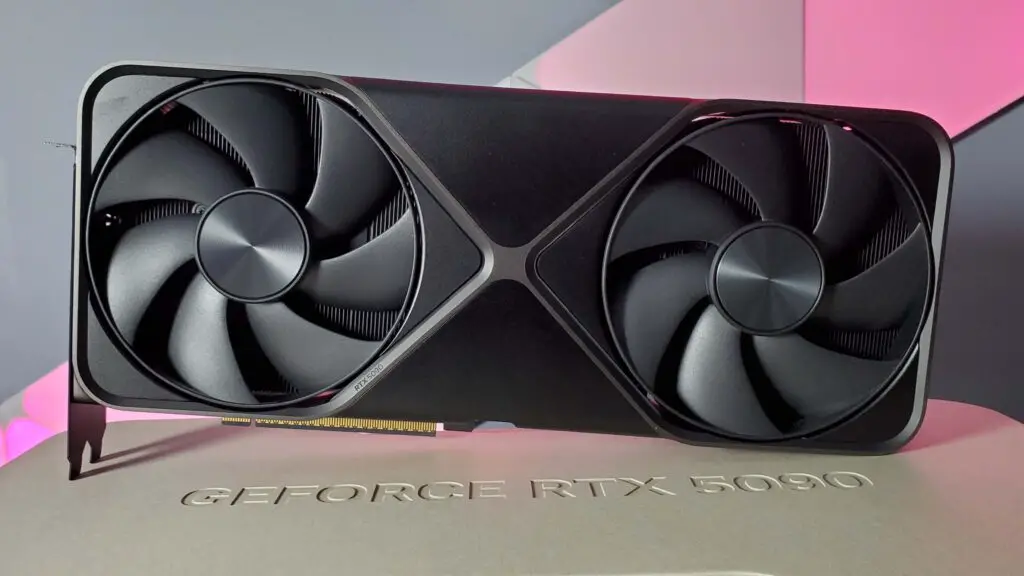
In the graphics sector, Nvidia’s in-house engineering is setting a high bar. The Founders Edition GPUs were identified as the most reliable GeForce RTX cards, boasting a staggering 0.25% failure rate. For those looking for the best longevity in 4K resolution gaming or 3D rendering, these numbers are hard to ignore.
| Component Category | Top Performer | Failure Rate |
|---|---|---|
| Processor (CPU) | Intel Core Ultra 7 265K | 0.77% |
| Graphics Card (GPU) | Nvidia Founders Edition | 0.25% |
| Memory (RAM) | Kingston DDR5 | 0.19% |
| Motherboard (Intel) | Gigabyte B890M Aorus Elite | 0.00%* |
| *Based on a sample size of 100 units with zero failures reported. | ||
The Unsung Heroes: Motherboards and Memory
While CPUs and GPUs get the headlines, your system’s stability often rests on the motherboard and RAM. Puget Systems highlighted the Gigabyte B890M Aorus Elite WiFi6E ICE and the Asus TUF B850M-Plus WiFi as the standout performers of the year. In our experience at Digital Tech Explorer, the “TUF” branding continues to live up to its name, with the B850M model recording only a single failure throughout the reporting period.
Memory reliability also saw a win for Kingston, which narrowly edged out Micron with a failure rate of just 0.19%. In the world of machine learning and heavy multitasking, this level of precision is exactly what we look for when recommending builds to our community.
Digital Tech Explorer’s Take
The 2025 reliability report is a breath of fresh air for those who were concerned about the recent volatility in the CPU market. It confirms that while the “bleeding edge” of technology can sometimes be sharp, manufacturers are successfully iterating on stability. For the developers and enthusiasts who follow TechTalesLeo, the message is clear: the current generation of 2024 and 2025 releases are proving to be some of the most stable we’ve seen in years.
As always, remember that these stats are based on Puget Systems’ specific inventory. While a brand may not be listed, it doesn’t necessarily mean it’s unreliable—it simply might not be part of their curated selection. Stay tuned to Digital Tech Explorer as we continue to track these trends and help you make informed decisions for your next high-performance build.