
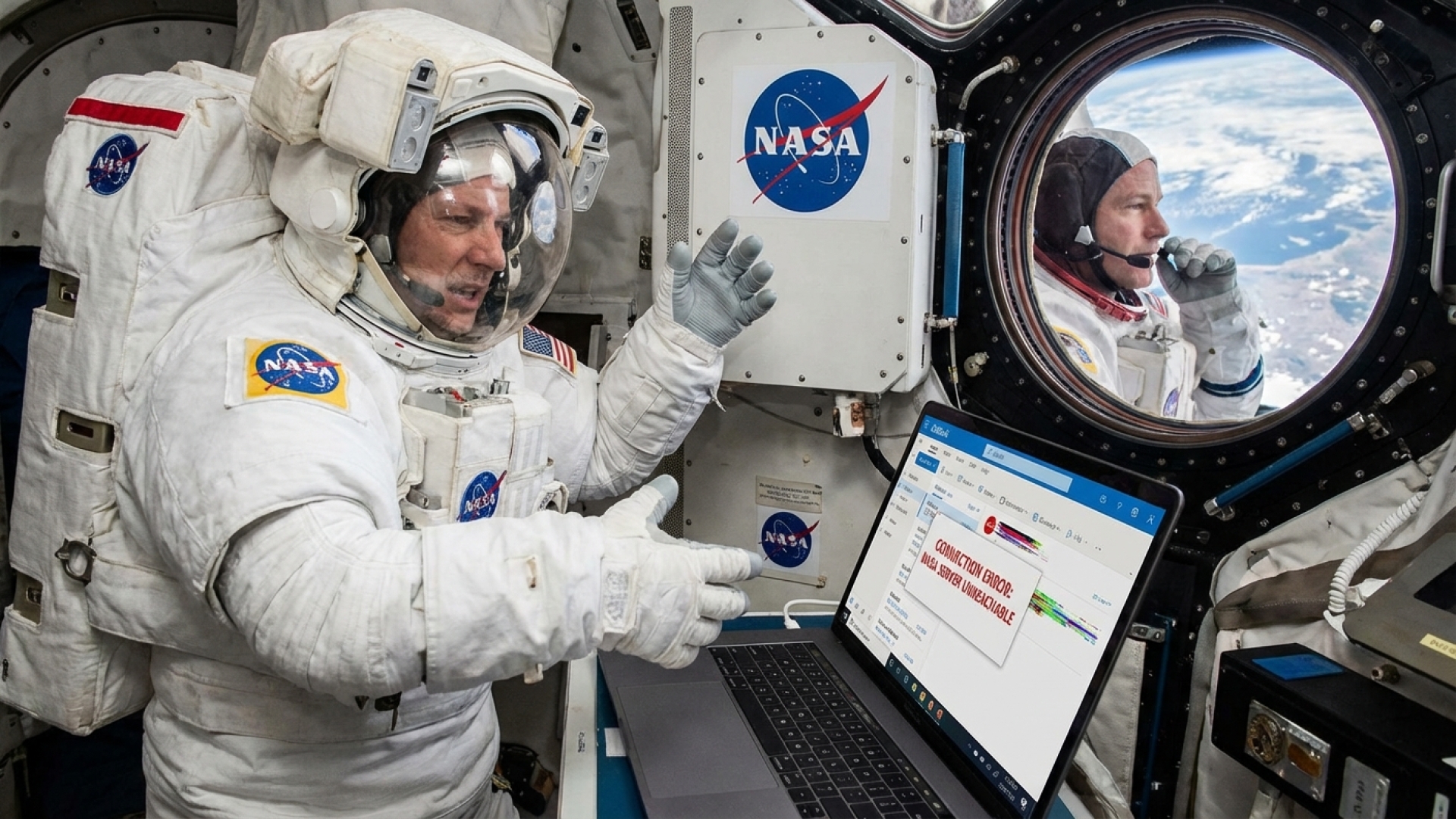
The Artemis II mission recently made headlines as it prepares to orbit the moon, marking a monumental step in humanity’s return to deep space. Yet, even as we push the boundaries of celestial exploration, some very earthly frustrations have managed to hitch a ride. Astronauts aboard the spacecraft have reported technical hurdles with Microsoft Outlook, proving that whether you are in a home office or 238,000 miles away, software glitches remain a universal constant.

Houston, We Have an Inbox Problem
In a recent transmission that felt all too relatable to IT professionals, an Artemis II crew member noted: “I also see that I have two Microsoft Outlooks and neither one of those are working. If you want to remote in and check the Optimus and those two Outlooks, that would be awesome.”
At Digital Tech Explorer, we often analyze the intersection of hardware and software reliability. While it remains to be seen if the conflict stems from the email client itself or the underlying integrated systems of the spacecraft, NASA is coordinating a remote diagnostic session. This incident highlights a core truth in modern hardware deployment: no matter how advanced the machine, it is only as reliable as the code running on it.
The Shift from WebView to Native Performance
The frustrations experienced by the Artemis crew may soon be addressed by a broader industry shift. Our team has been tracking Microsoft’s recent pivot back toward 100% native Windows applications. For years, the trend favored “WebView” applications—essentially web browsers disguised as desktop apps. While easier to develop across platforms, these “memory-hogging” apps often lack the snappiness required for high-stakes environments.
Microsoft’s commitment to rebuilding core tools like the Outlook app as native software is a significant win for AI acceleration and general system responsiveness. To better understand why this matters, here is a comparison of how these frameworks impact performance:
| Feature | WebView / React (Current) | Native (WinUI3 / C++) |
|---|---|---|
| Memory Usage | High (Requires browser engine) | Low (Direct hardware access) |
| Speed | Moderate (Dependent on wrapper) | Instant / High Performance |
| Offline Reliability | Variable | Robust |
| System Integration | Limited | Deep (Better UI/UX consistency) |
Optimizing Windows 11 for the Future
Beyond individual productivity tools, Microsoft is also refining the core of the Android-adjacent ecosystem within Windows. The company has pledged to improve overall Windows 11 performance by migrating essential UI elements—like the Start Menu—to the WinUI3 native framework. By moving away from React-based components, the operating system aims to eliminate the lag that has plagued users since its initial 2024 updates.
As TechTalesLeo, I find it fascinating that the same software struggles we face at our desks are being mirrored in the stars. The Artemis II mission is a testament to human ingenuity, but it also serves as a case study for why native software optimization is crucial. Whether you are a developer looking at AI integration or an astronaut checking mission parameters, the demand for stable, efficient software is non-negotiable.
We hope the Artemis II crew sees a swift resolution to their IT troubles. With Microsoft’s renewed focus on native applications and optimized UI frameworks, the future of computing looks much smoother—for those of us on the ground and the pioneers leading the way to the moon.
For more in-depth analyses on GPU performance, software engineering trends, and the latest in gaming tech, stay tuned to Digital Tech Explorer.