
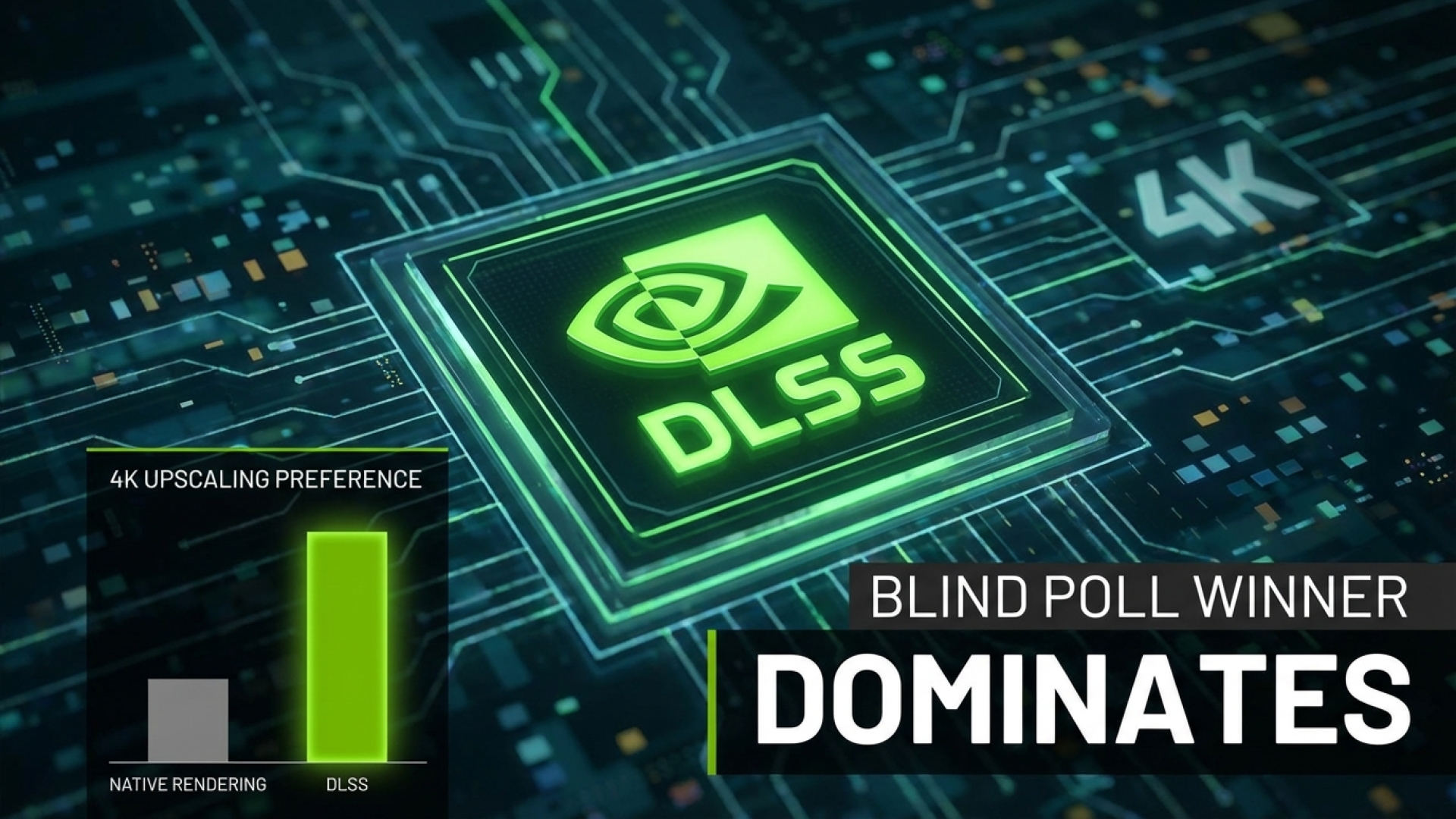
At Digital Tech Explorer, we closely monitor how AI acceleration is reshaping the landscape of modern computing. A recent blind comparison test conducted by the German tech outlet ComputerBase.de has provided a fascinating look into this evolution. In a survey involving over 1,000 gamers, Nvidia DLSS emerged as the definitive favorite, surprisingly outclassing both AMD FSR and native 4K resolution rendering across several high-profile titles. This evaluation offers a clear narrative on the current state of AI-based upscaling and its profound impact on gaming image quality.
Nvidia DLSS: The AI Frontrunner
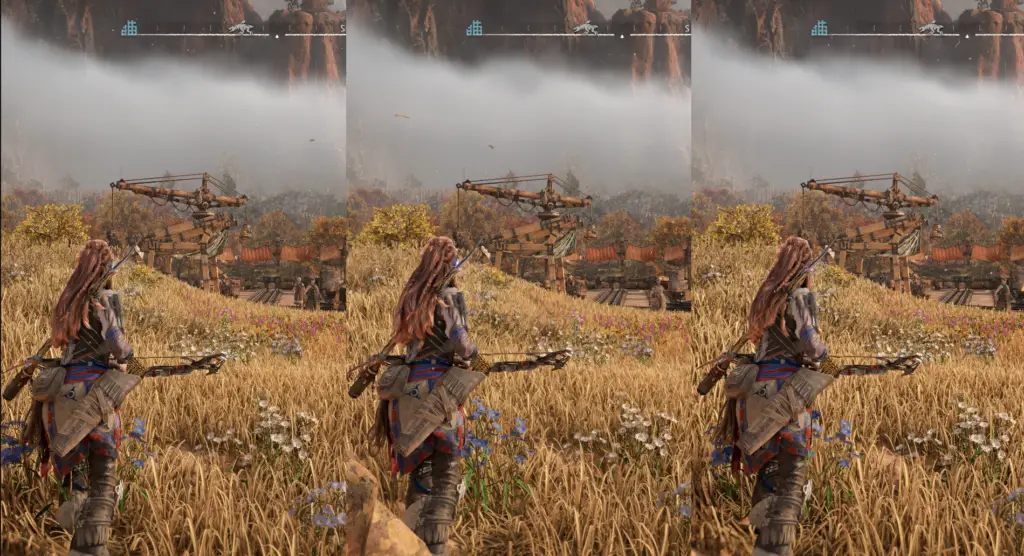
Nvidia DLSS (Deep Learning Super Sampling) represents a significant milestone in hardware and software synergy. By leveraging dedicated Tensor Cores found on Nvidia GeForce RTX graphics cards, the technology renders a game at a lower internal resolution before intelligently reconstructing it to a higher target, such as 4K. In the ComputerBase.de results, the latest iterations of the technology secured victories in every single game tested, including demanding titles like Cyberpunk 2077 and Horizon Forbidden West.
As a storyteller in the tech space, TechTalesLeo notes that the real “magic” here isn’t just about speed; it’s about the reconstruction of detail. DLSS utilizes temporal and vector data to sharpen textures, often resulting in an image that appears more stable and detailed than native 4K. With many developers now optimizing their engines specifically for AI upscaling, these tools have moved from being an optional “tweak” to a fundamental component of the high-end gaming experience.
AMD FSR and the Challenge of Visual Fidelity
AMD’s FidelityFX Super Resolution (FSR) remains the primary cross-platform competitor. During this blind test, participants evaluated versions often referred to as FSR 4 or “FSR Redstone,” which represent AMD’s latest push into more advanced machine learning techniques. However, the data reveals a steep uphill battle for Team Red; FSR consistently ranked behind both DLSS and native 4K rendering. While AMD continues to iterate and provide open-source solutions that work across various GPUs, the survey highlights a perceptible gap in the final visual output compared to Nvidia’s AI-heavy approach.
Intel XeSS: The Flexible Contender
While not the primary focus of the recent blind test, Intel XeSS (Xe Super Sampling) is an essential part of the conversation at Digital Tech Explorer. XeSS often finds a “sweet spot,” providing a balance between the high-end reconstruction of DLSS and the broad compatibility of FSR. While it performs optimally on Intel Arc hardware using dedicated XMX engines, Intel offers a DP4a-based version compatible with nearly all modern graphics cards, making it a versatile tool for the broader PC community.
Technology Comparison Overview
| Feature | Nvidia DLSS | AMD FSR | Intel XeSS |
|---|---|---|---|
| Core Technology | AI / Tensor Cores | Spatial/Temporal (Moving to AI) | AI / XMX or DP4a |
| Hardware Locked | Yes (Nvidia RTX Only) | No (Cross-vendor) | No (Optimized for Intel) |
| Visual Ranking | 1st (Preferred over Native) | 3rd (In recent blind tests) | Competitive / 2nd-3rd |
| Main Benefit | Best Image Quality | Widest Compatibility | Balance of Quality & Access |
Why Upscaling is Essential for Modern PC Gaming
The shift toward upscaling isn’t just a trend; it is a necessity driven by the AI boom and the increasing complexity of real-time ray tracing. By offloading the rendering burden, these technologies allow gamers to achieve high 4K frame rates that would otherwise require unobtainable hardware power. At Digital Tech Explorer, we believe this represents the “smarter, not harder” era of software engineering, where AI handles the heavy lifting of pixel reconstruction.
Final Thoughts from TechTalesLeo
The results from ComputerBase.de confirm what many tech enthusiasts have suspected: the “Native vs. Upscaled” debate is shifting. When AI-driven reconstruction like DLSS can outperform a native 4K signal in a blind test, the technology has officially matured. While AMD and Intel are making strides to close the gap, Nvidia currently holds the crown for visual fidelity in PC games.
As we continue to explore the boundaries of 2024 releases and beyond, these upscaling solutions will remain the most critical tool in a developer’s arsenal for delivering breathtaking visuals without sacrificing performance. Stay tuned to Digital Tech Explorer for more in-depth analyses of the hardware that powers your digital world.
Disclaimer: All content on Digital Tech Explorer is for informational and entertainment purposes only. We do not provide financial or legal advice. Some of the links on Digital Tech Explorer are affiliate links; we may earn a commission if you click through and make a purchase, at no additional cost to you.