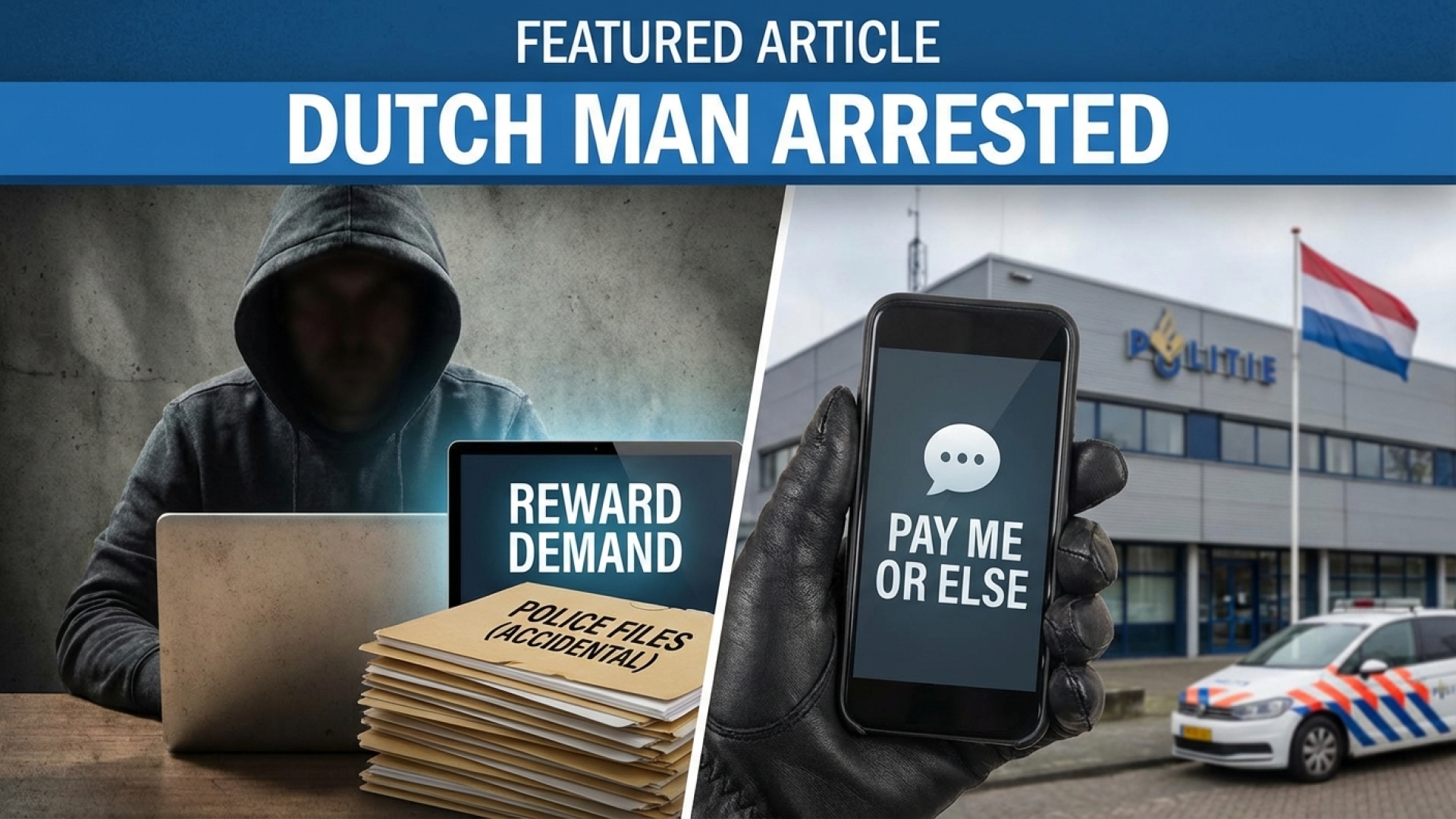
At Digital Tech Explorer, we often discuss the power of digital innovation, but a recent incident in the Netherlands serves as a stark reminder of the legal and ethical boundaries within our digital landscape. A 40-year-old man from Ridderkerk was recently arrested after allegedly refusing to return sensitive files mistakenly sent to him by the police, reportedly demanding a reward for their safe return.
The Incident: When an Upload Link Becomes a Data Leak
The situation began with a routine procedural interaction. The individual, who had been in contact with the police regarding an unrelated case, was supposed to receive a secure upload link to submit his own images. However, a critical administrative error occurred: the police inadvertently sent him a download link instead.
This simple technical oversight provided the man with direct access to confidential police documents. According to reports, the man proceeded to download the files, transitioning the situation from a minor clerical error into a significant breach of data security.
Security protocols are vital when handling sensitive digital data.
According to the Dutch National Police’s report, the suspect was subsequently arrested for “computer hacking” (computervredebreuk) following his refusal to comply with law enforcement requests.
The Reward Demand: A Costly Negotiation
Upon realizing the mistake, the police contacted the man and requested that he immediately delete the inadvertently shared files. Rather than complying, the individual reportedly stated he would only relinquish the documents if he “received something in return.” While the police report did not specify the exact nature of the demanded reward, such scenarios typically involve requests for financial compensation or personal favors.
In response to this ultimatum, law enforcement took decisive action. Officers arrested the man and conducted a search of his residence. The primary goal of the operation was to retrieve the confidential documents and “prevent possible dissemination,” highlighting the high stakes involved in protecting law enforcement intelligence.
Digital trespassing and data blackmail carry severe legal consequences in the modern tech era.
Digital Ethics and Legal Consequences
This case brings up a vital discussion for tech enthusiasts and professionals regarding the legalities of “found” data. The Dutch police emphasized that the man’s actions constitute more than just attempted blackmail; the act of downloading the files itself, under these specific circumstances, is considered an unlawful act.
The official statement from the police clarifies the legal stance: “If you receive a download link knowing you should be receiving an upload link, are clearly told not to download, and then choose to download the files anyway, you may be guilty of computer trespassing.”
Key Takeaways for Digital Users
Action
Legal/Ethical Implication
Accessing unintended links
Potential Computer Trespassing
Withholding government data
Obstruction of Justice / Criminal Possession
Demanding compensation for data return
Extortion or Blackmail
As our author TechTalesLeo often notes, technology is only as secure as the human elements managing it. The police further noted that any recipient could “reasonably assume” that a download link containing sensitive files not intended for them should not be accessed. This incident serves as a crucial reminder: possessing and refusing to return accidentally sent confidential data carries significant legal weight, including potential charges of computer trespassing and related digital offenses.
For more updates on digital innovation, software trends, and tech news, stay tuned to Digital Tech Explorer.