
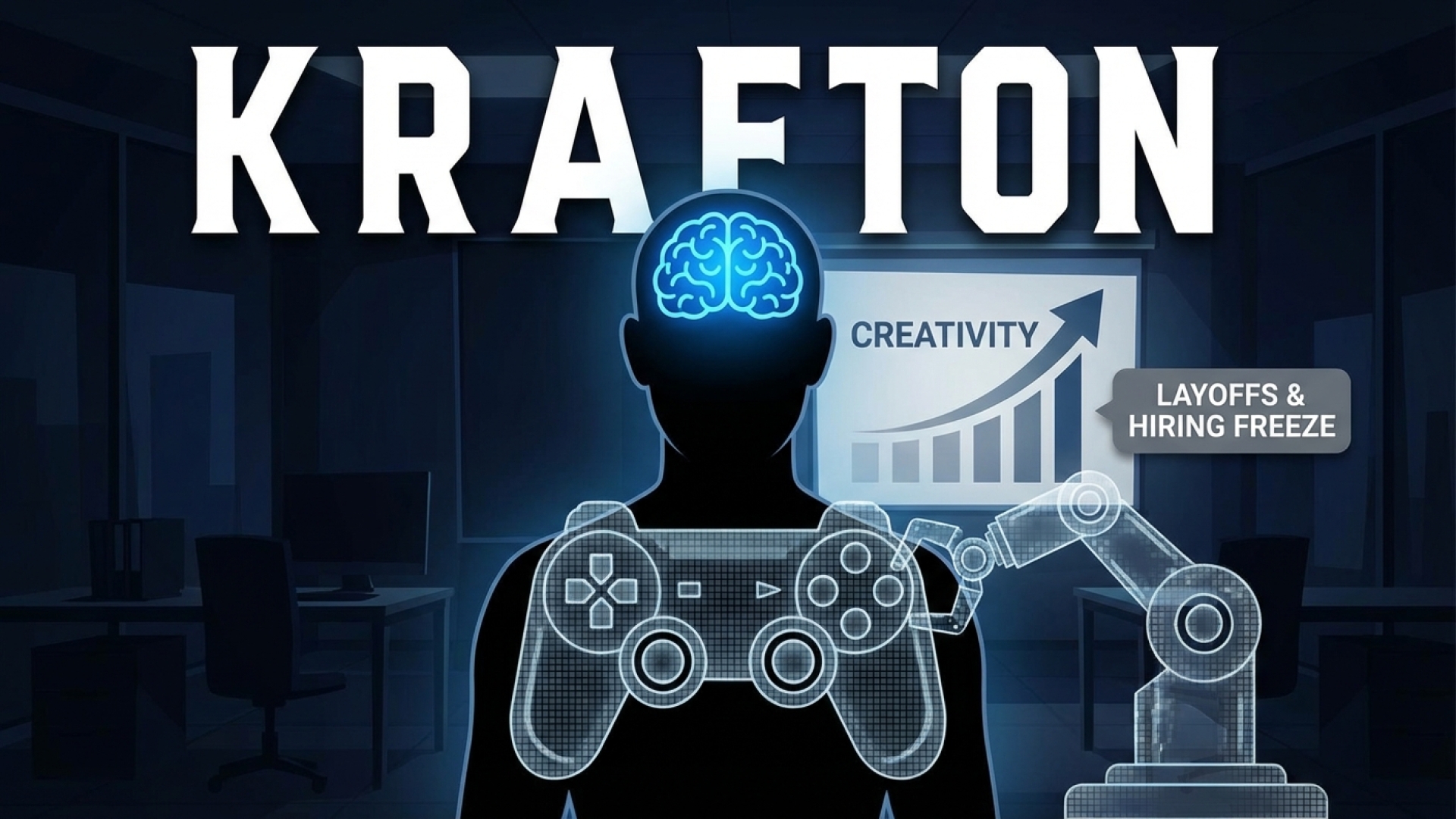
At Digital Tech Explorer, we closely monitor how major industry players navigate the intersection of artificial intelligence and software development. Krafton, the powerhouse behind PUBG, is currently making one of the most significant—and controversial—strides into AI. This commitment is so profound that it triggered a company-wide restructuring, including a hiring freeze and a voluntary resignation program, shortly after a successful financial quarter. The publisher is now funneling a staggering $88 million into AI technology, signaling a massive pivot in their long-term hardware and software strategy.
Krafton’s AI Vision: Amplifying Human Creativity?
Leading this transformation is Kangwook Lee, Krafton’s newly appointed Chief AI Officer. Having headed the Krafton AI division since 2022, Lee is now tasked with overseeing global AI R&D and shaping a “mid-to-long-term innovation strategy.” According to Lee, the goal isn’t to replace developers but to use AI acceleration as a tool to amplify human imagination. At Digital Tech Explorer, we’ve seen many firms claim AI will enhance creativity, but Krafton is betting $88 million that data-backed innovation will redefine player value in the gaming landscape.
| Strategic Pillar | Focus Area | Expected Outcome |
|---|---|---|
| Co-playable Characters | Generative AI NPCs | More immersive, reactive game worlds |
| Operational Efficiency | Workflow Automation | Reduced time for “repetitive” coding tasks |
| Physical AI | Ludo Robotics | Expansion into hardware and robotics research |
Current Applications: From Inzoi to Generative NPCs
While the vision is broad, practical applications are already appearing in 2024 releases and beyond. Krafton collaborated with Nvidia to explore “co-playable characters”—generative AI NPCs designed to react dynamically to player input. A primary testbed for this is the highly anticipated title Inzoi. However, early results have been mixed. Many tech enthusiasts argue that current gen-AI NPCs still lack the emotional depth and nuance found in human-curated narratives, leading to experiences that can feel unpolished or “uncanny.”

The Human Cost and the Shift to Robotics
As TechTalesLeo, I’ve tracked many digital innovations, but the human element remains the most critical story. The immediate impact of Krafton’s AI pivot has been felt by its workforce. The shift toward machine learning and automation has coincided with workforce reductions. Furthermore, Krafton is looking beyond the screen. Under Lee’s leadership, a new subsidiary called Ludo Robotics is being established to research physical AI. This signals that Krafton’s ambitions aren’t limited to PC games; they are looking to bridge the gap between digital intelligence and physical robotics.
Efficiency vs. Artistry: The Future of Game Dev
One of the primary justifications for this investment is “enhancing operational efficiency.” By streamlining workflows, Krafton hopes to reduce the burden of repetitive tasks. However, for those of us in the blockchain and web development space, we know the line between “repetitive task” and “creative process” is often thin. There is a growing concern that roles like concept art or environment design could eventually be categorized as automated tasks, potentially thinning the creative diversity of future titles.

As we look toward the future of 3D gaming, the industry remains at a crossroads. Players may soon encounter more AI-driven interactions in Krafton-published games, for better or worse. Whether this leads to a new era of “human-AI” collaboration or a marketplace filled with uninspired content remains to be seen. At Digital Tech Explorer, we will continue to provide the transparency and research you need to stay ahead of these trends.