
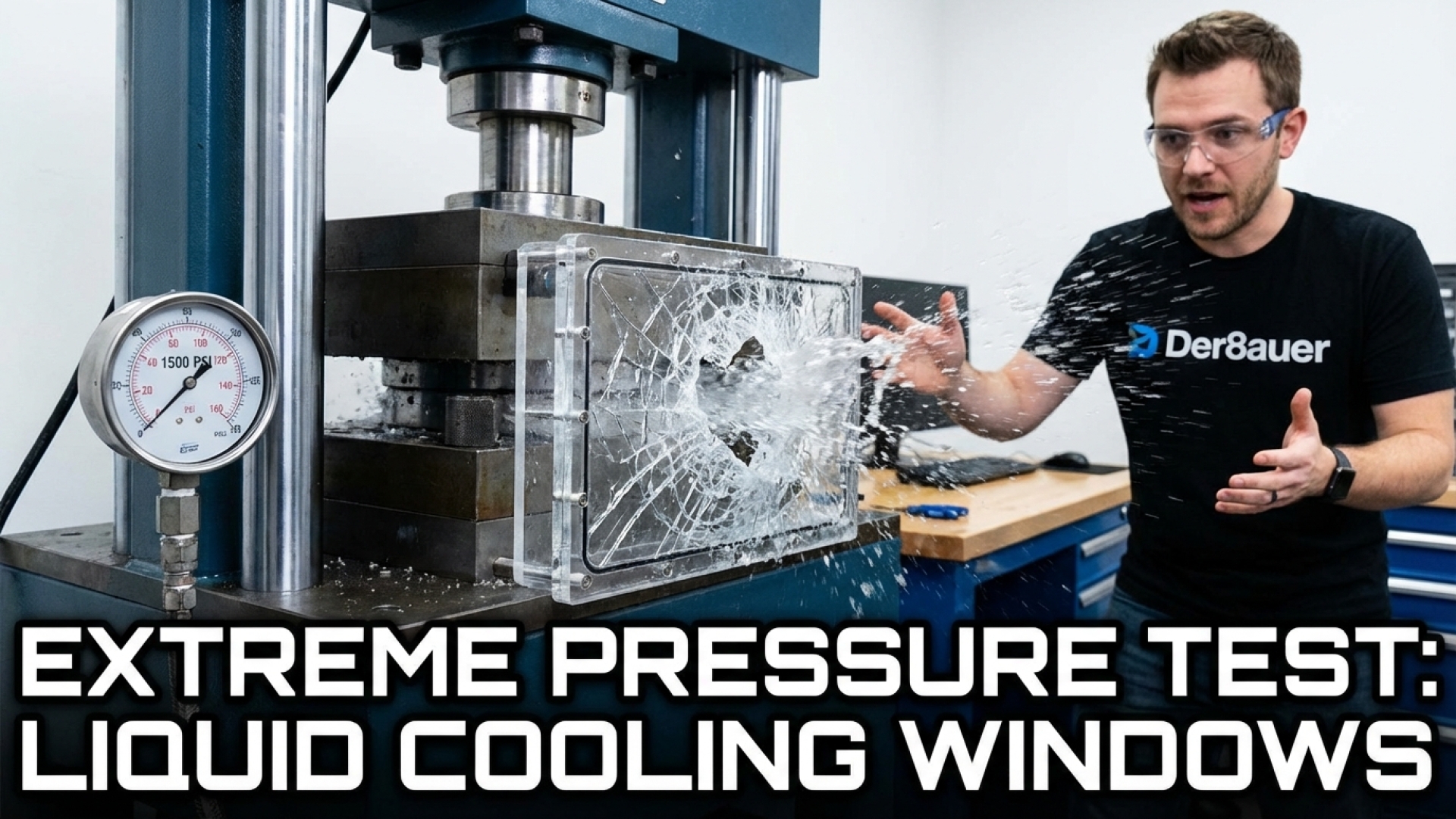
At Digital Tech Explorer, we are constantly tracking the boundary between aesthetic design and extreme performance. Recently, renowned overclocker and Thermal Grizzly CEO Der8auer took this pursuit to its breaking point—literally. By stress-testing the pressure resistance of water block cooling windows, he provided a masterclass in material science for the modern PC builder.
Traditionally, custom loop components utilize PMMA (acrylic) due to its resilience. However, as digital innovation pushes us toward premium materials, Thermal Grizzly has been investigating glass-windowed versions. To ensure these components meet the high standards expected by professionals and enthusiasts alike, Der8auer utilized a rigorous testing setup involving hand pumps and submersion tanks to find the exact moment of failure.
The Methodology: Controlled Destruction
Safety is paramount when dealing with high-pressure PC hardware. Der8auer conducted these experiments inside a reinforced plastic crate filled with water. This submerged approach prevents dangerous shards of acrylic or glass from projecting outward, a necessary precaution given the forces involved.
The process involves a closed-loop system where a specialized pump mechanism increases internal pressure incrementally. By expelling all air bubbles before sealing the unit, the test ensures that the failure is a direct result of hydraulic force against the window material. This transparent testing methodology reflects the commitment to quality we value here at Digital Tech Explorer.
Material Showdown: Acrylic vs. Glass
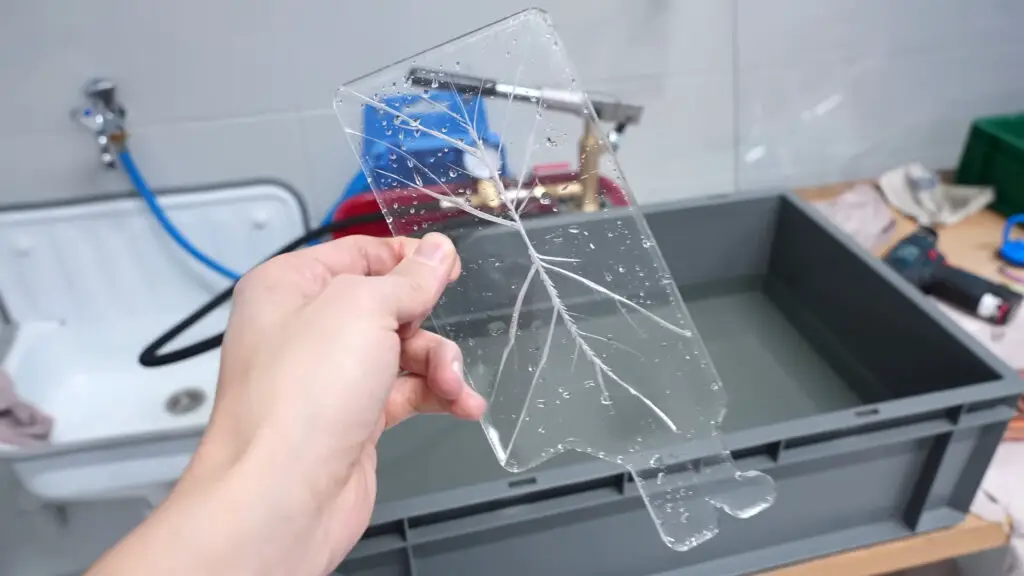
The results highlight a fascinating trade-off between flexibility and rigidity. The standard acrylic GPU block proved to be incredibly hardy, sustaining between eight and nine bars of pressure before a single, clean crack formed. Remarkably, the material did not shatter; it remained intact, allowing for easy removal even after failure.
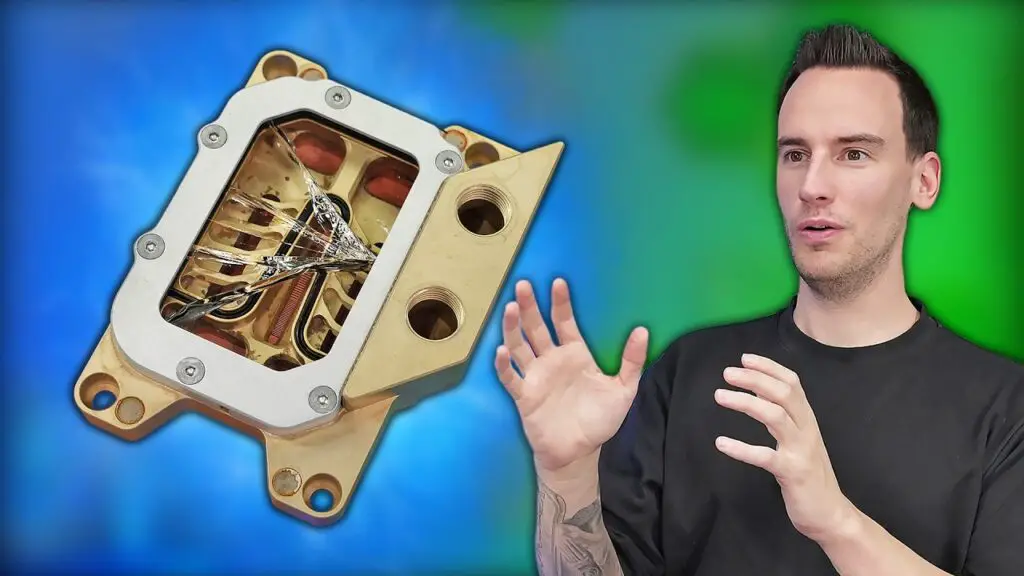
In contrast, the glass-windowed GPU block exhibited the brittle characteristics of its material. It reached its structural limit at approximately five bars, failing with a much denser, more dramatic shattering pattern. However, the size of the window plays a critical role in durability. A smaller CPU water block featuring a glass window managed to withstand a staggering 10 bars of pressure, proving that tempered glass can be exceptionally strong when the surface area is minimized.
| Component Type | Material | Failure Point (Bars) |
|---|---|---|
| GPU Water Block | PMMA (Acrylic) | 8 – 9 Bars |
| GPU Water Block | Glass | ~5 Bars |
| CPU Water Block | Glass | 10+ Bars |
Real-World Application for Enthusiasts
While seeing GPU components snap under pressure is entertaining, the real-world implications are reassuring for the average builder. A typical custom liquid cooling loop operates at less than 0.5 bars. This means that even the “weakest” glass window tested offers a 10x safety margin over standard operating conditions.
As Der8auer noted, in any practical scenario, a hose, fitting, or pump seal would likely fail long before the window of the block gives way. This blend of “blowing hardware up” and serious engineering helps developers and enthusiasts understand the true safety limits of their rigs. For more insights into the latest 2024 releases and hardware innovations, stay tuned to Digital Tech Explorer.
For more tech stories and product deep-dives, visit TechTalesLeo’s author page.