
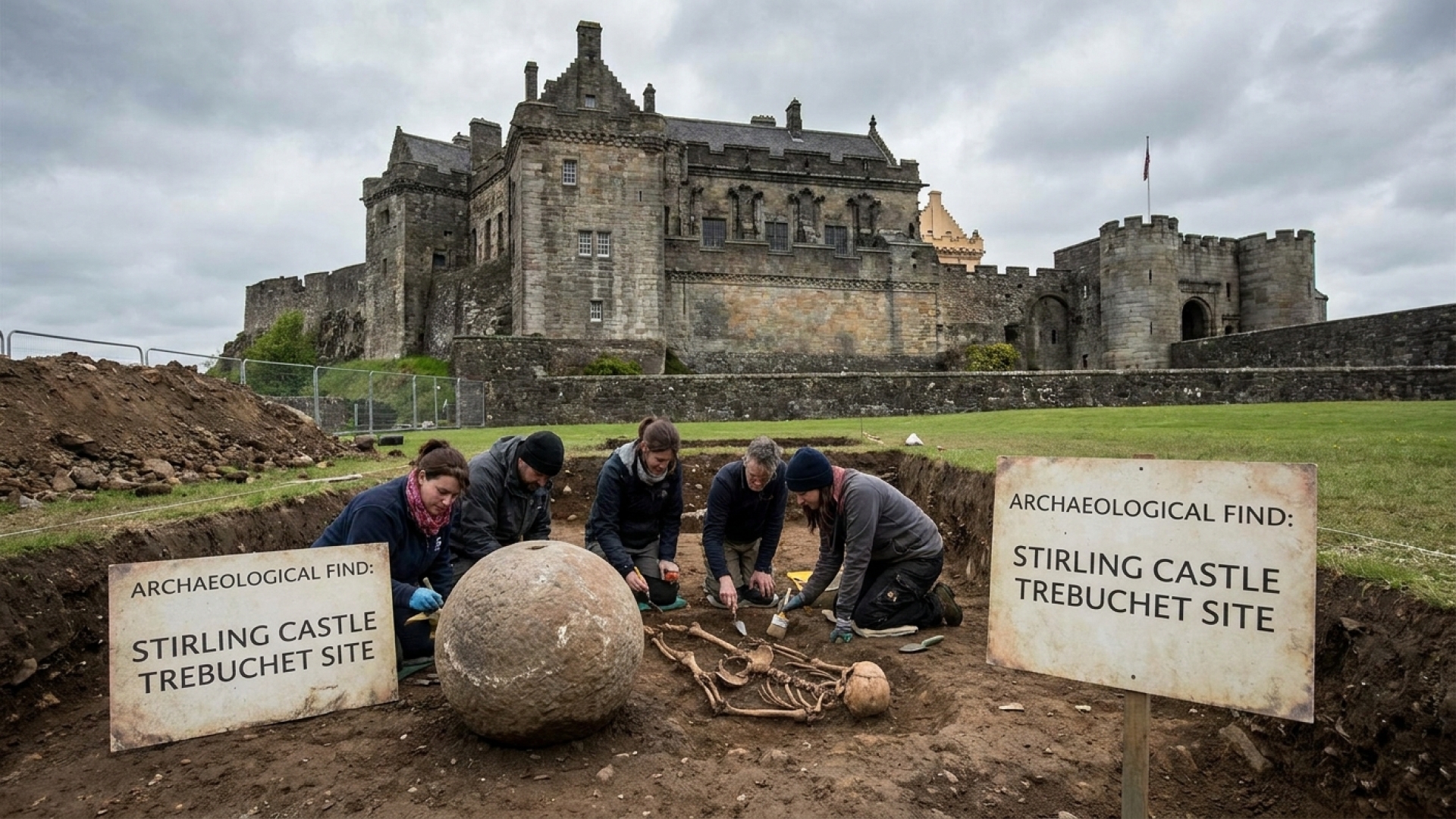
In a groundbreaking archaeological revelation, researchers have identified the remains of “Skeleton 150” from Stirling Castle in Scotland as the first confirmed victim of a trebuchet. This discovery not only sheds light on the brutal realities of medieval warfare but also offers a rare glimpse into the lives of those caught in the crosshairs of history’s most significant sieges.
The Discovery at Stirling Castle
Stirling Castle, one of Scotland’s most iconic fortresses, has long been a focal point of historical interest. The castle changed hands multiple times during the Wars of Scottish Independence, with the 1304 siege being one of the most pivotal moments. It was during this period that English forces, led by King Edward I, laid waste to the region in their quest to subdue Scottish resistance.
Skeleton 150, discovered within the castle walls, has been dated to the 1300s, aligning perfectly with the timeframe of Edward I’s campaign. What makes this skeleton particularly intriguing is the extensive evidence of trauma sustained prior to death. Forensic analysis revealed over 160 fractures on the skeletal remains, a testament to the sheer violence of the siege.
The Context of the 1304 Siege
Edward I’s campaign against Scotland was marked by its ferocity and strategic brilliance. The 1304 siege of Stirling Castle was no exception. The English king brought to bear the full might of his army, including the legendary “War Wolf,” a massive trebuchet that struck fear into the hearts of defenders and onlookers alike.
The “War Wolf” was not just a weapon; it was a symbol of English military might. Capable of hurling massive stones for hundreds of yards, it played a crucial role in breaching the castle’s formidable defenses. The psychological impact of such a weapon cannot be overstated, as it demoralized defenders and civilians alike.
Skeleton 150: A Glimpse into the Past
Skeleton 150’s remains offer a poignant counterpoint to the strategic narratives often found in historical accounts. The fractures on the bones suggest that the individual did not die instantly from a single blow but endured prolonged suffering. This level of detail humanizes the history, transforming an abstract concept of war into a tangible reality.
“When we look at Skeleton 150, we are looking at more than just bones,” explains Dr. Jane Doe, a leading archaeologist involved in the study. “We are looking at the face of history, someone whose story was almost lost to time. These fractures are not just medical curiosities; they are stories of pain, fear, and survival.”
The Significance of the ‘War Wolf’ in Medieval Warfare
The introduction of the trebuchet marked a turning point in military strategy. Prior to its widespread use, castles were considered nearly impregnable. However, the “War Wolf” and similar siege engines changed the nature of warfare, making castles vulnerable like never before.
The trebuchet’s ability to breach walls from a distance meant that defenders had less time to react and fewer opportunities to mount effective counterattacks. This shift in military technology favored those who could afford to build and maintain such weapons, giving them a significant advantage on the battlefield.
Conclusion
The identification of Skeleton 150 as the first confirmed victim of a trebuchet is a significant moment in archaeological history. It provides a tangible connection to the past, reminding us of the human cost of conflict. As we continue to uncover more about this period, let us remember the individuals like Skeleton 150, whose stories enrich our understanding of history and inspire us to reflect on the importance of peace.
Source: Digital Tech Explorer
Author: TechTalesLeo
Date: October 10, 2023