
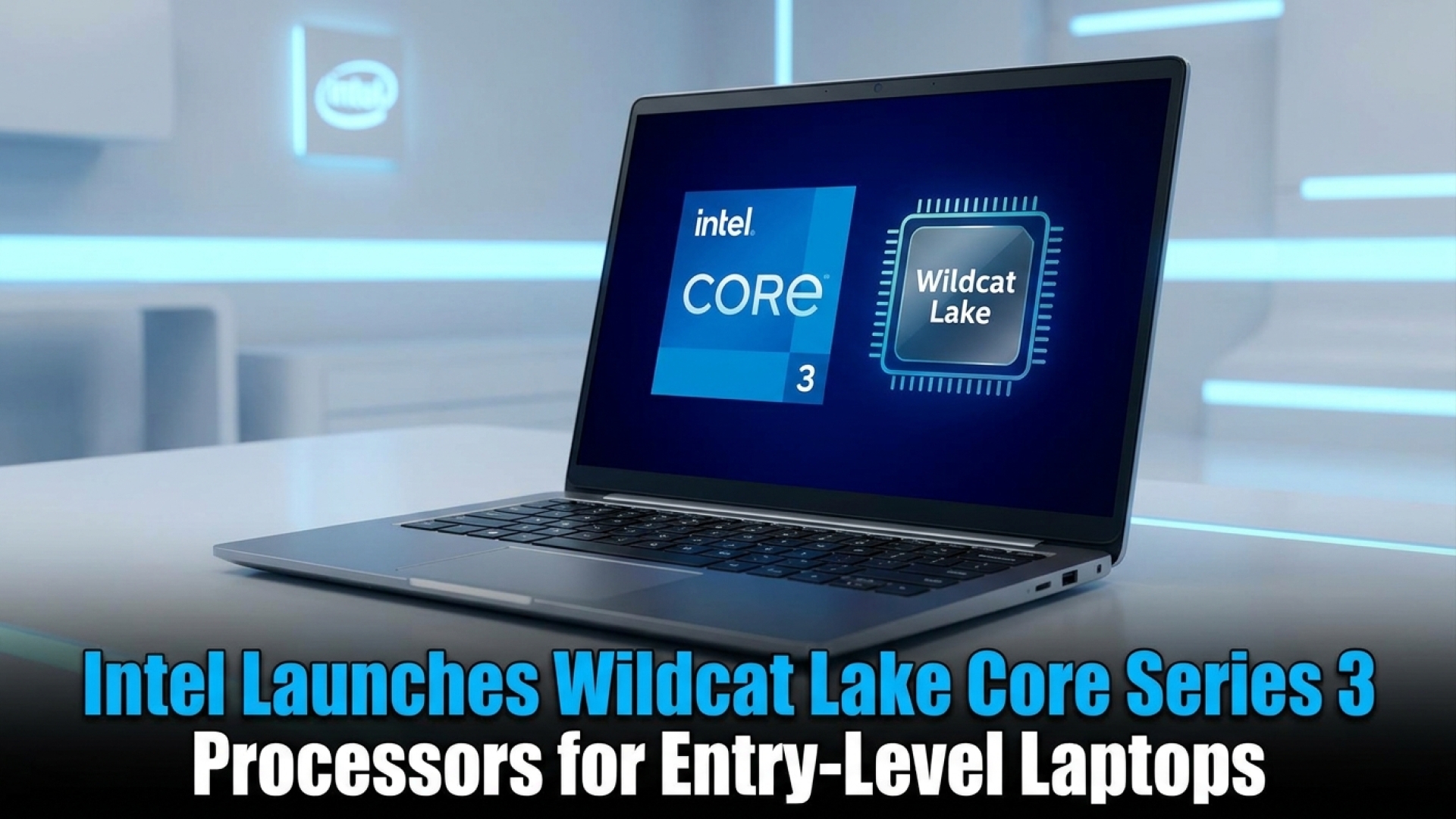
In the ever-evolving narrative of silicon innovation, Intel continues to refine its architectural story. Last October, the industry watched as Intel unveiled its Panther Lake mobile processor architecture. When we finally put a Core Ultra Series 3 CPU through its paces here at Digital Tech Explorer, the results were undeniable: Intel had successfully redefined what integrated graphics could achieve. Now, the story takes a focused turn with the introduction of Wildcat Lake—an architecture that distills the power of its predecessor into a more compact, efficiency-driven package.
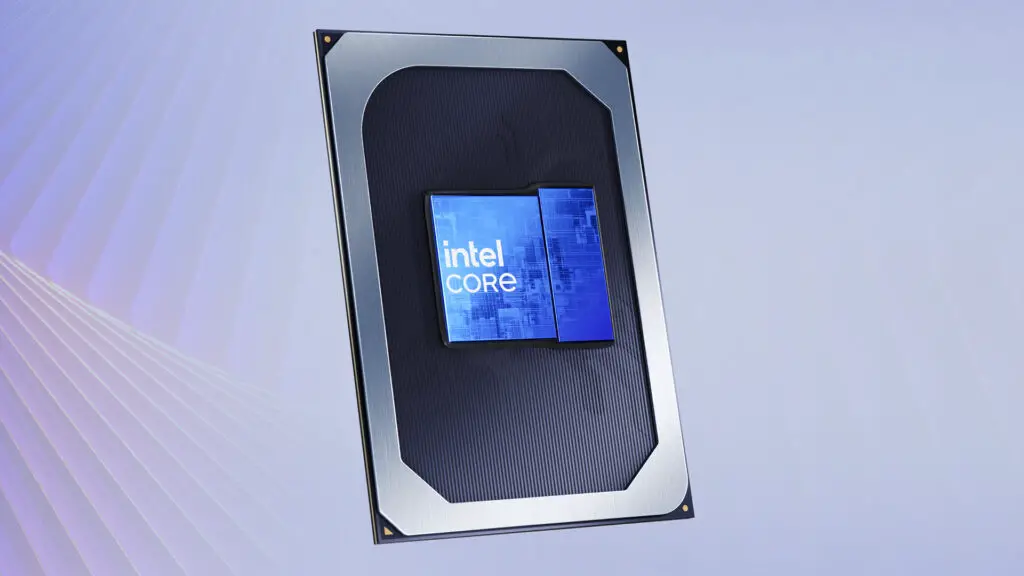
Officially branded as Core Series 3 (distinguished from the “Ultra” moniker), these new processors utilize the same advanced Cougar Cove P-cores and Darkmont E-cores found in Panther Lake (PTL). However, the narrative here is one of optimization rather than raw core counts. By reducing the footprint, Intel is targeting a specific niche in the mobile market where balance is more critical than brute force.
Core Series 3 vs. Core Ultra Series 3: Understanding the Shift
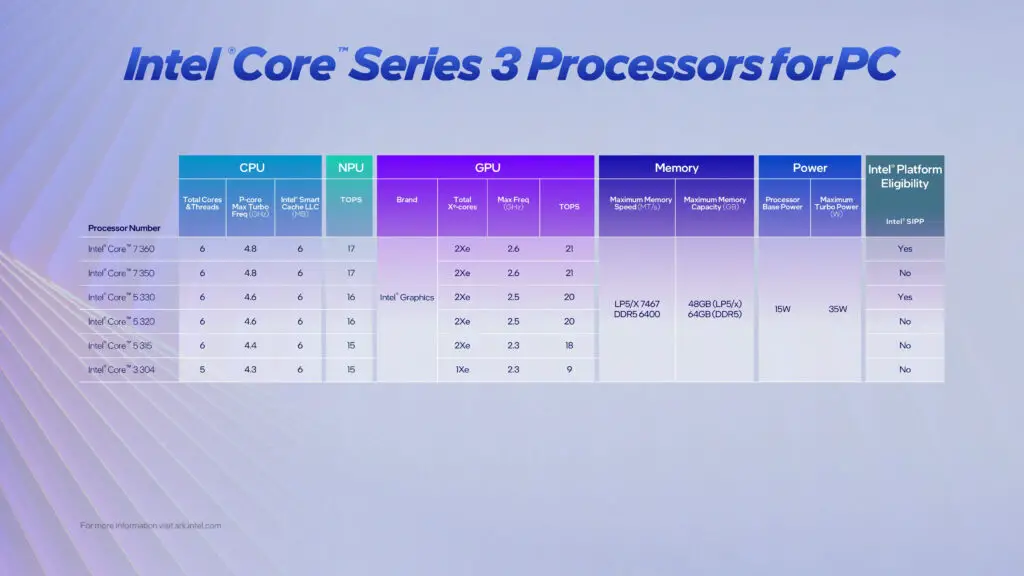
The distinction between the “Ultra” and standard series comes down to the scale of the workload. For instance, the PTL-powered Core Ultra X7 358H is a powerhouse featuring four P-cores, eight E-cores, and four Low Power E-cores, totaling 16 threads. In contrast, Wildcat Lake (WCL) takes a leaner approach. The Core 7 360, the peak of this new lineup, offers two P-cores and four E-cores for a total of six threads.
To help you visualize the hardware differences, our team at Digital Tech Explorer has broken down the key specifications below:
| Feature | Core Series 3 (Wildcat Lake) | Core Ultra Series 3 (Panther Lake) |
|---|---|---|
| Primary P-Cores | Up to 2 | Up to 4 |
| E-Cores | Up to 4 | Up to 8 |
| Max Threads | 6 | 16 |
| GPU Architecture | Intel Graphics (2 Xe Cores) | Intel Arc Graphics (4+ Xe Cores) |
| Target Market | Entry-level / Productivity | High-performance / Gaming |
Integrated Graphics and PCIe Considerations
While we often discuss GPU performance in terms of high-end gaming, Wildcat Lake focuses on the essentials. The integrated GPU is modest, featuring a maximum of two Xe cores. For comparison, that is half the core count found in a Core Ultra 7 270K Plus.
Furthermore, WCL’s controller tile is equipped with only six PCIe lanes. This technical limitation suggests that we won’t see these chips paired with high-end discrete GPUs in gaming laptops. Instead, these processors are designed for sleek, highly portable machines where the focus remains on daily tasks rather than intensive 3D rendering or 3d gaming.
Efficiency, AI, and Real-World Productivity
Intel’s mission with Wildcat Lake is clear: all-day battery life and seamless productivity. According to Intel’s benchmarks, the Core Series 3 offers significant leaps over the previous generation Intel Core 7 150U processors:
- Efficiency: Up to 64% lower processor power consumption.
- Productivity: Up to 2.1x faster creation workflows.
- AI Power: Up to 2.7x increase in AI acceleration for GPU-based tasks.
Market Challenges and the “RAMpocalypse”
Despite the impressive engineering, the road ahead for Wildcat Lake is not without obstacles. The tech landscape is currently grappling with rising costs for DRAM and flash memory. Additionally, the sophisticated multi-tiled manufacturing process Intel uses for these chips makes them more costly to produce than the monolithic designs favored by competitors like AMD and Qualcomm.
At Digital Tech Explorer, we keep a close eye on value. While WCL aims for the budget market, the current “RAMpocalypse” and manufacturing overhead might keep laptop prices higher than expected. It will be particularly interesting to see how these Windows-based portables stack up against the MacBook Neo, which has set a high bar for performance-per-dollar in the $599 range.
Intel has crafted a highly capable “kitten” in Wildcat Lake. However, in a market where every cent counts for business and education sectors, the success of this architecture will depend on whether manufacturers can deliver it at a price point that makes sense for the everyday user. As always, TechTalesLeo will be here to track how these chips perform in the real world once the first retail units hit the shelves.