

Affiliate Disclaimer: Some of the links on Digital Tech Explorer are affiliate links. This means we may earn a commission if you click through and make a purchase, at no additional cost to you. Our recommendations are based on thorough research and personal experience.
In the landscape of modern gaming, IO Interactive is a name synonymous with the art of the silent kill. Since the debut of Hitman: Codename 47 in 2000, the studio has perfected the stealth genre. However, a fascinating chapter in their technical history exists between the release of the first two Hitman titles. In 2003, IO Interactive pivoted from stealth to a high-octane, Soviet-occupied urban landscape with Freedom Fighters.
As a team dedicated to deep-diving into software evolution, we at Digital Tech Explorer find the development of this title particularly compelling. This wasn’t just another PC game; it was a masterclass in squad-based third-person shooter mechanics. Its primary technical achievement was an intricate battle system that made urban skirmishes feel dynamic and reactive, rather than scripted.
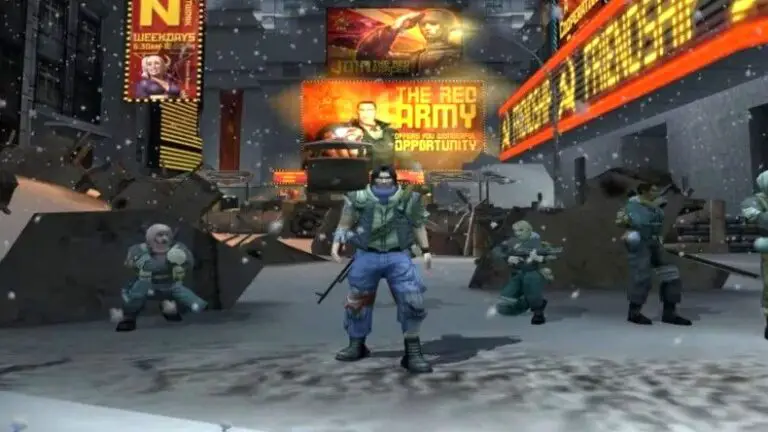
The Challenging Genesis of Freedom Fighters
Despite the eventual acclaim, the road to release was fraught with corporate skepticism. During this era of rapid hardware advancement, Electronic Arts (EA) expressed significant doubt regarding IO’s ability to transition from slow-burn stealth to a fast-paced action title. In an industry retrospective, lead designer Mads Prahm noted the intense pressure the team faced. “For the first year or so, I remember we really struggled,” Prahm admitted.
The technical hurdles were immense. Developing a fast-paced console game required entirely new movement schemes and a more robust AI framework than what the Glacier engine had previously supported. For months, the environment consisted of barren levels while the core gameplay loop remained elusive, putting the project at risk of cancellation.
The “Hocus Pocus” Demo: Turning the Tide
To salvage the project, IO Interactive needed to demonstrate a proof-of-concept that could satisfy executive demands. Prahm orchestrated a “hocus-pocus” demo—a carefully curated montage of music and raw gameplay footage designed to convey the “vibe” of the experience before the systems were fully refined. This creative storytelling approach worked, sparking enough interest for EA to grant a few more months of development.
When the team finally delivered a playable prototype, the result was transformative. The mechanics had clicked. The squad commands were intuitive, and the atmosphere was palpable. EA was so impressed by the progress that they immediately pivoted from skeptics to advocates, launching an international press tour to showcase what was quickly becoming a standout title in the 2003 release calendar.
| Feature | Description |
|---|---|
| Developer | IO Interactive |
| Genre | Squad-Based Third-Person Shooter |
| Core Mechanic | Recruit-and-Command System |
| Engine | Glacier Engine (Modified) |
| Legacy | Cult Classic Status |

The Enduring Legacy of a Non-Hitman Masterpiece
With full publisher support, IO Interactive realized its vision. Freedom Fighters is now frequently cited as the best non-Hitman game in the studio’s portfolio. At Digital Tech Explorer, we believe its success stems from how it bridged the gap between complex tactical shooters and accessible arcade action. Its influence can still be seen in modern squad mechanics and AI design.
For tech enthusiasts and developers, Freedom Fighters serves as a reminder that even the most barren development cycles can lead to industry-defining innovation with the right blend of persistence and creative problem-solving.
About the Author: TechTalesLeo is a dynamic storyteller and tech enthusiast who brings technology to life through captivating narratives and engaging content. With a wealth of experience in digital innovation, TechTalesLeo bridges the gap between complex software engineering and everyday usability. For more insights, visit the author page.
Disclaimer: All content on Digital Tech Explorer is for informational and entertainment purposes only. We do not provide financial or legal advice.