
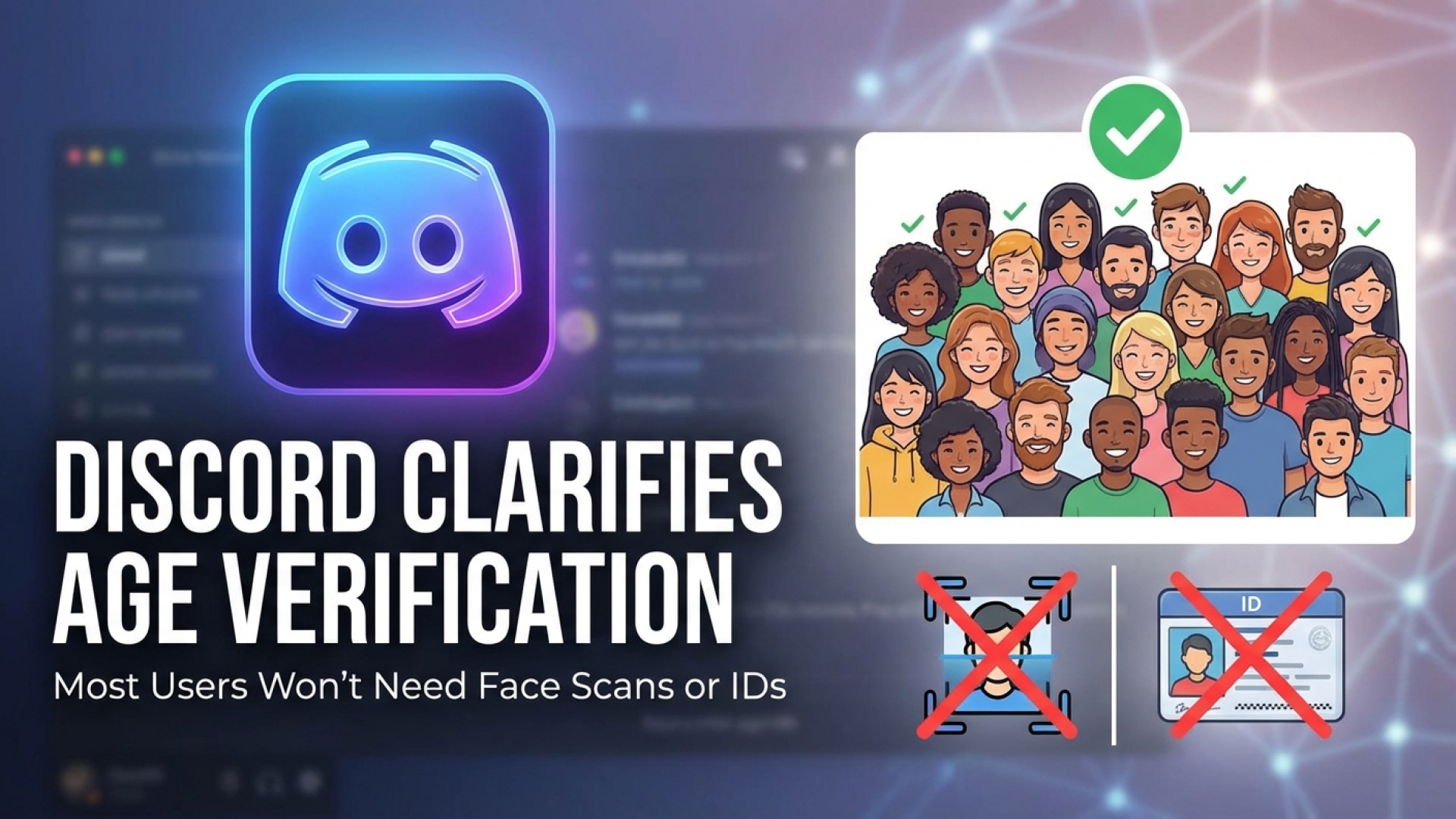
In an era where digital safety and user privacy are at the forefront of every tech conversation, Discord has stepped forward to clarify its evolving stance on age verification. As a storyteller at Digital Tech Explorer, I’ve watched the community react to rumors of mandatory ID uploads with significant concern. However, the platform is now reassuring its global user base that a widespread requirement for face scans or government-issued identification is not, in fact, the standard operating procedure.

The Science Behind Seamless Verification: Age Prediction Technology
According to updates from Discord’s safety team, the platform is steering away from intrusive checks for the average user. Instead of requiring everyone to undergo a face scan, Discord is leaning into age prediction technology. This method utilizes existing data points to determine age groups with high confidence, allowing users to stay within gaming communities and social hubs without friction.
This approach highlights a significant trend in digital innovation: using internal data to build safer experiences for teens while maintaining the “everyday usability” that TechTalesLeo often explores. By predicting age rather than demanding proof, Discord aims to keep the platform accessible while meeting modern safety standards.
When is Explicit Age Verification Required?
While the majority of users will never see a prompt for an ID, there are specific scenarios where Discord must be certain. These triggers usually involve accessing age-restricted content or “Adult” labeled servers. If Discord’s internal systems cannot confidently verify a user is over 18, they will be directed to “trusted partners” to complete a check.
| Verification Type | Method Used | Requirement Trigger |
|---|---|---|
| Standard Verification | Internal data & age prediction algorithms | General access to most servers and features |
| Explicit Verification | ID upload or face scan via third-party partners | Accessing age-restricted content or adult servers |
Discord maintains that they only receive the age result from these partners. Crucially, the specific identity details—such as your legal name or photo—are not linked directly to your Discord account, providing a layer of separation between your real-world identity and your digital persona.
Privacy Concerns and the Shadow of Past Breaches
Despite these safeguards, the tech world hasn’t forgotten the risks associated with data collection. Transparency is a core value here at Digital Tech Explorer, and it’s important to look at the historical context. Skepticism remains high following a security breach where 70,000 age verification ID photos were leaked.
That breach exposed sensitive information including names, emails, and even credit card details. While Discord acted quickly to secure systems and terminate the compromised vendor’s services, the incident serves as a stark reminder of the inherent risks in the hardware and software infrastructure of any major platform. The more data a company or its partners hold, the larger the target becomes for malicious actors.
As we navigate these emerging technology trends, the balance between safety and privacy remains delicate. Discord’s commitment to minimizing ID uploads is a step toward privacy-centric design, but for the savvy tech enthusiast, the lesson remains: always be mindful of the digital footprint you leave behind.
For more insights on the latest in software and digital security, stay tuned to Digital Tech Explorer, where we bridge the gap between complex tech and everyday life.