
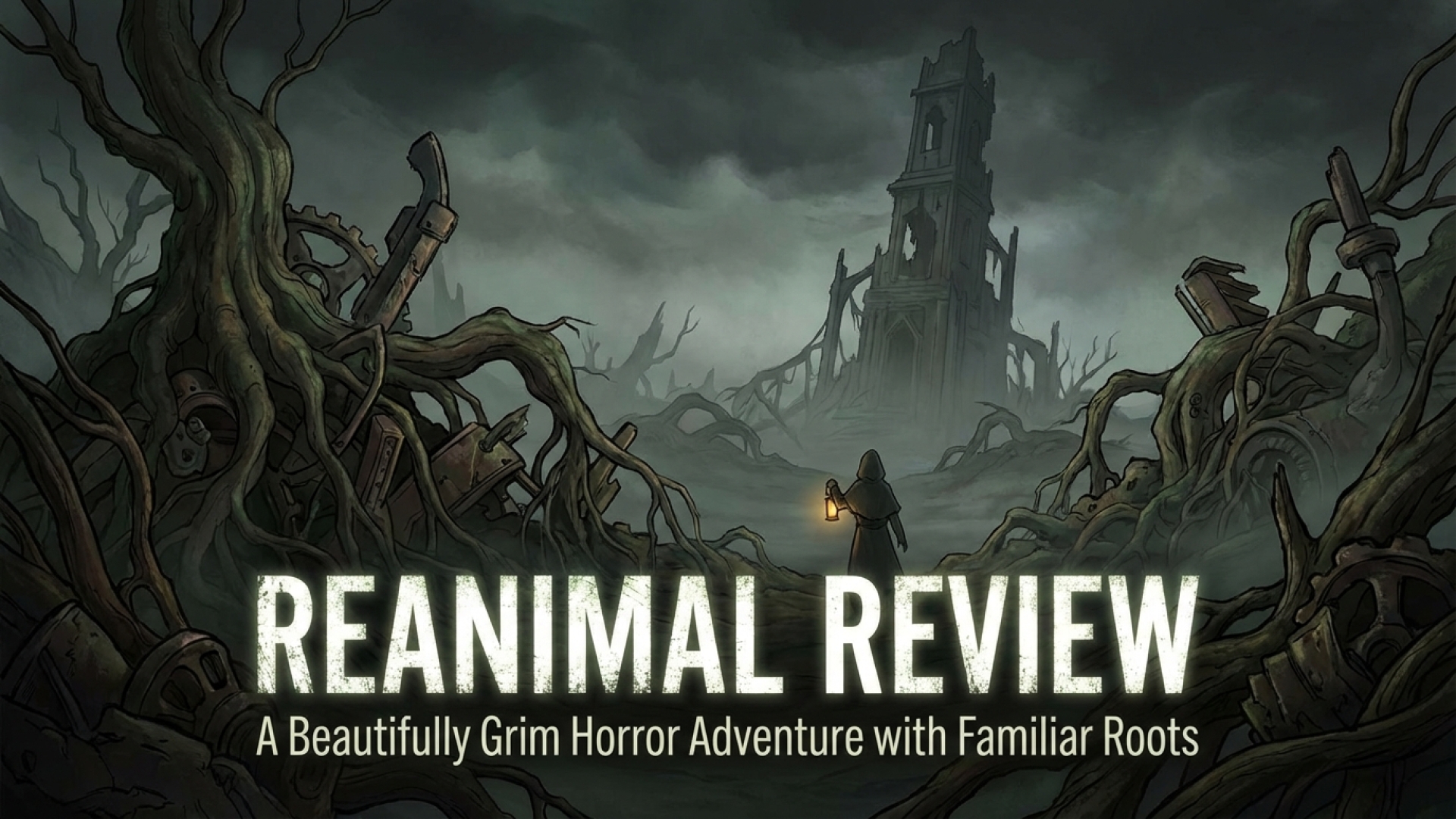
After eight hours spent in the near intolerably dark world of Reanimal, I’m still not entirely certain what lies at its core, or why it bears its title. As the latest offering from Tarsier Studios, this title shares a clear lineage with the Little Nightmares series. However, Reanimal is a far more disturbing and dismal outing, having shed the subtle, blackened whimsy of its predecessors in favor of a raw, atmospheric dread. It is an often stunning gaming experience that understands the power of ambiguity in a genre that frequently over-relies on gore.
Our story follows a brother and sister duo. In single-player mode, I guided the brother, while cooperative play—available both via split-screen and online—allows a second player to step into the role of the sister. They are unnamed, their bond shrouded in a vague, occasionally combative mystery. We meet them on a fog-shrouded ocean, navigating a dinghy toward the towering cliffs of a war-torn island. Their mission is grim: retrieve three friends from the maw of annihilation. The circumstances of their loss remain unexplained, as does the reason this island is stalked by gargantuan, mutated beasts.
Technical Specifications & Overview
To ensure a smooth experience during my deep dive into this nightmare, I tested the game on a mobile workstation. Below are the key details you need to know before embarking on this journey.
| Category | Details |
|---|---|
| What is it? | Filmic survival horror from the creators of Little Nightmares |
| Release Date | February 13, 2026 |
| MSRP | $40 |
| Developer | Tarsier Studios |
| Publisher | THQ Nordic |
| Reviewed On | RTX 3060 (Laptop), Ryzen 5 5600H, 16GB RAM |
| Steam Deck | TBC |
Reanimal adheres to the Tarsier blueprint: creeping through oppressive environments, utilizing stealth to avoid monstrous threats, and surviving high-tension chase sequences against pursuing colossi. A notable shift here is the use of a fixed 3D camera perspective, reminiscent of classic survival horror, rather than the strictly side-on view of their previous works. This perspective allows the developers to emphasize the “doomy” scale of the island, turning the grimy, near-greyscale world into a haunting, painterly landscape.
The visual design is remarkable, blending domestic, military, and pastoral imagery into an apocalyptic tapestry. Much of the game unfolds in panoramic exteriors where the boundaries are defined by impenetrable darkness or bottomless chasms. At times, the game grants a limited sense of exploration via the dinghy, which eventually comes equipped with harpoons for defense.
The Burden of Style
At Digital Tech Explorer, we often look at how hardware and software choices impact the user experience. In Reanimal, Tarsier prioritizes the perfect cinematic shot over mechanical fluidity. This occasionally causes friction during dinghy sections where camera control is restricted, despite feeling necessary. For the most part, the gameplay remains secondary to the atmosphere: puzzles are straightforward, and the stealth and combat feel functional rather than revolutionary.
“The island of Reanimal flows illogically from flooded towns to industrial backwaters, yet every inch feels tainted by unthinkable atrocity.”
The pacing follows a familiar rhythm: slow traversal through narrow corridors, precarious balancing acts, and the occasional mechanical puzzle. While some puzzles require collaboration, they rarely challenge your intellect. Similarly, the introduction of new foes follows a predictable pattern of foreshadowing followed by trial-and-error chases. While I occasionally questioned if this narrative would have been better suited as a film, the cooperative element and the sheer beauty of the “disturbing” imagery kept me engaged until the credits rolled.
A Bleak Evolution
While the gameplay loop remains stagnant, the storytelling has matured. Reanimal avoids the common pitfalls of “lore-dumping” or moral didacticism. Instead, it offers a bleakly impressionistic view of a world dipped in terminal madness. When the protagonists speak, their voices are deadpan and expressionless, reflecting an exhaustion born from surviving a world inured to chaos.
At one point, a character asks, “Do you know why we’re here?” The response—”No idea”—perfectly encapsulates the experience. Reanimal may not offer a complex mechanical evolution, but as a piece of digital storytelling, it is a superior, albeit significantly bleaker, successor to Tarsier’s previous work. For fans of PC games that prioritize atmosphere and artistic direction, this is a journey worth taking.
Our Verdict
Rating: 3 out of 5 stars (Score: 74)
Reanimal doesn’t meaningfully develop Tarsier’s approach to gameplay compared to the Little Nightmares series, but it remains a grim sight to behold and a worthwhile horror adventure for those seeking atmospheric dread.
About the Author: TechTalesLeo is a dynamic storyteller and tech enthusiast who brings technology to life through captivating narratives. With a background in digital media, they focus on bridging the gap between complex tech and everyday usability.
Disclaimer: All content on Digital Tech Explorer is for informational and entertainment purposes only. We do not provide financial or legal advice.
Affiliate Disclaimer: Some of the links on Digital Tech Explorer are affiliate links. This means we may earn a commission if you click through and make a purchase, at no additional cost to you. Our recommendations are based on thorough research and personal experience.