
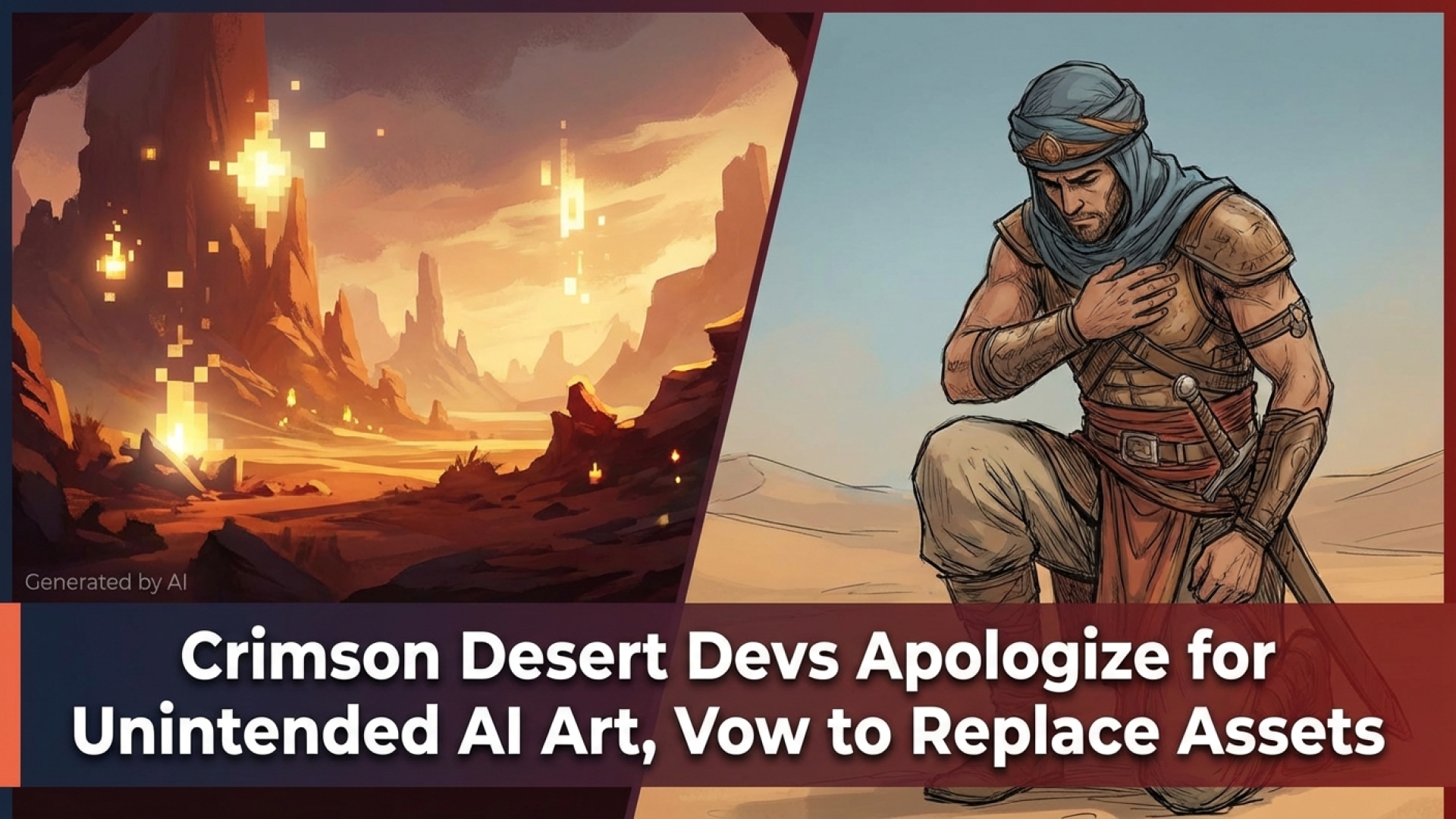
At Digital Tech Explorer, we closely monitor how emerging technologies reshape the creative landscape. Recently, the integration of artificial intelligence into game development has moved from a quiet experiment to a loud industry debate. The latest studio to find itself under the microscope is Pearl Abyss, the developer behind the highly anticipated Crimson Desert. Following keen-eyed reports from the community regarding suspected AI-generated art, the studio has stepped forward to clarify its process and commitment to quality.
Pearl Abyss Responds to AI Art Accusations in Crimson Desert
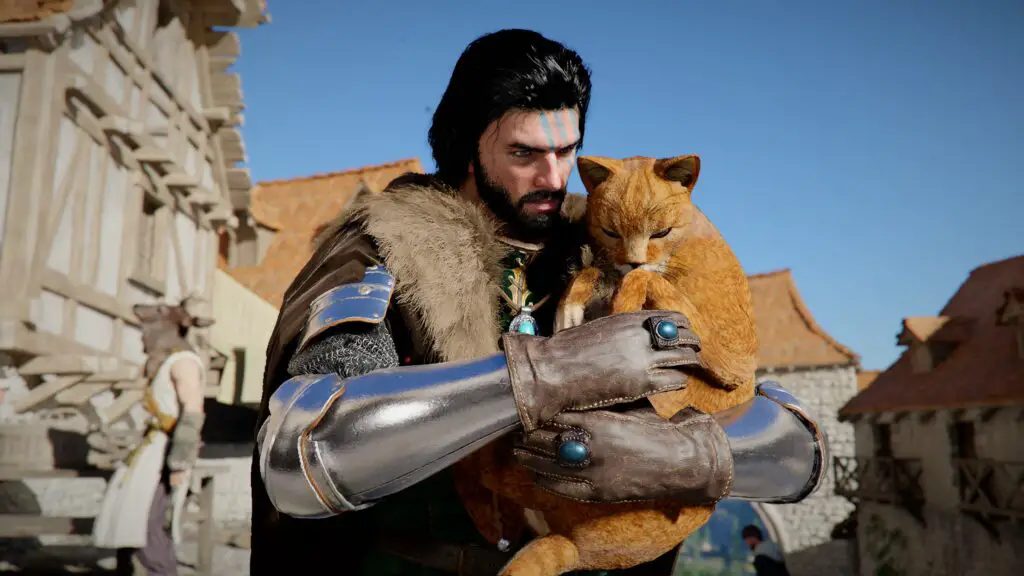
In a formal statement, Pearl Abyss confirmed that AI generative tools were indeed utilized for specific 2D visual props during the early phases of Crimson Desert’s development. According to the studio, these experimental assets were intended as temporary placeholders to help the team rapidly establish the game’s atmospheric tone. While the goal was to eventually replace these with handcrafted art, several of these assets remained visible in recent builds, sparking a conversation about transparency in the PC gaming community.
Industry Trends and the Call for Transparency
This situation is becoming a recurring narrative in the modern gaming era. As TechTalesLeo, I’ve observed that the line between “efficiency tool” and “final product” is increasingly blurred. Similar discussions have recently surrounded other high-profile titles, such as the upcoming Anno entry and Clair Obscur: Expedition 33. In both instances, players identified assets that lacked the characteristic “human touch,” leading developers to issue clarifications regarding their use of early-stage AI concepts.
The industry’s heavy hitters are also navigating these waters. Larian Studios, the team behind the massive success of Baldur’s Gate 3, initially explored generative AI for concept work but eventually pivoted away, committing to human-led final assets. This shift highlights a growing demand from players for transparency and a clear distinction between AI-assisted workflows and the final creative output.
| Game Title | AI Implementation Status | Developer Response |
|---|---|---|
| Crimson Desert | Early Production / 2D Props | Audit in progress; replacing with human art. |
| Anno (Latest) | Placeholder Assets | Clarified as early-stage conceptual tools. |
| Expedition 33 | Early Concepts | Addressed community concerns regarding visual fidelity. |
| Baldur’s Gate 3 | Internal Exploration Only | Publicly committed to human-created final assets. |
Pearl Abyss’s Commitment to Rectification
Pearl Abyss has expressed sincere apologies for the lack of transparency regarding their development pipeline. While the use of AI tools was framed as a production shortcut for early builds, the studio admitted that failing to disclose this to their audience was an oversight. “We should have clearly disclosed our use of AI,” the statement noted, acknowledging the high standards expected by their fans.
To remedy this, the Crimson Desert team is currently performing a comprehensive audit of all in-game assets. The studio has pledged to replace any remaining AI-generated art with content created by their internal art teams via upcoming patches. At Digital Tech Explorer, we believe this commitment to human creativity is vital for maintaining the trust and immersion that high-fidelity gaming requires.
Disclaimer: All content on Digital Tech Explorer is for informational and entertainment purposes only. We do not provide financial or legal advice. Some of the links on Digital Tech Explorer are affiliate links. This means we may earn a commission if you click through and make a purchase, at no additional cost to you. Our recommendations are based on thorough research and personal experience. For more insights, visit our author page.