
At Digital Tech Explorer, we are constantly fascinated by the intersection of software limits and human ingenuity. There is nothing quite like the “tease” of a developer dangling a massive raid boss in front of the community a week before it officially unlocks. For dedicated players of the gaming world, an unreachable boss isn’t a “keep out” sign—it’s a challenge to find a way in, even if it goes against the developer’s original script.
This week, a group of players nearly pulled off the impossible by attempting to slay a god-tier entity before its scheduled debut. However, Blizzard had a hidden trick up its sleeve to ensure the narrative stayed on track.
The Temptation of L’ura
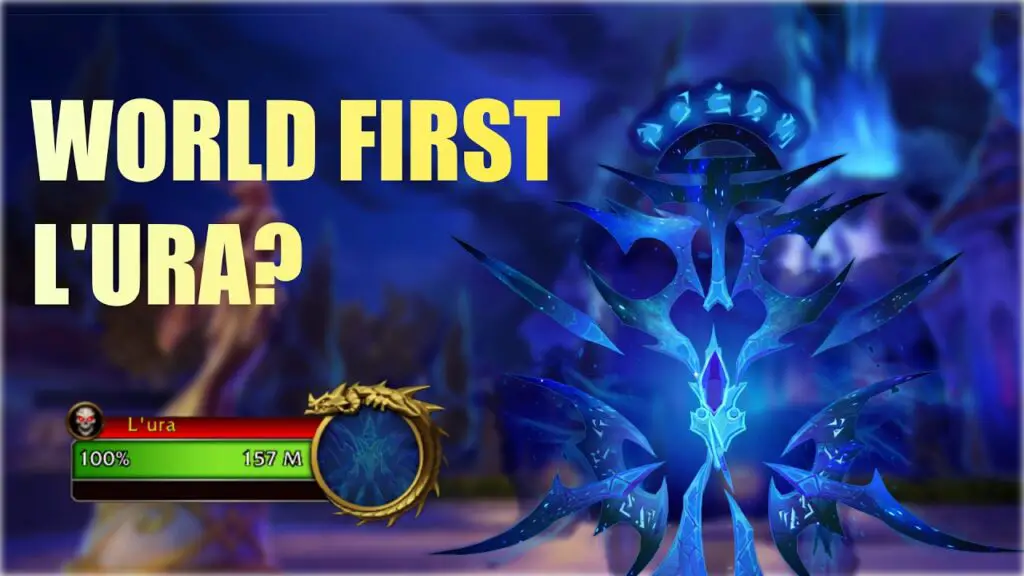
The World of Warcraft: Midnight’s March of Quel’Danas raid is one of the most anticipated 2024 releases in the MMO space. While the raid isn’t officially open, the boss L’ura—a massive, ethereal cluster of energy—is already physically present in the game world. Boasting a health bar of 149 million, she sat as a glowing invitation for the legendary YouTuber Rextroy and his team of digital explorers to attempt an early takedown.
Navigating the Deadly Domain
The first obstacle wasn’t the boss herself, but the environment. The area surrounding the void-corrupted Sunwell is designed to be lethal, dealing a massive 40% health reduction per second to any interloper. Under normal circumstances, survival is limited to a few heartbeats.
Rextroy’s team discovered a clever mechanical loophole: Resurrection Sickness. By dying outside the chamber and accepting the debuff—which reduces damage output by 75%—they found that the environmental damage was scaled down proportionally. This allowed the team to survive the “lethal” zone for several minutes, providing the window they needed to execute their strategy.
The “Sacrificial Rat” Strategy
Because L’ura possesses a passive self-healing mechanic, standard attacks from hunter pets weren’t enough. The team needed a massive, singular burst of damage. They turned to an ingenious, albeit bizarre, tactic: exploiting the way high-level characters interact with low-level NPCs. By using a bugged monk ability to transfer massive damage from a “sacrificial rat” to the boss, they aimed to bypass traditional combat phases.
| Strategy Component | Mechanical Purpose |
|---|---|
| Resurrection Sickness | Mitigates environmental damage for zone entry. |
| Low-Level Rats | Used as conduits for “Legacy Damage” scaling. |
| Monk Exploit | Transfers 100M+ damage from the rat to the boss. |
| Result | Boss health reduced to 1 HP (Hard-capped). |
The first attempt was a staggering success, instantly dropping L’ura to 50% health. Hope surged as the team prepared a second and third rat to finish the job. However, as the final blow landed, the health bar simply stopped moving.
Blizzard’s “Unkillable” Safeguard
As TechTalesLeo, I’ve seen many developers use creative ways to stop players, but Blizzard’s solution here was a hard-coded “No.” Despite the combat log confirming damage that exceeded L’ura’s remaining health, the boss was programmed to be unkillable before the raid’s official launch. She remained at a sliver of health, indifferent to the millions of damage points being funneled into her.
“Blizzard… that’s so boring,” Rextroy noted, though the experiment proved that without the developer-imposed “immortality,” the boss would have fallen days before her scheduled debut.
Pushing the Boundaries of PC Gaming
While they didn’t get the loot or the official “World First,” the team didn’t let the knowledge go to waste. Rextroy later applied these mechanics to PC games meta-testing, successfully one-shotting Mythic+ bosses and surprising opponents in PvP.

This story serves as a perfect example of why we love tech and software here at Digital Tech Explorer. It’s the constant tug-of-war between developer constraints and player creativity. Rextroy and his team may have been stopped by a line of code, but they remain the only players to have “defeated” L’ura using nothing but a few monks and a pack of rats.
For more deep dives into the latest in hardware, software exploits, and digital storytelling, stay tuned to our latest updates.