
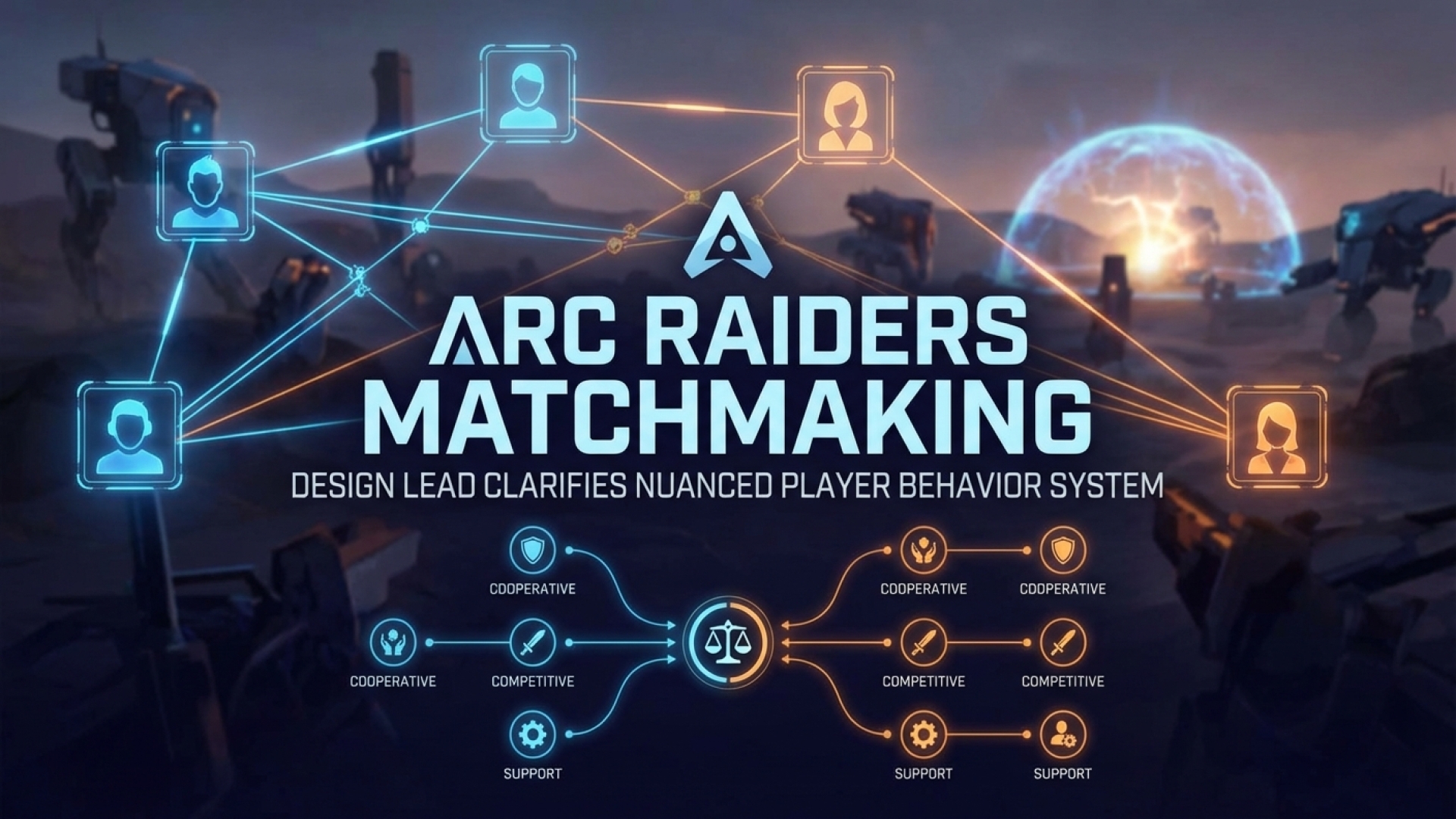
In the evolving landscape of extraction shooters, few titles have sparked as much debate as Arc Raiders. At the heart of the conversation is a sophisticated system designed to curate player experiences by sorting raiders into matches based on their behavior. While some players live for the thrill of hunting others and hijacking Bobcats, others prefer the camaraderie of battling AI “clankers” and forming fragile alliances. Balancing these clashing playstyles is a monumental task for any developer, and Embark Studios is taking a data-driven approach to solve it.
Shortly after the game’s debut, the community noticed a distinct shift in match “vibes.” Some lobbies felt like cooperative havens, while others were total warzones. Art director Robert Sammelin initially confirmed that player behavior serves as a key criterion for matchmaking. This was later expanded upon by Embark CEO Patrick Söderlund, who noted the system analyzes how prone a player is to PvP versus PvE. This revelation led to the community-coined term Aggression-Based Matchmaking (ABMM), a concept that has since dominated forums and discord servers alike.
Virgil Watkins Clarifies the “Aggression” Algorithm
As a storyteller focused on the intersection of code and community, I find the nuances of these systems fascinating. Recently, Arc Raiders design director Virgil Watkins provided much-needed clarity on how this “aggression” is actually measured. Watkins pointed out that while the community uses the term ABMM, Embark views the system as far more fluid. “It’s not nearly as binary as people think,” Watkins explained, noting that the game doesn’t strictly categorize lobbies as purely “friendly” or “aggressive,” but rather mixes player types to maintain the genre’s signature tension.
“I think people do feel as though it’s incredibly binary, and even shooting one raider, one time, just automatically puts you into an aggressive lobby. But that’s not at all how it works.”
Virgil Watkins, Design Director
The system is designed to track long-term habits rather than isolated incidents. This is a crucial distinction for players who fear that a single self-defense kill will ruin their reputation. The algorithm looks at a “series of rounds” to determine a player’s profile. Watkins also debunked the myth that post-match surveys influence matchmaking; those are purely for sentiment analysis and developer feedback.
Understanding the Matchmaking Metrics
| Player Action | System Impact | Matchmaking Influence |
|---|---|---|
| Isolated PvP Engagement | Low | Minimal change to player profile. |
| Consistent Raider Hunting | High | Increased likelihood of aggressive lobbies. |
| Cooperative AI Combat | Moderate | Trends toward “Care Bear” or PvE-centric lobbies. |
| Post-Match Surveys | None | Used only for development feedback. |
The Challenge of Balancing Tension and Community
While PC games in the extraction genre usually lean heavily into “kill-on-sight” mechanics, Embark was pleasantly surprised by the emergence of “safer” lobbies. Watkins admitted that the developers are now leaning into providing more opportunities for friendly and fun interactions, acknowledging that many players enjoy the social aspect of the game just as much as the combat.
However, the developer remains committed to the core DNA of the genre. Arc Raiders requires the inherent risk of player encounters to maintain its stakes. The challenge for the software engineers at Embark is maintaining a balance where even in the most cooperative-leaning matches, the possibility of betrayal remains. This emergent behavior is “down to human motivation,” making every expedition a unique social experiment.

Conclusion: Shaping Your Raider Legacy
The takeaway for the Digital Tech Explorer community is clear: your agency as a player matters. Engaging in occasional combat won’t exile you to a “PvP hell.” Instead, the system respects the natural ebb and flow of playstyles, focusing on persistent behavior rather than heat-of-the-moment decisions. As Arc Raiders moves through its 2024 release cycle, we will continue to monitor how these complex algorithms shape the future of multiplayer gaming.
For more deep dives into the mechanics of your favorite titles, stay tuned to our gaming section. You can also read the full interview with Virgil Watkins for additional developer insights.