
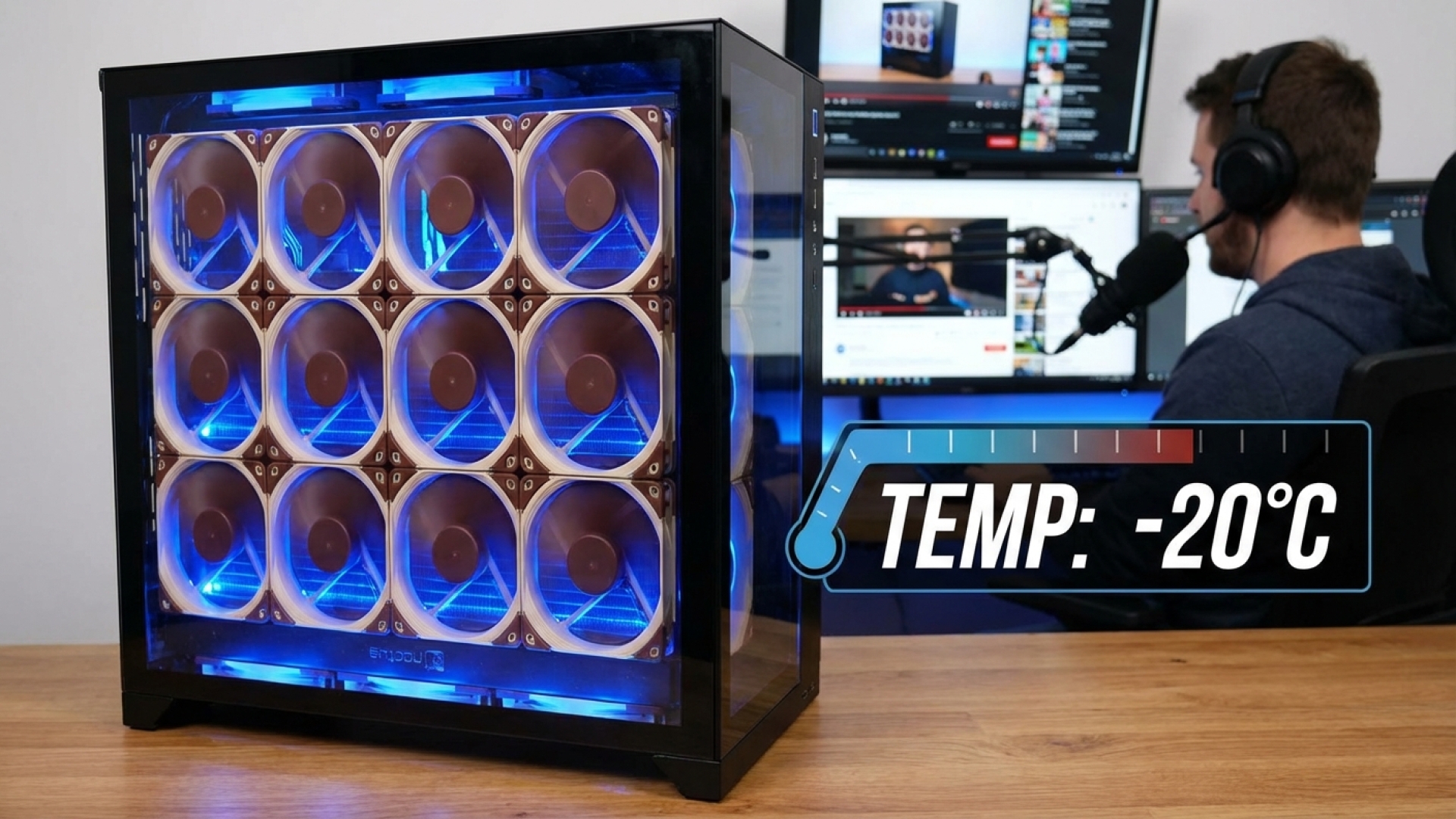
At Digital Tech Explorer, we are constantly tracking the frontiers of digital innovation and hardware modding. Recently, a project surfaced that perfectly captures the spirit of high-level tinkering. Last month, the hardware community was introduced to the “Fanhattan Project”—a curious experiment where YouTuber Major Hardware (James) replaced a single PC fan with a cluster of miniature ones. Now, James has returned with a significantly more ambitious follow-up that challenges everything we know about airflow: the Superdome.
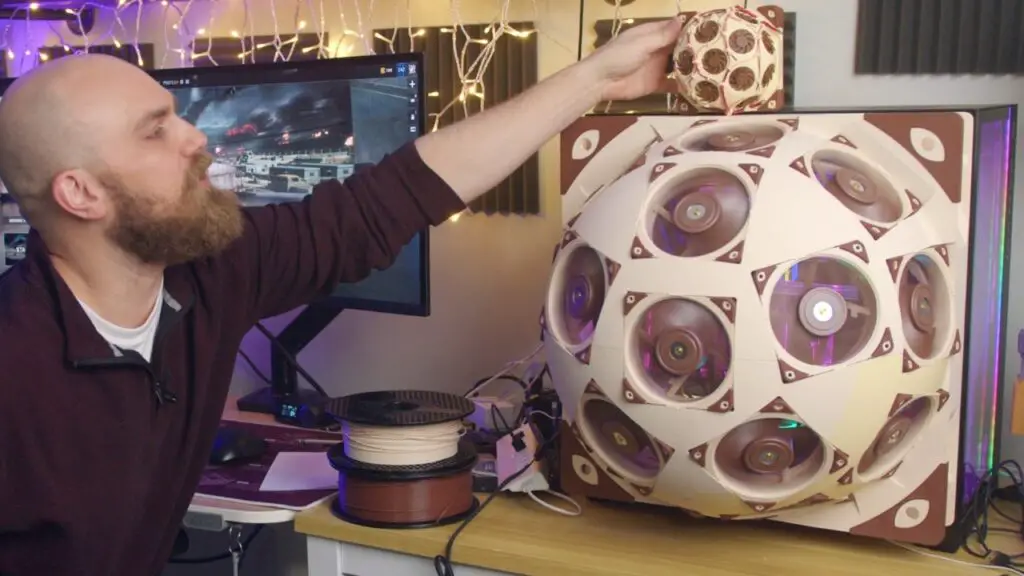
The Superdome is a custom-engineered side panel designed specifically for the Lian Li O11 Dynamic XL case. It houses a staggering 15 Noctua 120mm fans. While the initial concept seemed like an expensive “meme” build, the results have proven to be a masterclass in brute-force cooling for high-performance gaming rigs.
A Partnership with Noctua
Faced with a potential $500 bill just for the fans, James reached out to cooling giant Noctua. The company, known for its premium engineering, agreed to support the project. They provided 15 fans and the 3D printing materials needed to match Noctua’s iconic aesthetic. The resulting 3D-printed housing creates a massive dome that protrudes from the side of the chassis, forcing a massive volume of air directly onto the internal components.
“It started as a meme, but I think I might actually leave this on my PC because of how well the thermals were.” — Major Hardware
Performance Analysis: Brute Force Results
Despite the complex web of Y-connectors required for power, the Superdome performs remarkably well. Our analysis of the build shows that the setup is surprisingly quiet, often running more silently than a standard desktop configuration under load. However, the real story lies in the thermal data.
The following table illustrates the dramatic shift in performance when moving from a standard configuration to this 15-fan powerhouse:
| Metric | Standard Configuration | Superdome Setup |
|---|---|---|
| Power Draw | 6.1 Watts (Single Fan) | 27.6 Watts |
| Battlefield Gaming Temps | 86.3 °C | 66.9 °C |
| Temperature Reduction | N/A | -19.4 °C |
A nearly 20°C drop in temperatures is particularly impressive. By flooding the chassis with fresh air through the side panel, the Superdome effectively eliminates “heat soak”—a common issue during intense PC gaming sessions where internal ambient heat gradually raises component temperatures.
Engineering for Enthusiasts
For those interested in digital innovation and DIY hardware, James has released the blueprints for the Superdome via Thingiverse. To replicate this, you will need a large-format 3D printer, a compatible Lian Li case, and a significant supply of Noctua fans.
While the lack of integrated dust shielding remains a long-term maintenance concern, the thermal efficiency makes it a compelling solution for enthusiasts looking to maximize their GPU and CPU longevity. At Digital Tech Explorer, we see this as more than just a mod; it is a testament to how creative engineering can solve traditional hardware limitations.
For more stories on emerging tech trends and deep-dives into the latest hardware, stay tuned to TechTalesLeo and the rest of our team of experts.