
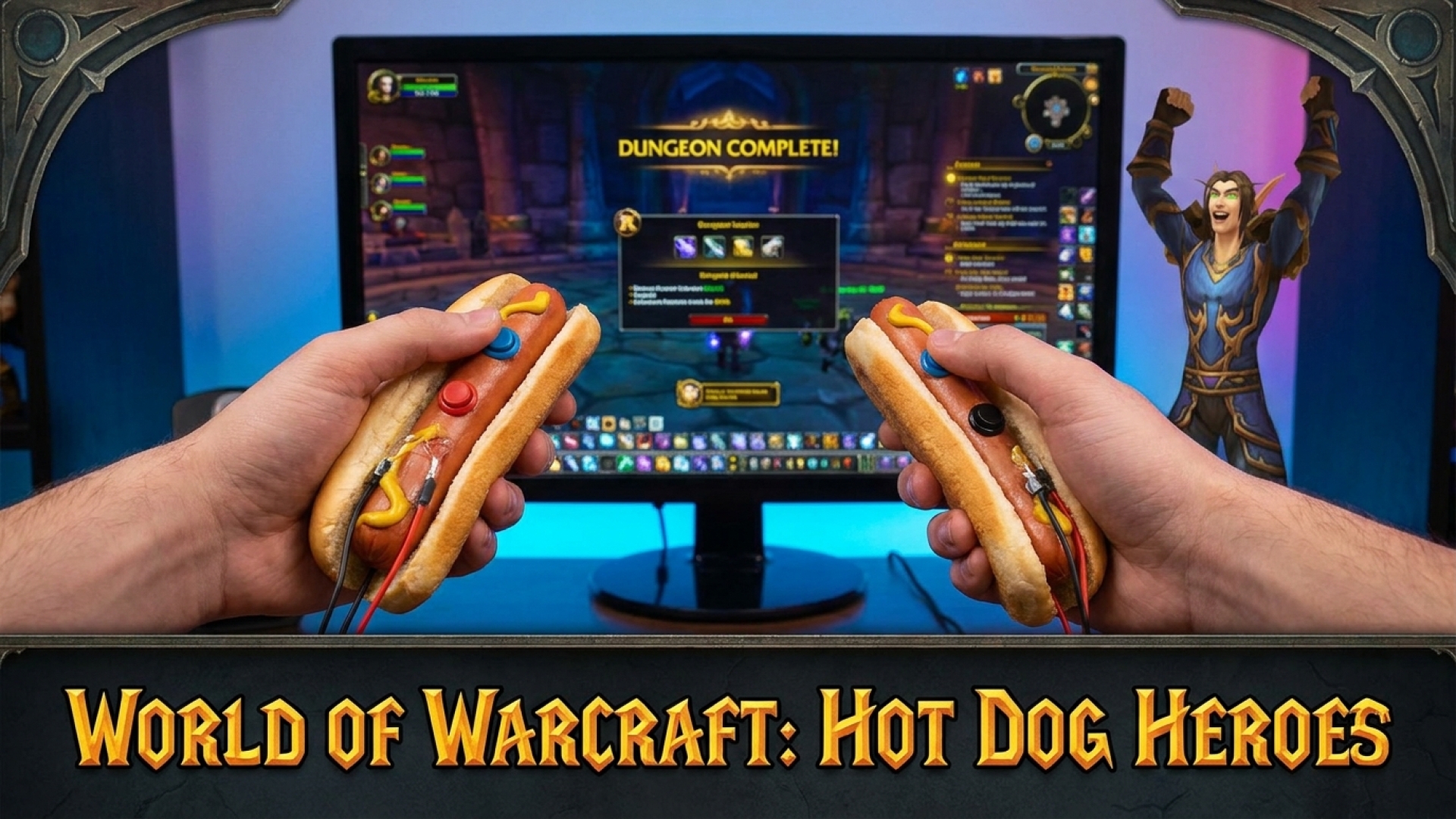
In the evolving landscape of digital innovation, gamers are constantly pushing the boundaries of what is possible with gaming hardware. From high-end VR rigs to custom-built mechanical keyboards, the community thrives on optimization. However, sometimes the most intriguing stories come from those who choose the most unconventional paths. At Digital Tech Explorer, we’ve seen players reach the level cap in World of Warcraft using dance mats, but YouTuber Addison2k has taken “organic input” to a whole new level by conquering a Mythic Keystone run using hot dog controllers.
The Engineering Behind the “Meat-Based” Interface
As a storyteller focused on the intersection of tech and creativity, I find the construction of these peripherals fascinating. These aren’t just snacks plugged into a PC; they are a result of specialized 3D-printed constructs. Addison2k designed custom housings that hold four hot dogs each, wired meticulously to translate physical touch into digital commands.
The setup functions through capacitive touch—similar to how a smartphone screen detects your finger. One controller is mapped for character movement, while the second manages the combat abilities required for a high-level World of Warcraft dungeon. It is a brilliant, albeit greasy, example of how hardware hacking can turn everyday objects into functional input devices.
| Feature | Standard Gaming Setup | The “Hot Dog” Controller |
|---|---|---|
| Input Method | Mechanical Switches / Optical Sensors | Capacitive Touch via 3D-Printed Meat Housing |
| Haptic Feedback | Vibration Motors | Literal Texture of Processed Meat |
| Durability | High (Millions of Clicks) | Low (Requires Refrigeration) |
| Customization | RGB Lighting & Macro Keys | Condiment Selection (Optional) |

Navigating Azeroth: The Technical Challenges
In the world of PC games, precision is everything—especially in a Mythic Keystone run where timing can mean the difference between victory and a wipe. Addison2k chose a Retribution Paladin for the experiment, a class known for a combat rotation that is relatively forgiving. However, the lack of a traditional mouse created a significant technical hurdle: camera control.
Without a way to pan the view easily, Addison2k often found his character “backwards-walking” into danger. His teammates, while supportive, couldn’t help but joke about the absurdity of the situation. Beyond the orientation issues, a specific technical glitch occurred when a target became stuck on a defeated mob. Because the hot dog array didn’t have a “Tab” key mapped, he had to briefly touch a traditional keyboard to reset his targeting—a reminder that even the most creative digital innovation sometimes needs a fallback to classic hardware.

Victory and Final Thoughts
Despite the “glizzy-based” interface and the comedic struggles of dungeon navigation, the team successfully cleared the run and defeated every boss. It stands as a testament to the fact that with enough coding knowledge and 3D printing ingenuity, almost anything can be turned into a controller.
The aftermath of the experiment was perhaps the most relatable part of the story for any tech enthusiast who has spent hours on a project: the physical toll. As Addison2k noted, the smell of hot dogs lingered on his hands for hours. While we at Digital Tech Explorer usually recommend a high-quality mechanical keyboard for gaming, we can’t help but admire the sheer dedication to the craft of tech storytelling shown here. This run proves that in the world of modern technology, the only limit is your imagination—and perhaps your sense of smell.
For more in-depth looks at unique hardware and the latest in digital innovation, stay tuned to Digital Tech Explorer.