
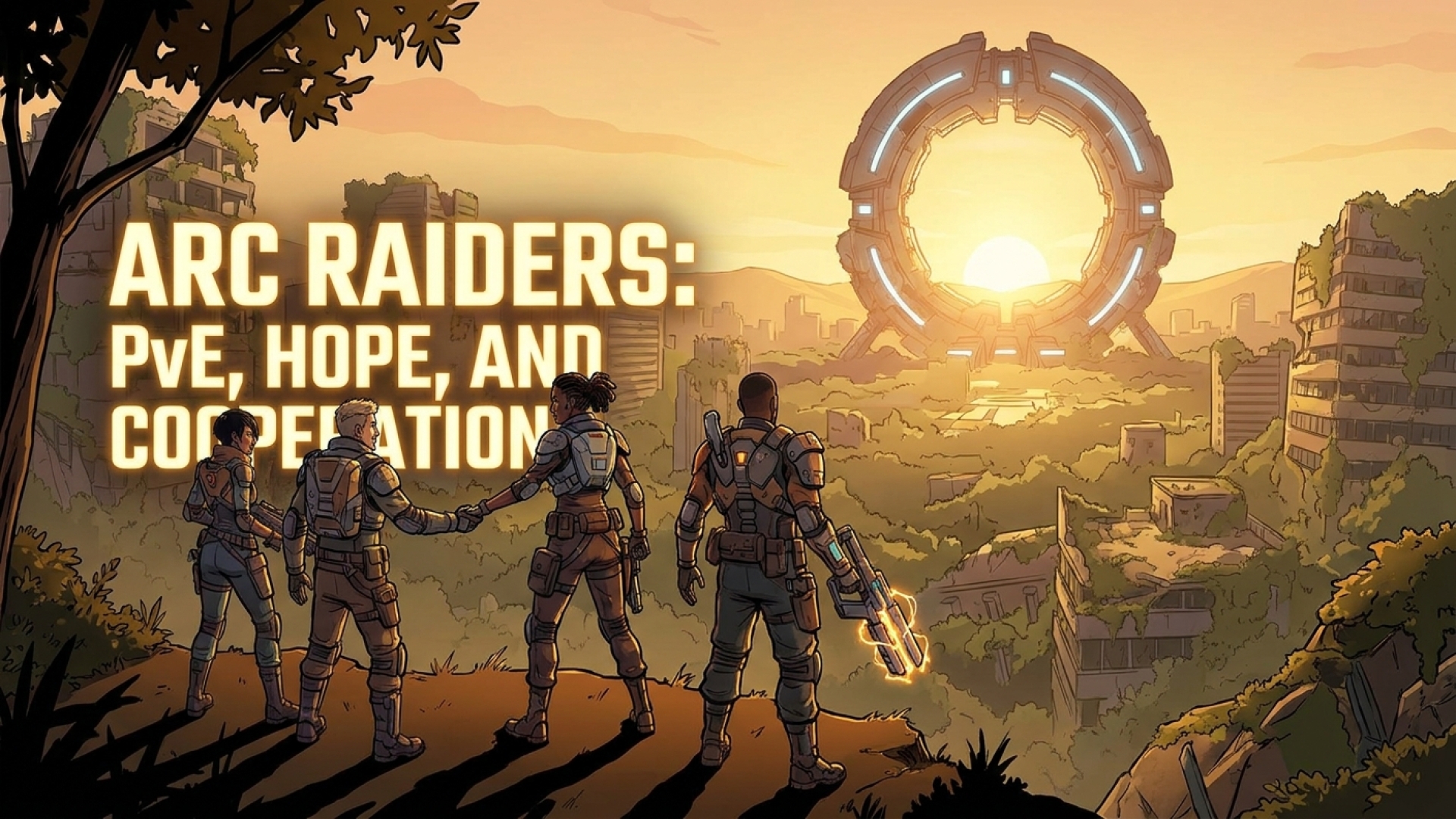
In the evolving landscape of digital innovation, the debate between Player vs. Environment (PvE) and Player vs. Player (PvP) continues to shape how communities form within virtual worlds. At Digital Tech Explorer, we closely monitor these social dynamics, especially when a title like Arc Raiders challenges conventional wisdom. While some gamers live for the high-stakes adrenaline of competitive combat, others find their purpose in collaborative survival. What makes Embark Studios’ latest action shooter so compelling is how it bridges this gap, creating a rare ecosystem where cooperation thrives even amidst conflict.
Decoding the Player Split: PvE vs. PvP Dynamics

From a software engineering and game design perspective, predicting player behavior is notoriously difficult. Data shared by Embark Studios reveals a surprisingly even distribution of playstyles. Rather than a community polarized by conflict, the metrics show a nuanced ecosystem of engagement:
| Player Preference | Percentage of Player Base | Primary Focus |
|---|---|---|
| Co-op Enthusiasts (PvE) | 30% | Environment challenges and cooperative raids. |
| Competitive Combatants (PvP) | 30% | Direct engagement and player skill matchups. |
| Hybrid Explorers | 40% | A balanced mix of both cooperative and competitive modes. |
This distribution caught the development team off guard. Executive producer Aleksander Grøndal admitted that Embark Studios did not fully anticipate such a robust, PvE-focused community to flourish within an action shooter. This passion for cooperative play suggests that modern audiences are increasingly looking for shared triumphs alongside competitive challenges.
The Architecture of Cooperation
At Digital Tech Explorer, we believe the best technology empowers human connection. Arc Raiders embodies this through its integrated communication systems. Statistics indicate that over 95% of players actively utilize the in-game proximity chat. In a genre often marred by toxic interactions, this high adoption rate signals a shift toward meaningful teamwork.
The introduction of the “Matriarch”—a formidable, world-altering threat—has become a case study in emergent gameplay. Grøndal noted that when the Matriarch appears, combat between rival players often ceases instantly. Within seconds, former enemies turn their weapons toward the common threat. This spontaneous alliance mirrors the “hope-core” philosophy the developers intended, contrasting sharply with the early, often brutal “kill-on-sight” culture seen in games like DayZ.
World-Building: Instilling Hope in the Digital Ruin
As a storyteller in the tech space, I find the visual narrative of Arc Raiders particularly striking. The game world isn’t a bleak, grey wasteland. Instead, the developers chose to portray a world in the midst of a vibrant renewal. Grøndal explains that despite the mechanical dominance of the Arcs, “nature has come back from an ecological collapse. The animals are back and the world is thriving.”
This intentional design choice is more than aesthetic; it’s functional. By creating an environment that feels alive and worth saving, the game subconsciously encourages collaboration and resilience. It moves the needle from “survival of the fittest” to “survival of the collective.”
Final Thoughts
Arc Raiders is proving that the gaming landscape has room for titles that balance fierce competition with genuine camaraderie. For both tech enthusiasts and seasoned PC games veterans, the game offers a refreshing look at how intentional world-building can influence social behavior. Whether you are navigating the complexities of the surface or optimizing your raiding scripts, Arc Raiders provides a hopeful glimpse into the future of cooperative shooters.
Master the Surface: Related Arc Raiders Content
- Arc Raiders Roadmap: Stay ahead of the latest updates and seasonal releases.
- Essential Raider Skills: A software engineer’s guide to maximizing your build.
- Weapons Tier List: Top-tier hardware for your next excursion.
- Expeditions Guide: How to successfully retire your Raider with honors.
- Weather Monitor Project: Using tech to beat the environmental hazards.
- Trophy Display Project: Showcasing your digital achievements.
For more insights into hardware optimization and the latest in AI-driven game design, stay tuned to Digital Tech Explorer.