

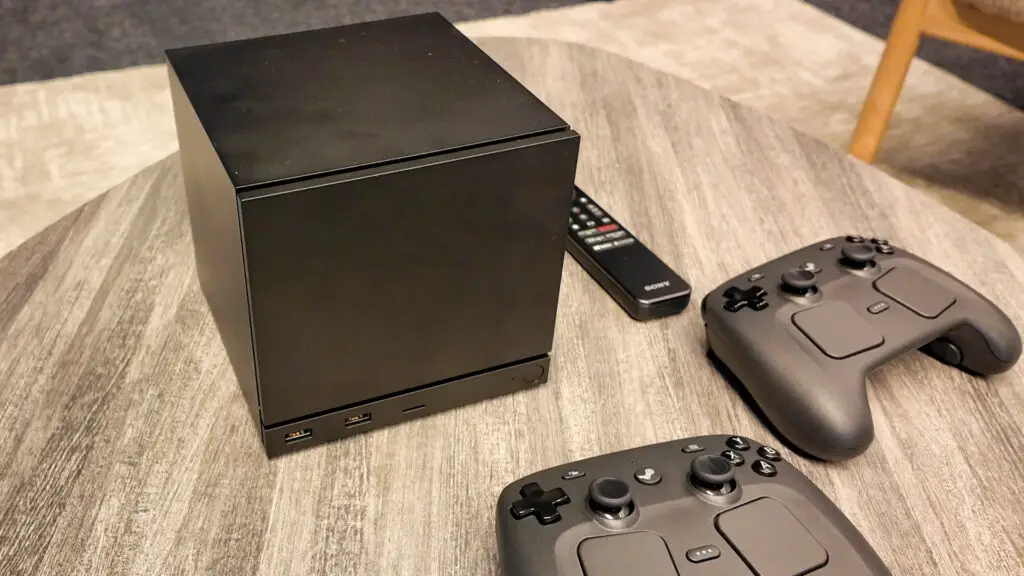
Valve has finally lifted the veil on its highly anticipated hardware, offering fresh insights into the Steam Frame and the next-generation Steam Machine. Here at Digital Tech Explorer, we’ve been tracking these developments closely, and it’s clear Valve is aiming to redefine living room gaming. The company also addressed the notable delay in revealing official pricing and a firm launch date, citing the ongoing “RAMpocalypse” and global storage shortages as primary hurdles.
Steam Machine Performance Targets
In official internal testing, Valve reports that the vast majority of Steam titles are expected to perform exceptionally well on the new platform. The primary engineering target is to achieve a consistent 4K at 60 fps performance by utilizing FSR (FidelityFX Super Resolution).
Valve acknowledges that while many games will hit these benchmarks natively, certain high-fidelity titles may require more aggressive upscaling. For these demanding scenarios, the system is designed to leverage VRR (Variable Refresh Rate) to maintain smoothness, even when locked to a 1080p internal resolution to ensure visual clarity on 4K displays.
Our analysis at Digital Tech Explorer highlights several key optimizations currently in the pipeline. Valve’s development team is actively working on the implementation of HDMI VRR, investigating next-gen upscaling technologies, and refining ray tracing performance at the driver level. This multi-pronged strategy is essential for maintaining a premium gaming experience across a wide variety of hardware configurations.
Hardware Specifications & Features
For enthusiasts and developers who value hardware flexibility, Valve is staying true to its open philosophy. Below is a breakdown of the core features confirmed for the Steam Machine:
| Feature Category | Specifications & Capabilities |
|---|---|
| Performance Target | 4K Resolution at 60 FPS (via FSR) |
| Visual Technologies | HDMI VRR & Ray Tracing Optimization |
| Upgradability | User-replaceable SSD and Memory (RAM) |
| Customization | Third-party faceplates & official CAD files |
| Expected Launch | First Half of 2026 |
Upgradability and Customization Options
One of the most exciting aspects for the DIY community is Valve’s confirmation that both the SSD and memory will be user-upgradable. This approach provides significant future-proofing, allowing users to scale their performance as storage and RAM needs evolve over time.
Furthermore, Valve is embracing a high degree of aesthetic customization. The company plans to release official CAD files and detailed specifications, enabling both individual users and third-party manufacturers to design and produce custom faceplates. This level of transparency aligns perfectly with our mission here at Digital Tech Explorer to support open and accessible technology.
Expected Release Timeline
While the tech world was hoping for an immediate price point, global supply chain challenges—specifically regarding high-speed memory and storage—have shifted the announcement schedule. Despite these hurdles, Valve remains optimistic. Both the Steam Machine and the Steam Frame are currently on track for a first-half 2026 release.
As we get closer to the launch, we will continue to provide in-depth analyses and real-world testing results. For developers and tech enthusiasts alike, Valve’s latest move represents a significant leap toward bridging the gap between high-end PC performance and the accessibility of a console-like experience.