
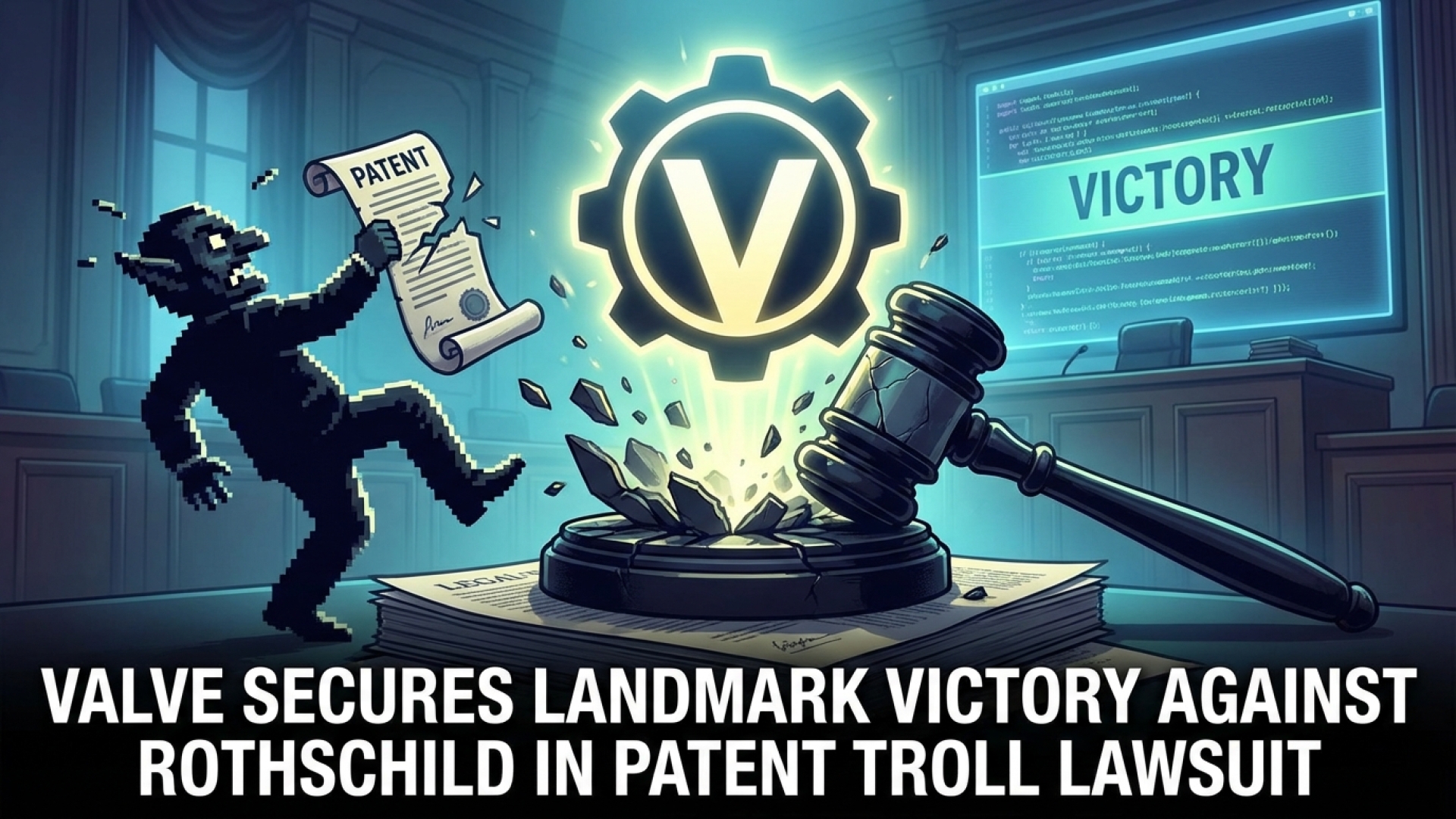
In a significant victory for the gaming industry and the broader tech ecosystem, the District Court of the Western District of Washington recently ruled in favor of Valve Corporation. This concludes a 2023 lawsuit against Leigh Rothschild and his various business entities. At Digital Tech Explorer, we closely monitor these legal shifts, as they set the stage for how software innovation is protected from predatory litigation.

The court sided with Valve on every count, including breach of contract and violations of Washington state’s Patent Troll Prevention and Consumer Protection Acts. For developers and tech enthusiasts, this case is a masterclass in how established companies are beginning to fight back against “bad-faith assertions” of intellectual property infringement.
Background: The Rothschild Patent Portfolio
Leigh Rothschild is a prolific inventor with a vast portfolio of patents spanning numerous digital sectors. However, his business model has often drawn criticism from the tech community. Valve’s legal team alleged that Rothschild and his associated companies—including Rothschild Broadcast Distribution Systems LLC and Display Technologies LLC—engaged in deceptive practices designed to extract settlements rather than foster innovation.
The Core of the Dispute: Patent US8856221B2
The conflict centered on US8856221B2, a patent involving cloud-based broadcast content storage. Interestingly, Valve had already secured a “perpetual, irrevocable, royalty-free, fully paid-up, worldwide license” for this exact intellectual property back in 2016. Despite this ironclad agreement, Rothschild-linked entities continued to pursue Valve with infringement claims in 2022 and 2023.
| Entity Involved | Role in the Litigation |
|---|---|
| Valve Corporation | The Licensee (Plaintiff in the counter-suit) |
| Leigh Rothschild | The Patent Holder and Lead Defendant |
| RBDS & Display Technologies | Shell entities used for infringement claims |
| District Court of WA | Presiding legal authority |
A Landmark Verdict for Software Integrity
The jury’s ruling was absolute. It was determined that Rothschild and Display Technologies breached their 2016 agreement. Perhaps most importantly, the court found that Rothschild and RBDS had no “just excuse” for repudiating their obligations. By filing a counter-lawsuit, Valve transitioned from a defensive posture to an offensive one, successfully challenging the “corporate veil” often used by patent litigants.
Dismantling the “Patent Troll” Strategy
A pivotal moment in the case was the court’s application of the Washington Patent Troll Prevention Act. Valve argued that Rothschild’s various companies were merely “alter egos” for the inventor himself. By holding Rothschild personally liable, the court has sent a clear message: using shell companies to bypass existing license agreements is a violation of consumer protection laws.
In the world of hardware and PC games, where cross-licensing is common, this precedent is vital. It protects developers from being sued multiple times for the same technology by the same individual operating under different names.
Wider Implications for the Tech Industry
The success of this case is expected to encourage more tech firms to utilize state-specific prevention acts against patent trolls. These entities typically acquire patents solely to generate revenue through litigation rather than creating actual products. For the community here at Digital Tech Explorer, this represents a win for transparency and fair play in digital innovation.
As we continue to navigate the evolving landscape of 2024 releases and emerging AI technologies, legal clarity like this ensures that creators can focus on coding and building the future, rather than fighting baseless courtroom battles.