
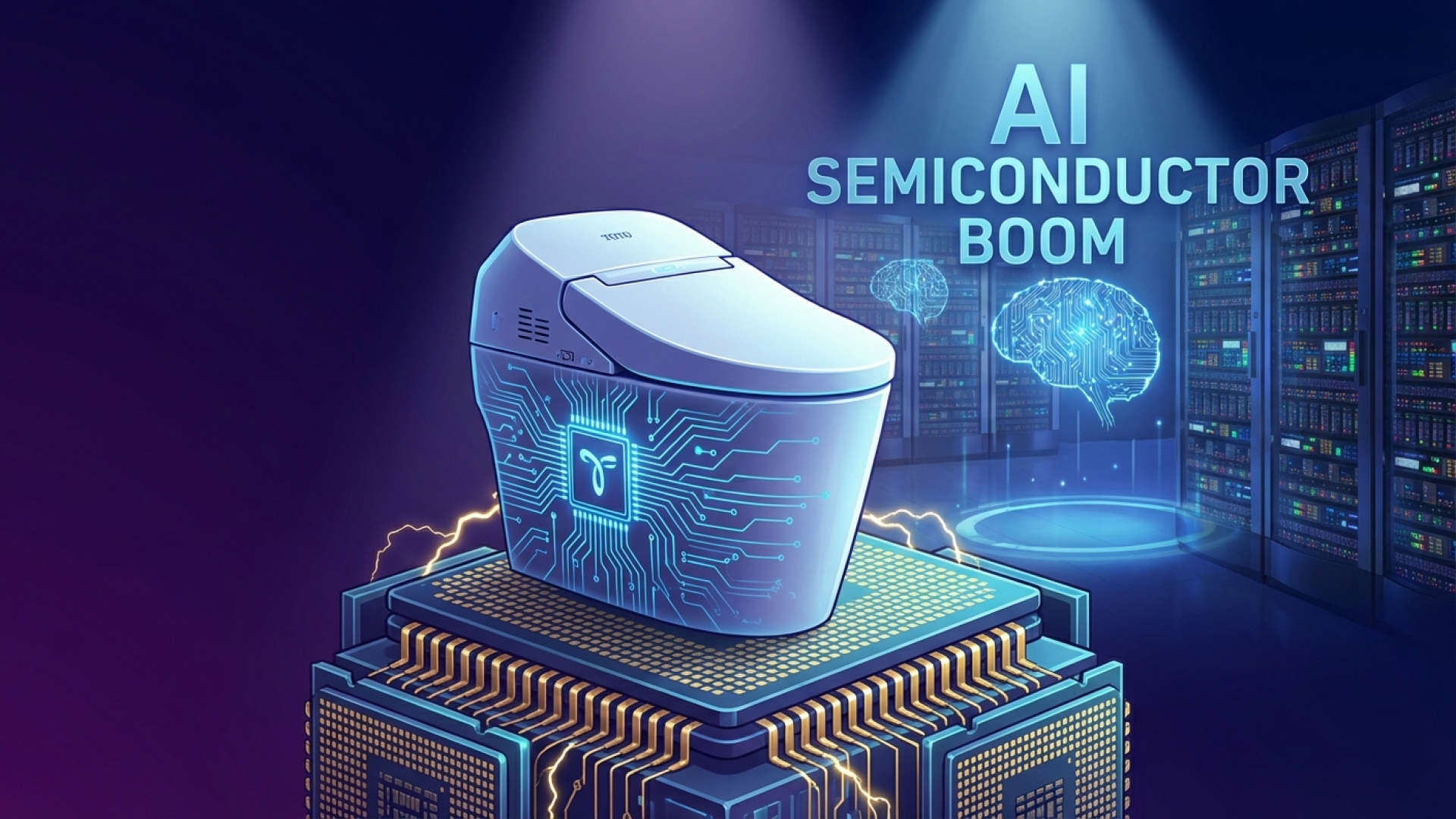
The global memory supply crisis shows no signs of slowing down, fueled by the insatiable appetite of AI data centers for high-capacity RAM and enterprise-grade storage. For those of us tracking the market here at Digital Tech Explorer, we’ve seen the most affordable consumer deals evaporate as manufacturers struggle with soaring costs from their upstream suppliers. However, in a fascinating twist of digital innovation, an unlikely beneficiary has emerged from the AI gold rush: the world’s leading toilet manufacturer.
Toto, the Japanese giant synonymous with high-tech bathroom luxury, has caught the attention of major investors. Palliser Capital recently acquired a significant stake in the company, labeling it “The Most Undervalued and Overlooked AI Memory Beneficiary.” While it might seem like a strange narrative, the technical reality behind Toto’s involvement in the hardware supply chain is a masterclass in industrial diversification.
How Ceramic Innovation Powers the AI Boom
The link between porcelain thrones and artificial intelligence lies in Toto’s advanced ceramic segment. This division is currently a powerhouse, contributing more than 50% of the company’s total operating profit. Toto has leveraged its expertise in ceramics to become the dominant supplier of electrostatic chucks. These components are critical for Lam Research’s cryogenic dielectric etching tools, which are used specifically in 3D NAND channel hole etching.
To put it in simpler terms for our fellow tech enthusiasts: these ceramic chucks hold silicon wafers in place with extreme precision during the low-temperature etching process required to create high-density flash memory. As the demand for storage to house massive machine learning models grows, so does the reliance on Toto’s specialized hardware. It appears the backbone of future AI storage is being built by the same hands that perfected the bidet.
| Component | Application | Impact on AI Industry |
|---|---|---|
| Ceramic Electrostatic Chucks | Wafer holding during 3D NAND etching | Essential for high-density flash memory production |
| Advanced Ceramics | Cryogenic dielectric etching tools | Enables next-gen chip manufacturing at low temperatures |
| 3D NAND Flash | Data center and system storage | Supports the massive data requirements of LLMs |
The Broader Market Impact: From Datacenters to Gaming
The scale of investment in this sector is staggering. This year alone, industry titans like Meta, OpenAI, Nvidia, Microsoft, and Amazon have been linked to AI-related deals totaling nearly $200 billion. This financial “feeding frenzy” has direct consequences for the average consumer. Phison’s CEO recently warned that the ongoing memory shortage could force several consumer electronics manufacturers to exit product lines or face bankruptcy by the end of 2026.
The gaming world is also feeling the heat. Recent industry reports suggest that Sony is closely monitoring the RAM shortage, with some analysts speculating that the launch of next-gen PlayStation hardware could be pushed as far back as 2029. When enterprise giants outbid consumer brands for every available gigabyte of DRAM, the ripple effects touch everything from high-end PC games to the next generation of consoles.
Navigating the Future of Tech Hardware
While there are whispers that DRAM prices may finally be plateauing, the volatility of the market remains a concern. At Digital Tech Explorer, we believe transparency is key to understanding these shifts. Whether it’s a breakthrough in AI acceleration or an unexpected contribution from a ceramics manufacturer, the landscape of technology is constantly evolving in surprising ways.
For now, it’s clear that the AI boom isn’t just about code and algorithms; it’s about the specialized physical hardware that makes digital innovation possible. As TechTalesLeo, I’ll continue to follow these narratives where complex engineering meets everyday life, ensuring you stay ahead of the trends that matter.