
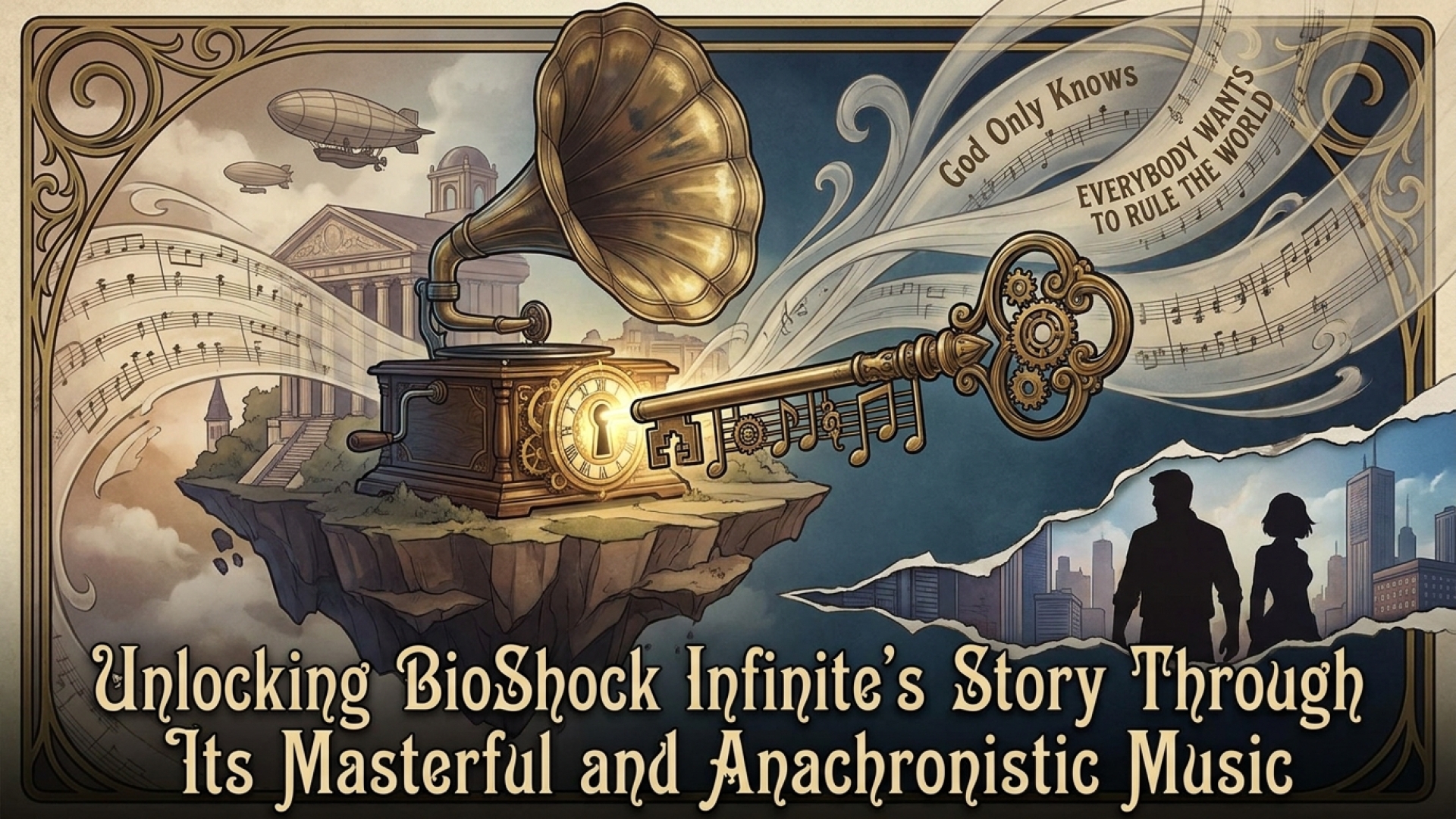
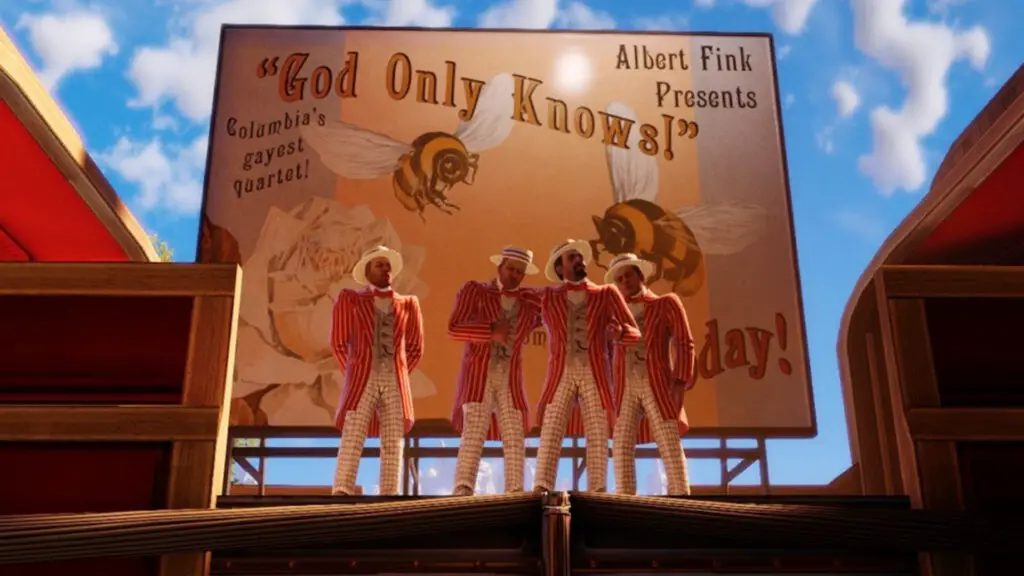
At Digital Tech Explorer, we often dive into how software and design intersect to create immersive worlds. While playing BioShock Infinite, the mesmerizing sound of “I may not always love you…” sung by the barbershop quartet, the Bee Sharps, as they float across the screen with their a cappella rendition of The Beach Boys’ “God Only Knows,” truly sets a dreamy scene for Columbia. It is easy to get lost in the hypnotic atmosphere of this city in the sky and overlook a crucial technical detail: a game set in 1912 featuring a song released over 50 years later. This clever anachronism is one of the most intriguing narrative devices in modern gaming.
Music’s Time-Traveling Twist
Typically, licensed music in video games establishes the setting and time period to enhance realism. For example, GTA Vice City uses ’80s hits to ground players in that specific era. However, BioShock Infinite subverts this expectation through brilliant sound design. The anachronistic rendition of “God Only Knows” doesn’t immediately trigger alarm bells because the developers carefully selected songs that resonate with a sense of nostalgia without explicitly revealing their modern origins.
Beyond the Beach Boys, the soundtrack features several “old-timey” covers of hits that tech-savvy players might recognize upon closer inspection. These selections avoid overly modern instruments, using calliopes and acoustic arrangements to prevent revealing the game’s central mystery too early. Here is a breakdown of the iconic tracks hidden within the world of Columbia:
| Song Title | Original Artist | Original Release | In-Game Style |
|---|---|---|---|
| God Only Knows | The Beach Boys | 1966 | Barbershop Quartet |
| Girls Just Want to Have Fun | Cyndi Lauper | 1983 | Calliope / Organ |
| Tainted Love | Soft Cell | 1981 | Blues / Ragtime |
| Everybody Wants to Rule the World | Tears for Fears | 1985 | Waltz / Folk |
| Shiny Happy People | R.E.M. | 1991 | Victorian Orchestral |
Albert Fink’s Musical Tears
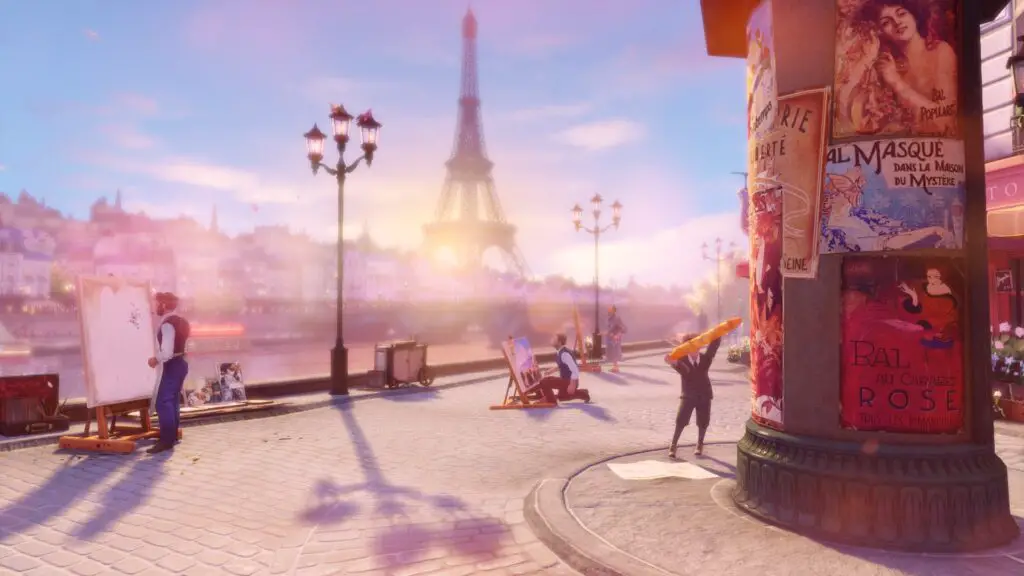
As TechTalesLeo, I find the in-game explanation for these out-of-time melodies to be a masterclass in digital storytelling. Albert Fink, a composer and upper-class citizen in Columbia, is revealed to have been using “tears“—dimensional rifts—that manifest in his studio. Through these tears, he peers into the future, plucking musical tracks from decades ahead of his time and stylizing them to fit the early 20th-century aesthetic.
This revelation is further hinted at through voxophone recordings from Albert’s brother, who references “wonderful music trumpeting from holes in thin air.” The presence of “God Only Knows” serves as one of the earliest clues to the overarching plot, cleverly placed in plain sight for players to ponder. It’s a perfect example of how digital innovation in narrative design can reward observant players.

A Tender Moment: Will the Circle Be Unbroken
Beyond its clever pop covers, the original and traditional music in the game stands out as a core emotional pillar. A particularly moving and easily missable scene involves protagonists Booker and Elizabeth discovering an acoustic guitar in a basement. Booker strums a few notes, prompting Elizabeth to delicately sing a few lines of the classic hymn, “Will the Circle Be Unbroken.”
This moment provides a much-needed, incredibly tender reprieve from the constant tension of the PC games landscape. Details like Elizabeth gently reassuring a frightened child with a piece of fruit further enrich the scene, all underscored by the hymn’s poignant melody. This beautiful cover highlights the emotional depth the audio team contributes to character interactions and the overall narrative.

Over a decade after its release, BioShock Infinite’s musical choices remain one of its strongest and most lauded elements. By blending historical fiction with science fiction through its soundtrack, the game effectively drives the narrative forward, proving that sound is just as important as code in creating a lasting digital experience. For more insights into the intersection of technology and storytelling, stay tuned to Digital Tech Explorer.