
Navigating the UK’s Online Safety Act: What “Highly Effective Age Assurance” Means for Tech Platforms
At Digital Tech Explorer, we pride ourselves on dissecting complex digital regulations to help developers and tech enthusiasts stay ahead of the curve. Over a year since the UK’s landmark Online Safety Act (OSA) was passed, the industry is finally getting clarity on one of its most technical hurdles: age verification. To bridge the gap between policy and implementation, the Information Commissioner’s Office (ICO) and Ofcom recently released a joint statement defining the standards for “highly effective age assurance” (HEAA).
As our resident storyteller TechTalesLeo often notes, the challenge isn’t just following the law—it’s implementing technology that respects user privacy while maintaining a seamless digital experience. Here is an in-depth look at how these new standards will reshape the web.
Defining Highly Effective Age Assurance (HEAA)
The term HEAA is intentionally broad, designed to remain tech-neutral as innovation evolves. Regulators state that age assurance solutions must be technically accurate, robust, reliable, and fair. Crucially, they must also account for accessibility and interoperability. This flexibility allows service providers—from independent startups to global giants—to choose methods that align with their specific user base and technical resources.
Verification Methods: What Works and What Doesn’t
To assist developers in making informed decisions, regulators have categorized various age verification methods. Below is a breakdown of the methods currently recognized as “Highly Effective” versus those that fall short of the new requirements.
| Status | Verification Method | Description |
|---|---|---|
| Highly Effective (HEAA) | Credit Card Checks | Utilizes financial data to confirm the user is 18+. |
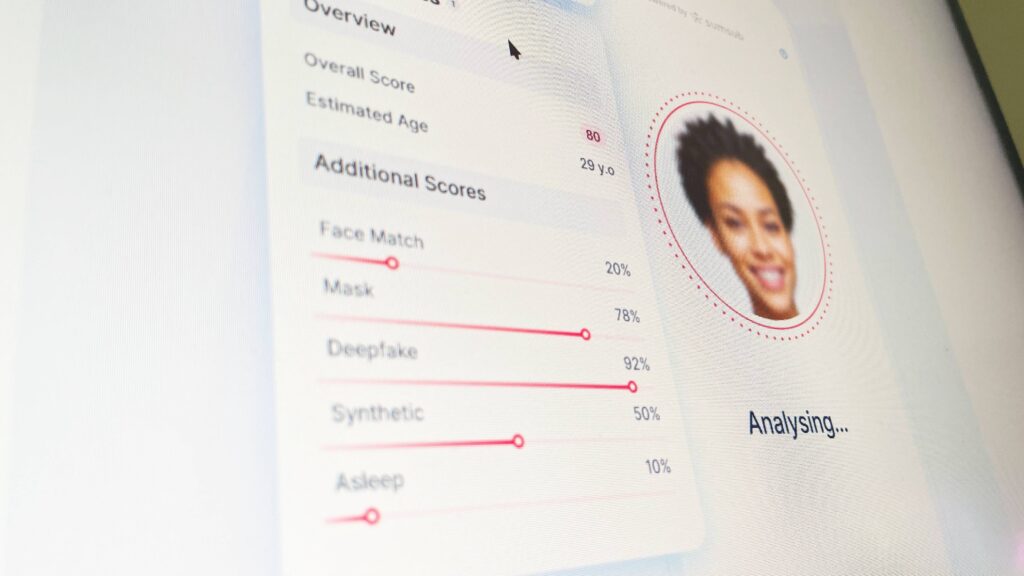
| Highly Effective (HEAA) | Facial Age Estimation | Uses AI to estimate age without identifying the individual. |
| Highly Effective (HEAA) | Photo-ID Matching | Correlates a live selfie with a government-issued ID. |
| Highly Effective (HEAA) | Open Banking | Securely verifies age through bank account credentials. |
| Highly Effective (HEAA) | Digital Identity Services | Third-party apps specifically designed for identity verification. |
| Insufficient | Self-Declaration | Simply asking a user to enter their birthdate. |
| Insufficient | Debit Card Checks | Often available to those under 18, making them unreliable. |
| Insufficient | General TOS Restrictions | Standard legal text prohibiting children from using the service. |
Scope and the Global Landscape
The HEAA mandate is primarily triggered by the type of content a platform hosts. Under the OSA, any user-to-user service that is likely to be accessed by children and permits “primary priority content” (harmful material), or any site publishing its own adult content, must implement these robust checks.
Interestingly, the UK’s tech-neutral approach stands in contrast to the European Union’s age verification blueprint. While the EU aims for a common, standardized method across all member states to simplify regulation, the UK places the onus on the platform to prove their chosen technology is effective and proportionate to the risk.
The Privacy Frontier: Zero-Knowledge Proofs
As tech enthusiasts, the most exciting development in this space is the potential for Zero-Knowledge Proofs (ZKPs). From a blockchain and security perspective, ZKPs allow a system to verify that a statement is true (e.g., “this user is over 18”) without revealing the underlying data that proves it (e.g., the user’s date of birth or name).
While the ICO/Ofcom statement doesn’t explicitly name ZKPs, the ICO’s guidelines demand that companies embed data protection by design. This strongly favors data minimization—the practice of never collecting or storing sensitive data in the first place. For developers, prioritizing ZKPs isn’t just about compliance; it’s about building trust with a user base that is increasingly wary of hardware and software tracking.
Final Thoughts
As TechTalesLeo observes, the road to a safer internet is paved with complex engineering challenges. If implemented poorly, these regulations could cause more harm than good, as scientists have warned. However, by focusing on high-accuracy methods like facial estimation and cryptographic solutions like ZKPs, the industry can meet its safety obligations without sacrificing the fundamental right to privacy.
About the Author: TechTalesLeo is a dynamic storyteller at Digital Tech Explorer, dedicated to making complex digital innovations accessible to everyone through engaging narratives and deep product analysis.
Disclaimer: All content on Digital Tech Explorer is for informational and entertainment purposes only. We do not provide financial or legal advice. Some links may be affiliate links; we may earn a commission at no additional cost to you.
Tags: AI, Blockchain, Hardware, 2024