
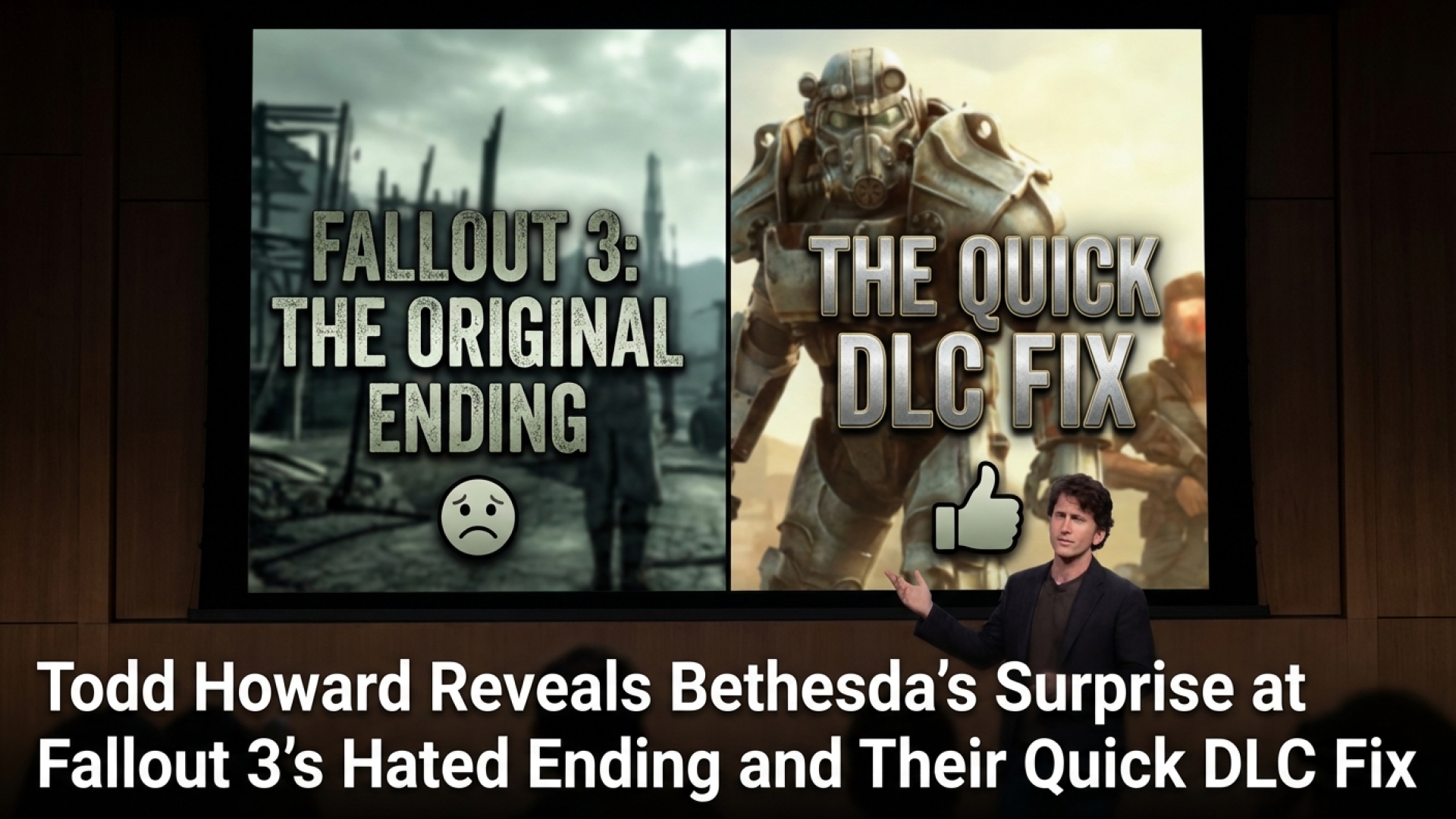
As the curtains close on the critically acclaimed Fallout season 2, fans across the globe are revisiting the irradiated ruins of the wasteland. While many were hoping for a surprise remaster announcement, Bethesda has instead treated us to a deep dive into its archives. A recent retrospective from GameInformer offers a captivating look at the development of Fallout 3, revealing how a significant design choice almost alienated a generation of vault dwellers.
The Abrupt End of the Capital Wasteland
For those who weren’t there at launch in 2008, it’s hard to imagine a version of Fallout 3 that simply stopped. In its original form, completing the final main quest, “Take it Back,” resulted in an immediate roll of the credits. Your journey through the Capital Wasteland was over—no post-game exploration, no finishing side quests, and no returning to Megaton or Rivet City with your endgame gear.
Tradition vs. Player Expectation
In the retrospective, Todd Howard admits that Bethesda was genuinely surprised by the backlash. The team had looked at the franchise’s history rather than its future. “The one thing that we did, we ended up changing in Fallout 3, we were like, ‘Well, like the other Fallouts, it has to end,’” Howard explains.
However, Bethesda had already trained its audience to expect infinite playability through *The Elder Scrolls* series. Players weren’t looking for a traditional RPG “Game Over” screen; they wanted to live in the world they had spent dozens of hours saving. “People hated it!” Howard admits. “They expected, like, ‘Why would the game end?! The [Elder Scrolls] don’t end!’”
The “Broken Steel” Narrative Fix
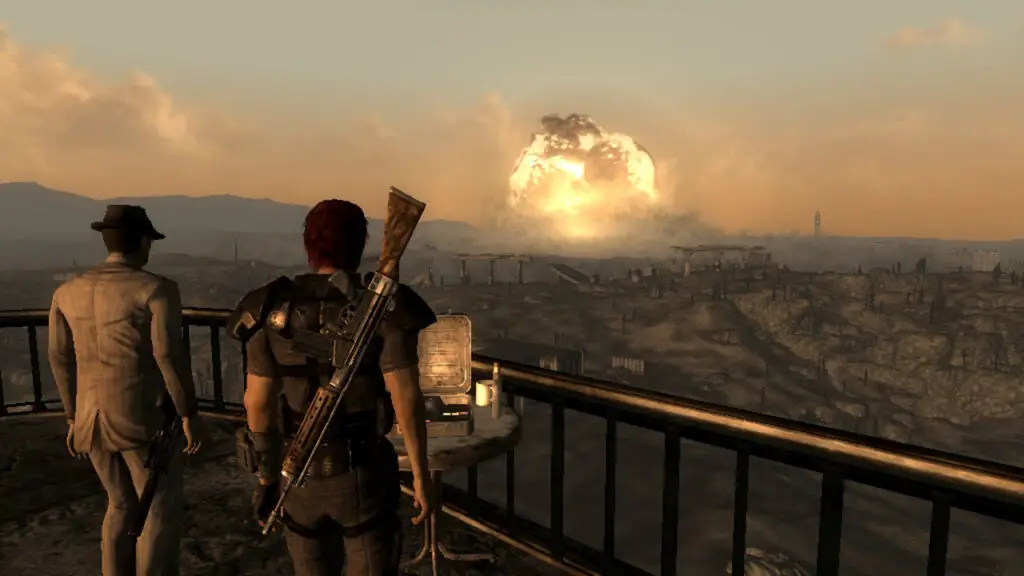
To address this, Bethesda released the Broken Steel expansion approximately six months later. It was a narrative “fudge” that allowed the Lone Wanderer to survive the purifier’s activation, waking up two weeks later to continue the fight against the Enclave. This update didn’t just fix the ending; it raised the level cap and introduced new endgame content, effectively transforming the title into the modern open-world benchmark it is today.
Howard gives the team an “average grade” on the narrative elegance of that fix, but it was undoubtedly the right move for the longevity of the game. It set a new standard for how the studio would approach post-game content moving forward.
How Endings Evolved in the Fallout Universe
The lesson learned from the 2008 controversy shaped every subsequent release. Here is a look at how Bethesda and its partners handled endgame states in later titles:
| Game Title | Endgame State at Launch | Post-Game Exploration? |
|---|---|---|
| Fallout 3 | Hard Stop (Credits Roll) | Only via Broken Steel DLC |
| Fallout: New Vegas | Hard Stop (Last Save Point) | No (Requires Mods or Reload) |
| Fallout 4 | Infinite Play | Yes (Built into Base Game) |
| Fallout 76 | Live Service / Infinite | Yes (Persistent World) |
VATS: From Burnout 2 to the Wasteland
The retrospective also touched on the technical hardware challenges and creative sparks that defined the game’s mechanics. Lead artist Istvan Pely revealed that the Vault-Tec Assisted Targeting System (VATS) was a last-minute addition that barely functioned before the gold master.
Intriguingly, the inspiration for VATS’ cinematic violence came from an unlikely source: Burnout 2. Todd Howard envisioned the slow-motion destruction of cars—where parts fly off in every direction—applied to the biological “parts” of a super mutant. This quirky piece of dev history reminds us that digital innovation often comes from the most unexpected places.
For more tech tales and deep dives into digital innovation and gaming, stay tuned to Digital Tech Explorer. Whether you’re a seasoned developer or a casual player, we’re here to bridge the gap between complex tech and everyday fun.
Disclaimer: All content on Digital Tech Explorer is for informational and entertainment purposes only. Some of the links on our site are affiliate links, meaning we may earn a commission if you click through and make a purchase, at no additional cost to you.