
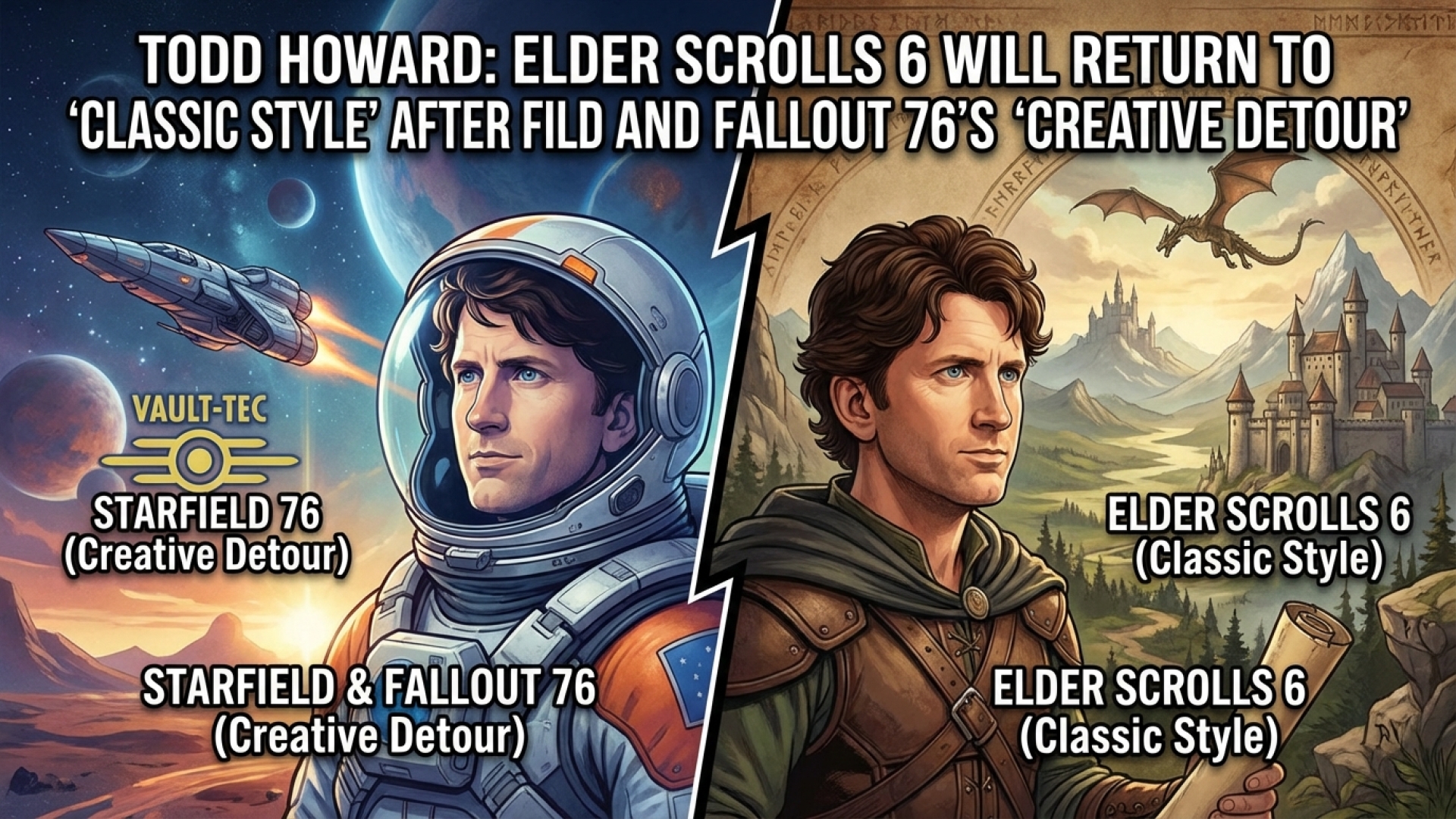
In the ever-evolving landscape of digital innovation, few names carry as much weight as Todd Howard. Recently, the Bethesda game director sat down for an insightful interview on the Kinda Funny Gamescast, weaving a narrative that bridges the gap between the studio’s experimental recent years and the highly anticipated future of The Elder Scrolls 6. For those of us tracking the pulse of gaming and software evolution, Howard’s revelations offer a fascinating look at how Bethesda is pivoting back to its roots while leveraging next-generation tech.

Refining the Starfield Experience
One of the more grounded takeaways from the interview involved the current state of Starfield. Howard was refreshingly transparent regarding the game’s trajectory. Rather than promising a “2.0” overhaul designed to win over critics, he emphasized that upcoming updates are curated specifically for the dedicated player base already exploring the Settled Systems. This focus on deep-tier refinement over broad-spectrum changes marks a strategic commitment to community-driven development, ensuring that those invested in the PC games ecosystem see tangible improvements in the mechanics they already enjoy.
The Elder Scrolls 6: A Return to the Golden Age
Perhaps the most exciting chapter of Howard’s story was the clarification of Bethesda’s creative direction for The Elder Scrolls 6. He characterized Fallout 76 and Starfield as “creative detours”—necessary explorations that allowed the studio to test new boundaries. However, for the next journey into Tamriel, the goal is a return to the “classic style.”
What does this mean for the player? It signals a move away from the procedural sprawl of recent titles and a return to the handcrafted, deep-world exploration that defined icons like Skyrim and Oblivion. The emphasis is shifting back to environmental storytelling and a seamless sense of place, aiming to capture the magic that originally set the standard for the fantasy RPG genre.

The Tech Behind the Tale: Creation Engine 3
From a technical perspective, the most significant news is the leap in internal software. While Starfield utilized Creation Engine 2, Howard confirmed that the team has been hard at work on Creation Engine 3. This isn’t just a minor patch; it’s a foundational upgrade designed to power the next decade of Bethesda narratives.
The transition to this new engine architecture is expected to address long-standing technical hurdles. Developers and enthusiasts alike are looking for improved asset streaming, reduced loading screens, and more robust physics—elements that are crucial for maintaining immersion in a massive open world. Below is a look at how Bethesda’s technology has scaled across their recent and upcoming flagship titles:
| Game Title | Engine Version | Core Design Philosophy |
|---|---|---|
| Fallout 4 / 76 | Creation Engine 1 | World Persistence & Multiplayer Integration |
| Starfield | Creation Engine 2 | Procedural Generation & Space Exploration |
| The Elder Scrolls 6 | Creation Engine 3 | Classic Handcrafted Exploration & High Immersion |
Final Thoughts: A New Chapter for Bethesda
As we look toward the future, it’s clear that Todd Howard and his team are striking a balance between innovation and tradition. By acknowledging the “creative detours” of the past, Bethesda is positioning The Elder Scrolls 6 not just as a sequel, but as a homecoming. For tech enthusiasts and RPG fans, the combination of a “classic” design philosophy and the cutting-edge capabilities of Creation Engine 3 promises a digital experience that could redefine the genre once again. Stay tuned to Digital Tech Explorer as we continue to track these developments and the evolving tech that brings these vast worlds to life.