
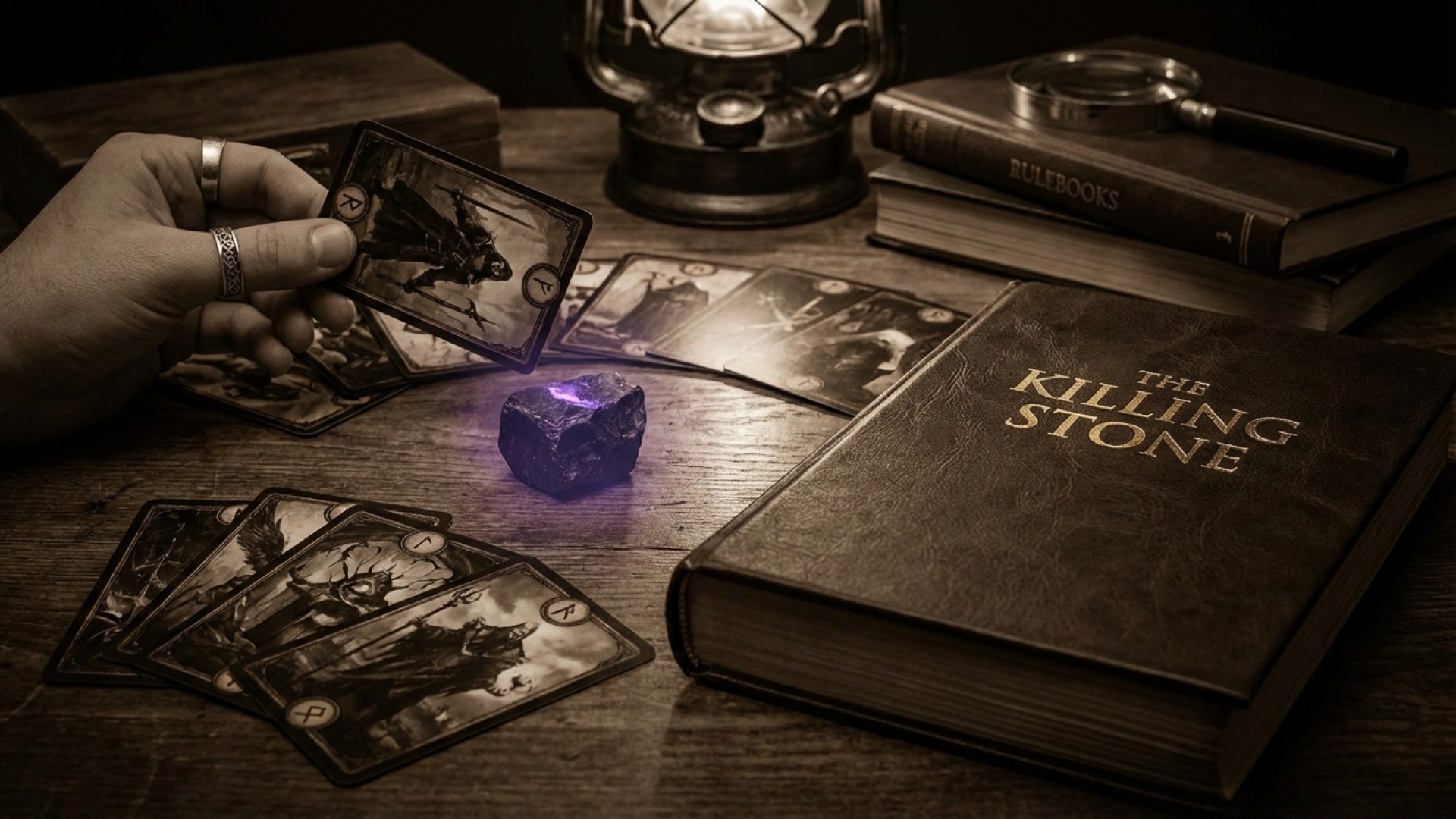
In the haunting, frost-bitten world of The Killing Stone, players find themselves stepping into the boots of a witch’s apprentice. Your task? Navigating a complex, supernatural will left by your late mistress, Mariken. This isn’t your standard inheritance dispute—it’s a devil’s contract that intricately weaves multiple souls into a web of fiendish legalities. Here at Digital Tech Explorer, we appreciate when software design meets high-concept storytelling, and this title delivers both in spades.
The heart of this occult contract law dispute unfolds through a unique card-battling game called Fanghella. Named after ancient Icelandic boulders used in ritual sacrifices, the game serves as the primary mechanic for settling debts within an isolated 17th-century mansion. This setting, located on a remote island in the Arctic Circle, is colloquially known as “Little Denmark.”

Innovative Mechanics: Fanghella and the Reserve System
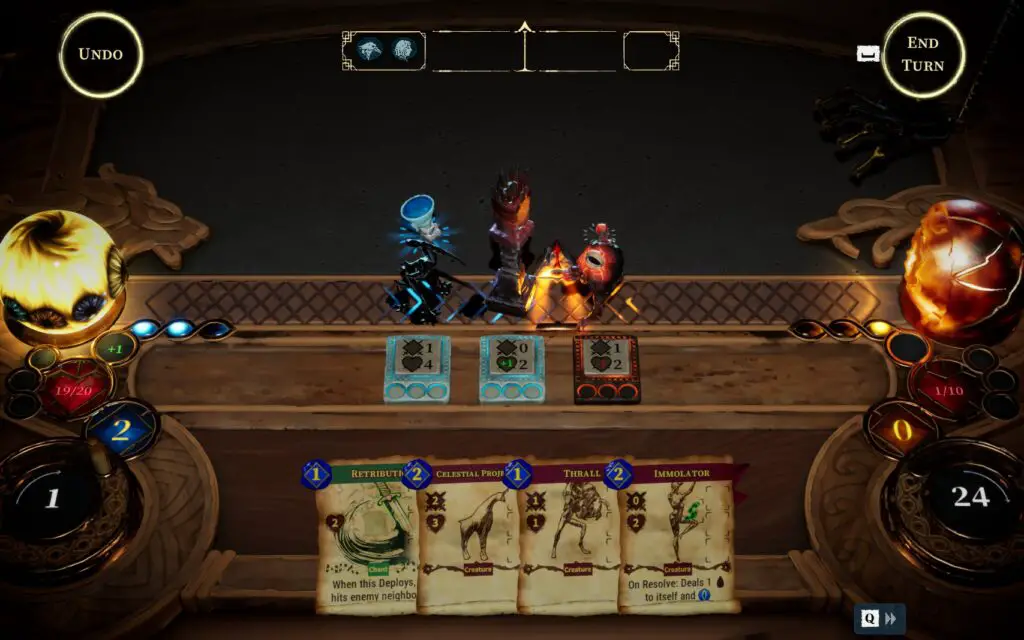
TechTalesLeo thrives on finding the “narrative in the numbers,” and the card-battling system in The Killing Stone offers plenty of depth. While it draws structural inspiration from popular PC games and deckbuilding roguelikes, it discards traditional tropes. Most notably, the game lacks standard “defend” cards. This absence results in frequent board wipes, turning every match into a high-stakes puzzle of calculated aggression.
The standout technical feature is the reserve mechanic. This allows players to stack cards above active creatures on the battleline. These can be backup units or “incantations” that buff the primary creature. Even in the reserve row, cards can trigger passive effects; for instance, a Flask of Thoughts will continue providing healing every turn while safely tucked behind the front line.
Gameplay Comparison: The Killing Stone vs. Traditional Roguelikes
| Feature | Standard Roguelike Deckbuilders | The Killing Stone (Fanghella) |
|---|---|---|
| Defense Strategy | Block and Defend cards are essential. | Minimal blocking; focus on board control and excess damage. |
| Unit Persistence | Creatures often stay on board across turns. | Frequent board wipes; creatures are often cleared each turn. |
| Reserve Rows | Rarely seen; usually a single battleline. | Strategic reserve slots for buffs and reinforcements. |
| Win Condition | Reduce enemy HP to zero. | Damage the “Eyeball” behind enemy lines via excess power. |
Atmospheric Storytelling and Professional Voice Casting
As TechTalesLeo often notes, the soul of a game lies in its atmosphere. Between the intense card matches, you’ll explore the mansion and interact with Mariken’s descendants. The narrative is bolstered by incredible voice talent. Emma Gregory (Minthara in Baldur’s Gate 3) provides a haunting performance as Mariken, while the chief devil is voiced by Liam O’Brien of Critical Role fame.
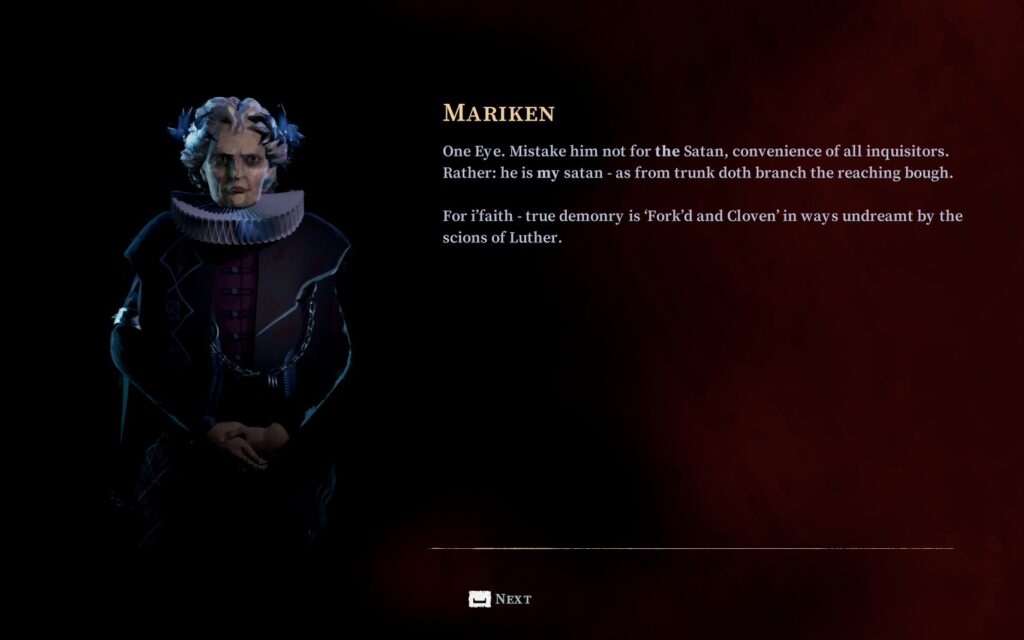
For those seeking total immersion, the game offers a choice between Modern English and authentic 17th-century Period English for all dialogue. This linguistic attention to detail brings a layer of historical weight to the AI-driven narrative paths, though the game helpfully includes plain-text subtitles for those who find the archaic phrasing a bit too cryptic.
Mystical Accountancy: The Rules of the Pact
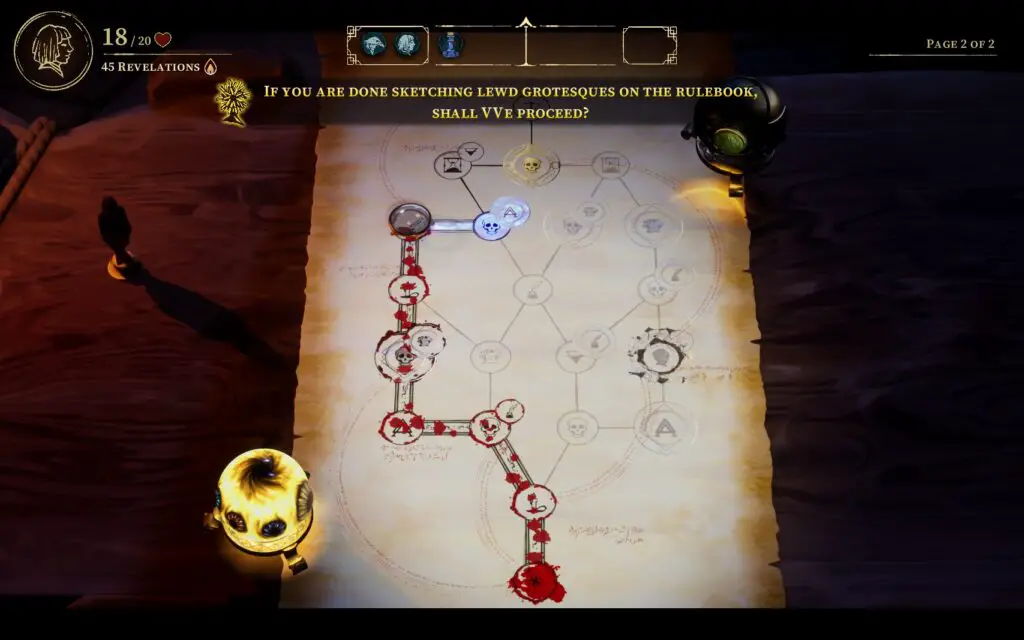
The game brands itself as a “mystical accountant” simulator. Players earn revelation points by analyzing dense legalese, which can be spent during bargaining rounds with the devil to vote on “boons” or “banes.” This adds a layer of hardware-like precision to your deck-building strategy.
Decks are structured around “pacts”—sets of three or four cards that define your playstyle. This system prevents players from simply picking the “best” individual cards and forces a more holistic approach to strategy. During battle, you must manage several complex keywords:
-
Tunneling: Bypass enemy creatures to hit the core health.
Blast: Damage spills over to the units behind the target.
Sliding: Shift creature positions along the line to optimize buffs.
Early Access and Future Outlook
While the lore is rich and the mechanics are deep, The Killing Stone is currently in Early Access. This phase is intended to help the developers refine the pacing and balance the sheer volume of rules introduced to the player. For enthusiasts who enjoy gaming with a heavy emphasis on strategy and occult themes, the demo is currently available on Steam.
At Digital Tech Explorer, we believe this blend of historical fiction and complex card mechanics represents an exciting trend in indie development. Stay tuned as we follow its journey toward a full 1.0 release.
About the Author: TechTalesLeo is a dynamic storyteller and tech enthusiast who brings technology to life through captivating narratives and engaging content. With a wealth of experience in digital innovation, TechTalesLeo bridges the gap between complex systems and everyday usability.
Disclaimer: All content on Digital Tech Explorer is for informational and entertainment purposes only. We do not provide financial or legal advice. Affiliate Disclaimer: Some of the links on Digital Tech Explorer are affiliate links. This means we may earn a commission if you click through and make a purchase, at no additional cost to you.