
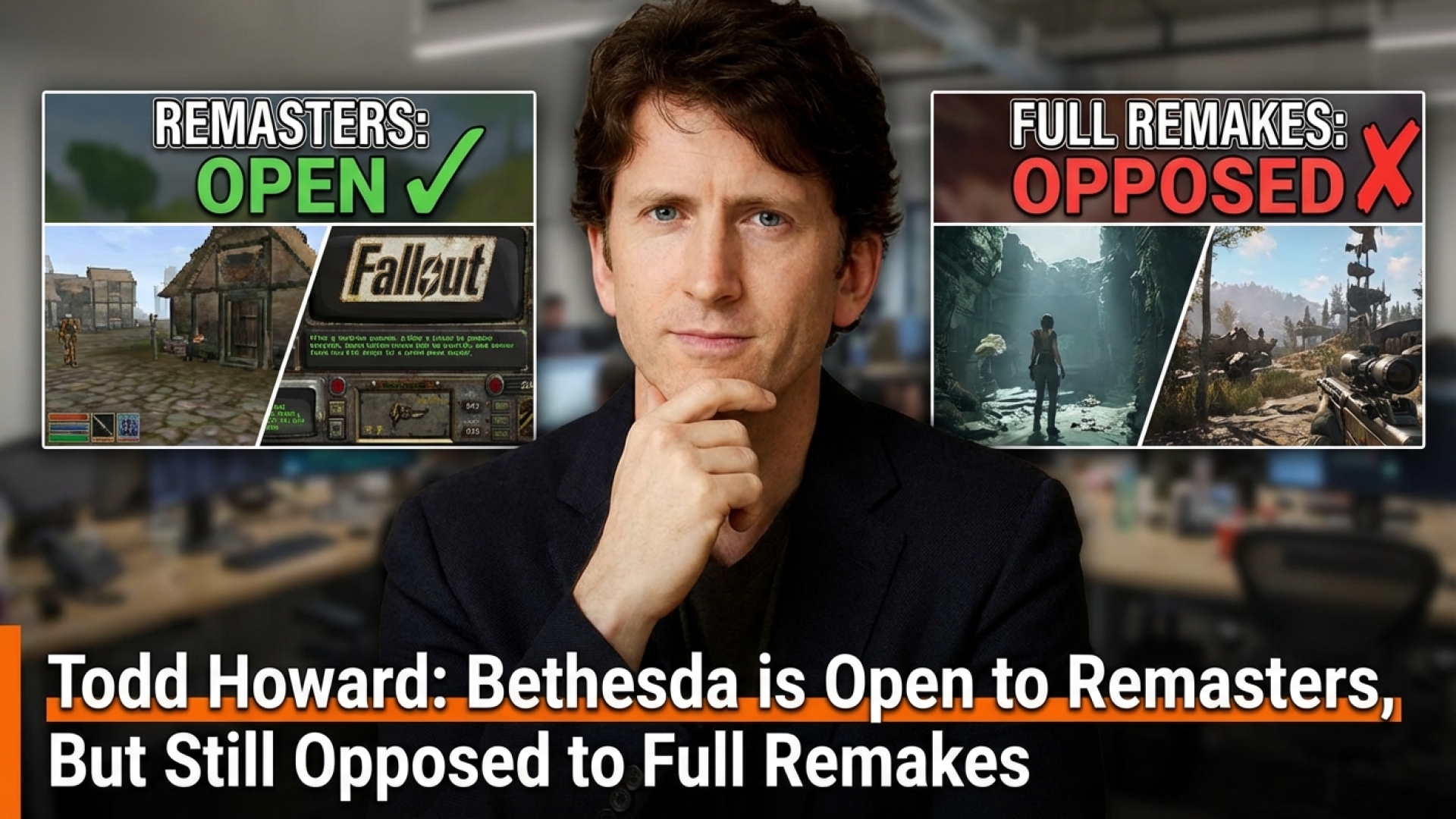
Todd Howard, a cornerstone of the modern gaming industry, has recently shared a narrative-shifting perspective on the digital evolution of classic titles. Following the staggering commercial success of Oblivion Remastered, Howard admits his stance on game preservation via remasters has softened. However, for those of us tracking the intersection of legacy software and modern hardware, his firm “anti-remake” philosophy remains a fascinating point of contention.
The Commercial Catalyst: A “Squillion” Reasons to Revisit
At Digital Tech Explorer, we often discuss how market performance drives innovation. The shift in Bethesda’s strategy is directly linked to the financial phenomenon that is Oblivion Remastered. Attracting over 9 million players and generating what Howard playfully describes as “approximately a squillion dollars,” this success has forced a re-evaluation of the Bethesda back catalog. It proves that there is a massive, hungry market for high-fidelity nostalgia that respects the source material.

Remaster vs. Remake: Understanding the Bethesda Philosophy
To understand Howard’s evolving mindset, we must look at the technical and artistic distinction he draws between a remaster and a remake. For the team at Bethesda, a game’s age is not a bug; it’s a feature of its “personality.” This distinction is vital for developers and tech enthusiasts to understand:
| Feature | Remaster (The Howard Preference) | Remake (The “Anti-Remake” Stance) |
|---|---|---|
| Core Engine | Maintains original codebase and logic. | Often built from scratch in a new engine. |
| Visuals | Enhanced textures, lighting, and resolution. | Complete reimagining of assets and art style. |
| Goal | Delivering the “absolute best version” of the original. | Fundamentally altering the experience for modern trends. |
| Personality | Preserves the era-specific charm and quirks. | Risks erasing the unique “soul” of the classic. |
In 2018, Howard was hesitant to touch titles like Morrowind or Fallout 1, preferring players experience them in their raw, original state on PC. While the success of Oblivion has opened the door for more remasters, his respect for the original “personality” of a game means we are unlikely to see a Morrowind remake that strips away its complex systems for the sake of modern accessibility.
Digital Archeology: Files and Fan Skepticism
From a software engineering perspective, the Oblivion Remaster is a fascinating piece of digital archeology. Investigators digging into the remaster’s files have found the original game’s core files preserved beneath the new layers, much like a set of dinosaur bones. This technical choice ensures the “soul” of the RPG remains intact, even as it is updated for 4K resolutions and modern hardware.
However, the community remains divided. While a Morrowind remaster is highly anticipated, many tech-savvy fans argue that Bethesda should look toward community-driven innovation. Projects like OpenMW represent the pinnacle of fan-led digital preservation, offering a modern engine implementation that Bethesda could officially support to bridge the gap between classic design and modern stability.

The Road Ahead: Performance vs. Preservation
Despite the praise, the road to the “absolute best version” has been bumpy. Even after its second major patch in July, Oblivion Remastered still struggles with performance issues and legacy bugs. Interestingly, Bethesda did choose to iron out some “kinks,” such as the controversial scaled-leveling system, proving that even Howard is willing to tweak the “personality” of a game if it improves the fundamental player experience.
As we continue to explore the frontiers of digital technology here at Digital Tech Explorer, Howard’s journey reminds us that in the world of coding and software, the past is never truly gone—it just needs a better coat of paint. Whether you are a developer looking at legacy code or a gamer revisiting Cyrodiil, the balance between innovation and preservation remains the industry’s greatest challenge.
Disclaimer: All content on Digital Tech Explorer is for informational and entertainment purposes only. Some of the links in this article may be affiliate links, meaning we may earn a commission at no additional cost to you.