
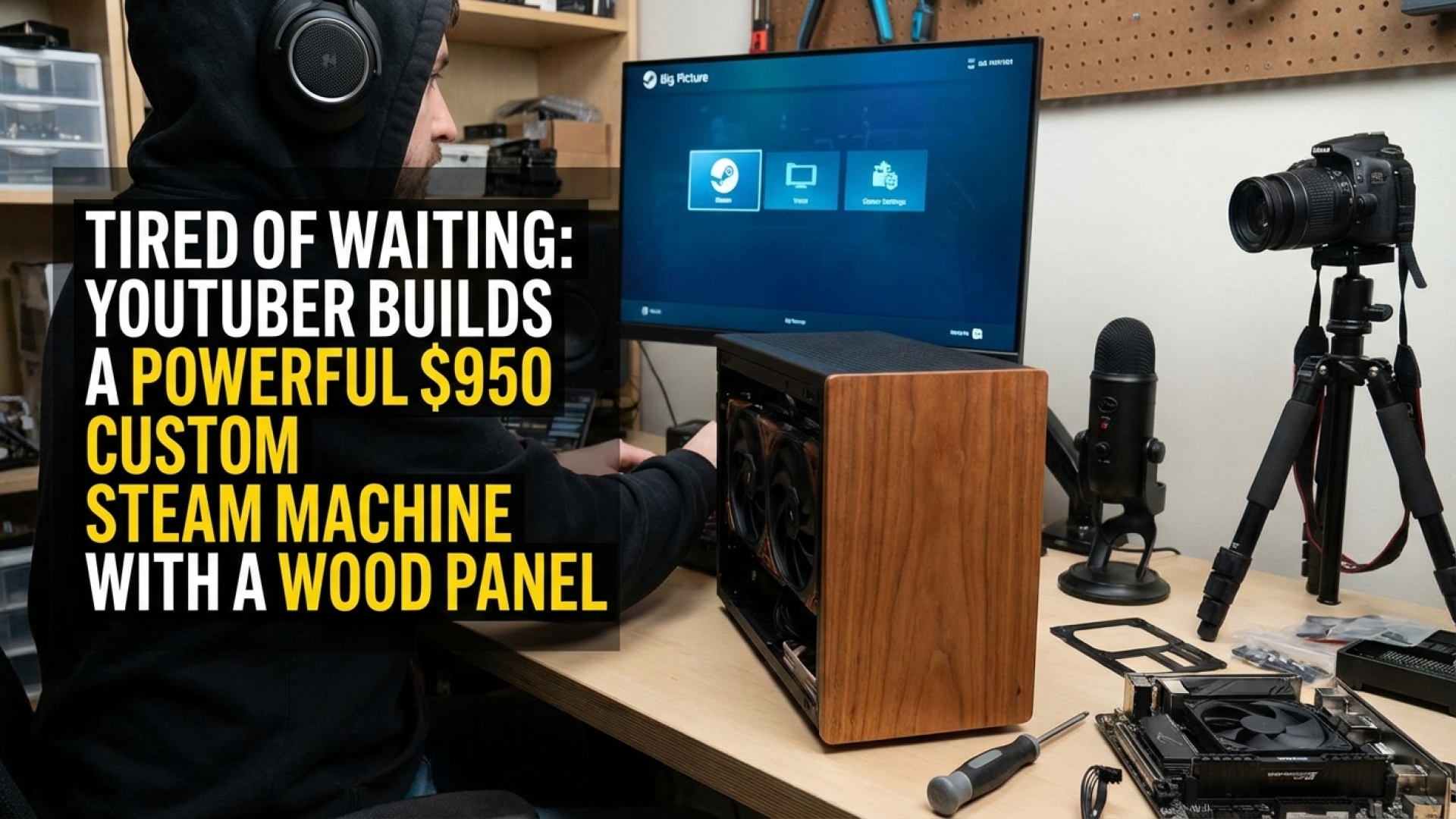
In the world of modern hardware, waiting for a major manufacturer to release a product can feel like an eternity. For tech enthusiasts and developers alike, innovation often happens when we take matters into our own hands. This is exactly what YouTuber Zac Builds did by constructing a custom Steam Machine for approximately $950. Driven by Valve’s perceived delays, Zac aimed to craft a system that was not only faster but significantly more efficient than what the market might eventually offer. Here at Digital Tech Explorer, we love a good “build vs. buy” narrative, especially one that pushes the boundaries of PC gaming.
Component Selection and Budget Strategy
The journey into this digital innovation wasn’t without its hurdles. Zac encountered a “rude awakening” when trying to source components that were both affordable and compact enough for a console-sized form factor. To keep the project under the $1,000 benchmark, he turned to the second-hand market—a savvy move for any builder looking to maximize performance per dollar. By sourcing high-quality used parts, he managed to assemble a powerhouse for approximately $835 USD ($1,135 CAD).
| Component Type | Model Selected |
|---|---|
| Processor (CPU) | AMD Ryzen 5 5600X |
| Graphics Card (GPU) | AMD Radeon RX 9060 XT (16 GB) |
| Motherboard | Gigabyte B550I |
| Storage | Gen 3 XPG 2TB SSD |
| Memory | 16 GB DDR4 |
| Power Supply | 650-watt PSU |
Engineering a Custom Console: 3D Printing Meets Woodworking
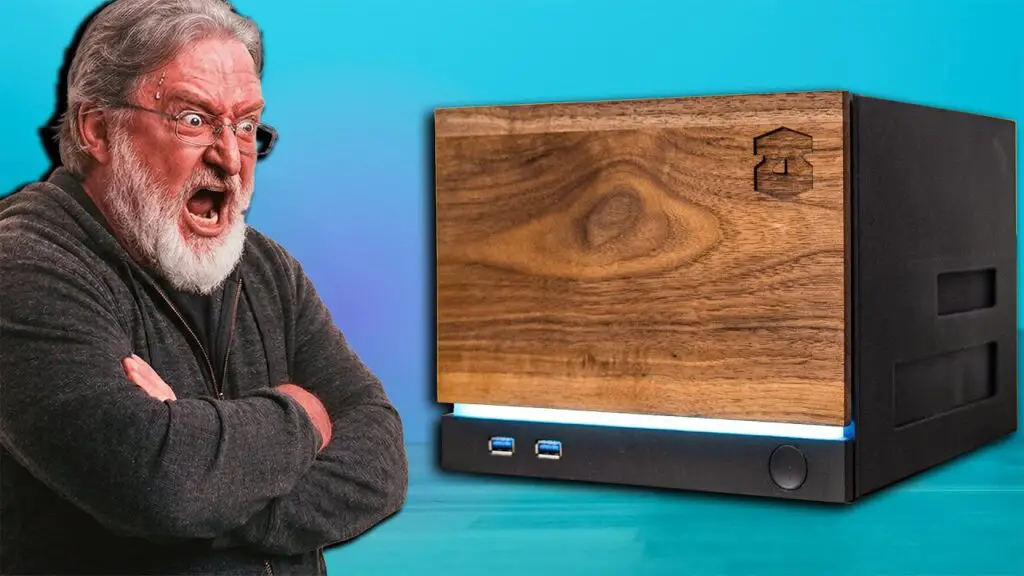
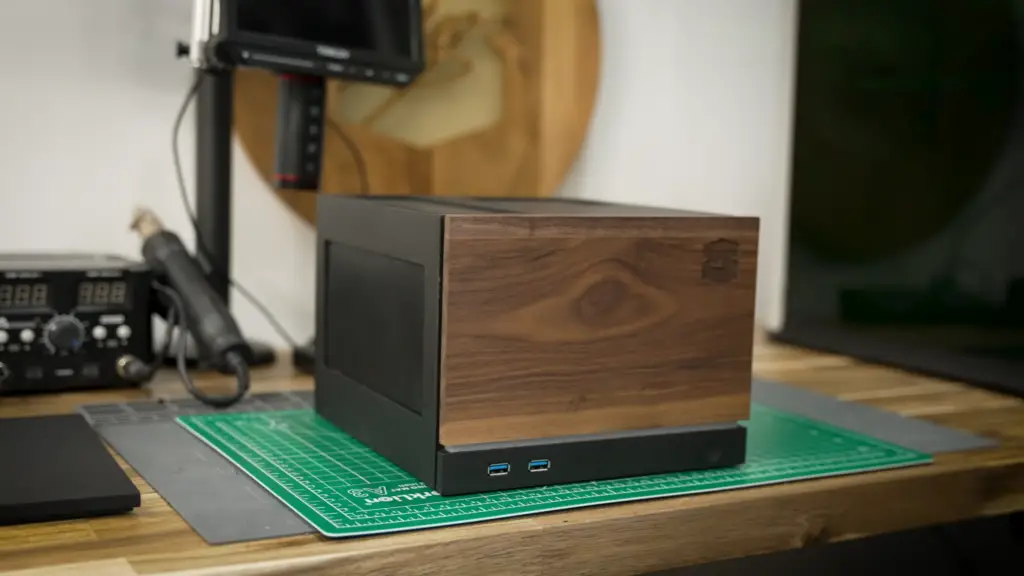
Finding a case that fits the “Steam Machine” aesthetic proved nearly impossible, leading Zac to utilize 3D printing and scanning to design a bespoke enclosure. The multi-layered structure utilizes a bottom housing for core components, with additional layers that snap into place. To combat the thermals of such a cramped space, Zac engineered a custom connector for the Noctua fan to draw in external cold air directly.
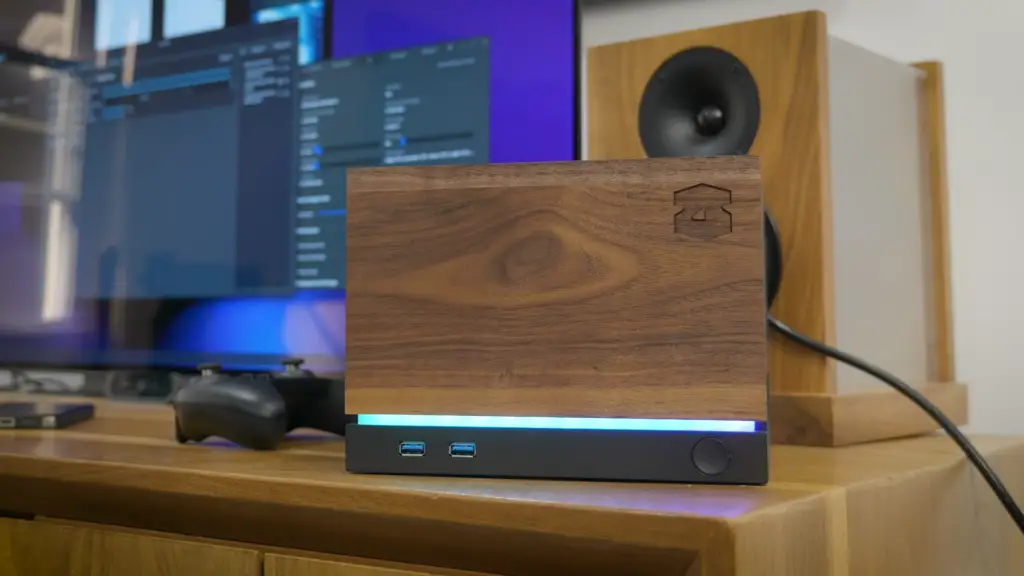
Beyond the technical engineering, the aesthetics play a huge role in this story. Zac added front-facing USB Type-A ports and a meticulously applied matte black finish. In a nod to Valve’s history of customization, he embedded magnets into the front of the chassis to hold a custom-crafted walnut wood faceplate. This blend of high-tech manufacturing and traditional woodworking bridges the gap between cold industrial design and personal craftsmanship.
Software Challenges and 4K Performance
As any software engineer will tell you, hardware is only as good as the code running it. Because the GPU was too new for the current SteamOS stable build, Zac pivoted to Bazzite, a specialized Linux distribution. This software flexibility allowed the machine to achieve results that rival high-end desktop rigs.
In real-world testing, the custom machine tackled heavy hitters like Cyberpunk 2077 and Spider-Man 2. The system maintained a steady 60 fps at 4K resolution using a mix of medium and high settings. By leveraging FSR upscaling and frame generation, those numbers soared to 100 fps. Zac estimates his build will likely outperform the official Valve release by 50% to 100% in raw GPU performance.
Final Thoughts: DIY vs. Official Release
The total investment for this project reached roughly $950 USD ($1,301 CAD). While Zac’s creation is slightly larger than the anticipated official Valve unit—by about 50 mm in thickness and depth—it remains a compact powerhouse. He acknowledges that when Valve finally releases their version, consumers will be paying for the convenience of a “headache-free” experience, including integrated software and professional support.
However, with the tech industry currently facing a volatile market and a looming memory crisis, waiting for a corporate release isn’t always the best path for every gamer. For those with access to 3D printers and the drive to experiment, this project serves as an inspiring example of how to stay ahead of tech trends. Zac Builds has shown that with a little ingenuity and the right parts, you don’t have to wait for the future—you can build it yourself.
For more in-depth reviews and the latest in digital innovation, stay tuned to Digital Tech Explorer. You can also explore more stories from TechTalesLeo as we continue to bridge the gap between complex tech and everyday usability.