
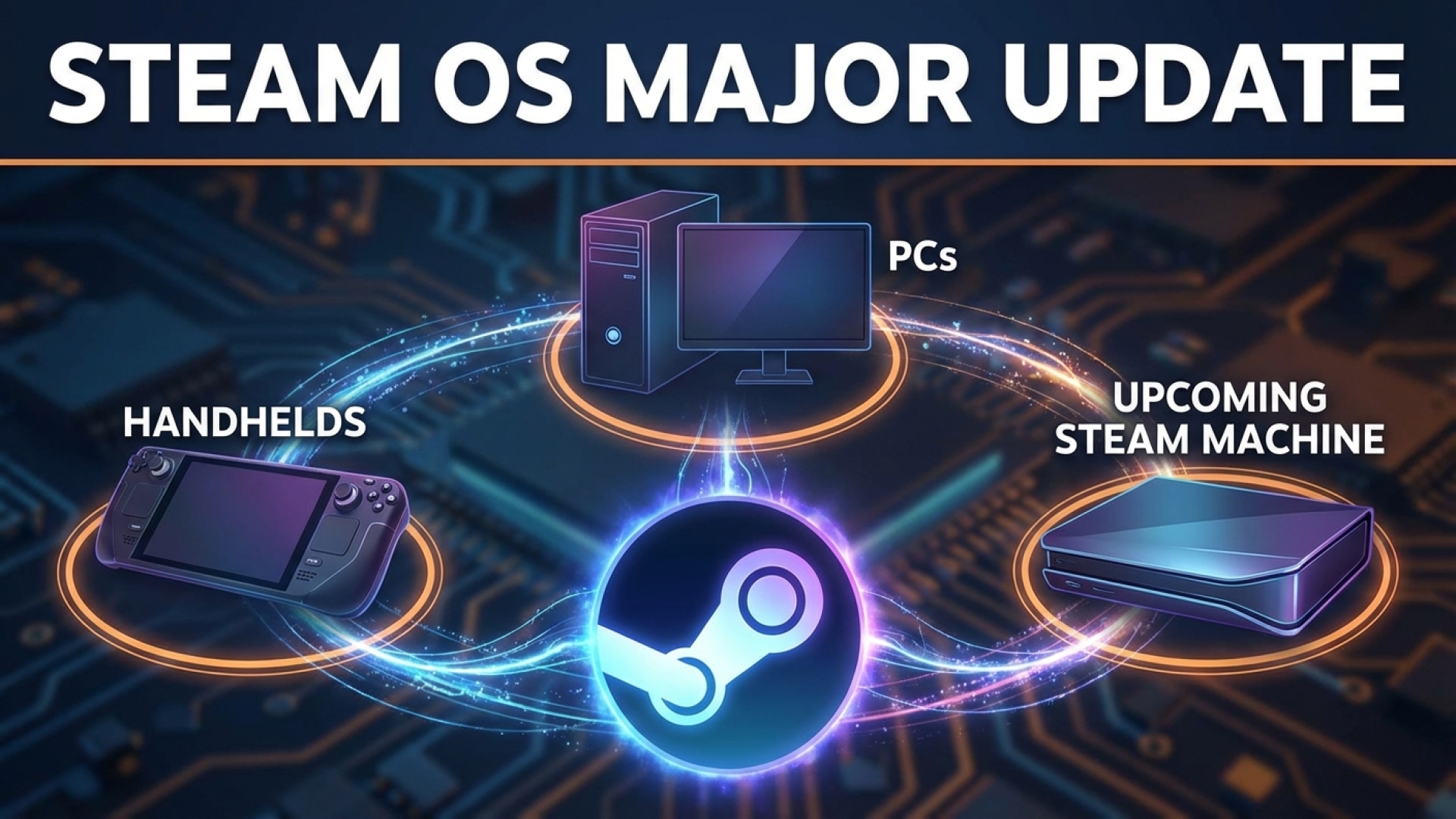
SteamOS continues to redefine the boundaries of mobile computing, powering the industry-leading Steam Deck and the Lenovo Legion Go S. Despite the inherent hardware limitations of portable devices, Valve’s Linux-based ecosystem is proving that software optimization is the ultimate equalizer. At Digital Tech Explorer, we’ve been tracking the evolution of the SteamOS 3.8.0 Preview, a significant update that signals a new era for both the upcoming Steam Machine and a wide array of third-party gaming hardware.
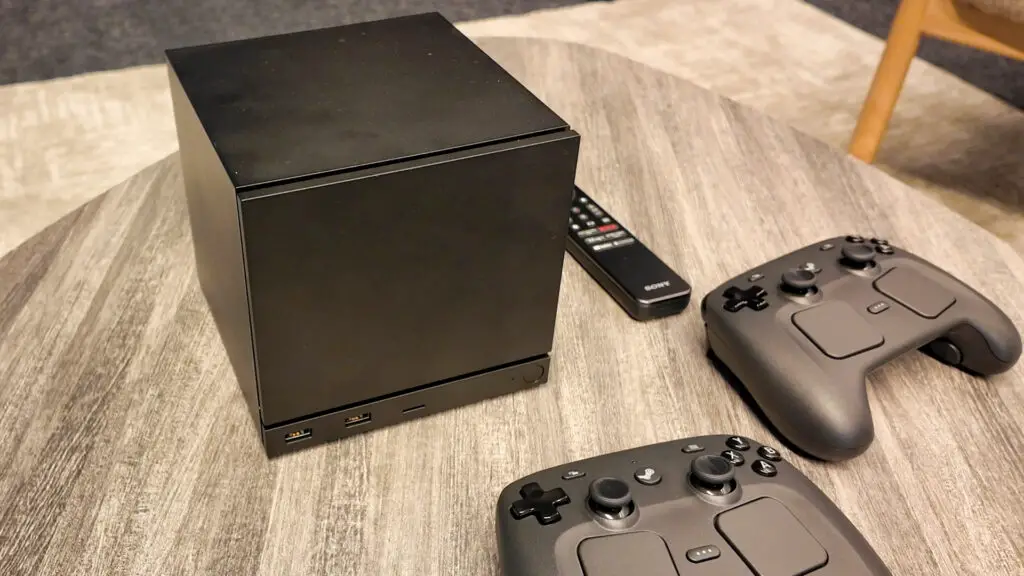
Enhanced Platform Compatibility for the Steam Machine Era
The SteamOS 3.8.0 Preview provides the first official support for the much-anticipated Steam Machine. While Valve remains tight-lipped on the specific launch window, the technical specifications are already generating excitement among AI and gaming enthusiasts alike. The device is set to feature a high-performance Zen 4 CPU and a semi-custom RDNA 3 GPU, ensuring it can handle modern 4K resolution gaming with ease.
Beyond internal hardware, this update expands Valve’s vision of a versatile, open-source gaming ecosystem. Key improvements include:
- Universal Hardware Support: Refined compatibility for the latest Intel and AMD platforms.
- Optimized Memory Management: Significant breakthroughs in video memory management for systems utilizing discrete GPU solutions.
- Enthusiast Customization: Facilitating the installation of SteamOS on custom-built hardware, bridging the gap between console convenience and PC flexibility.
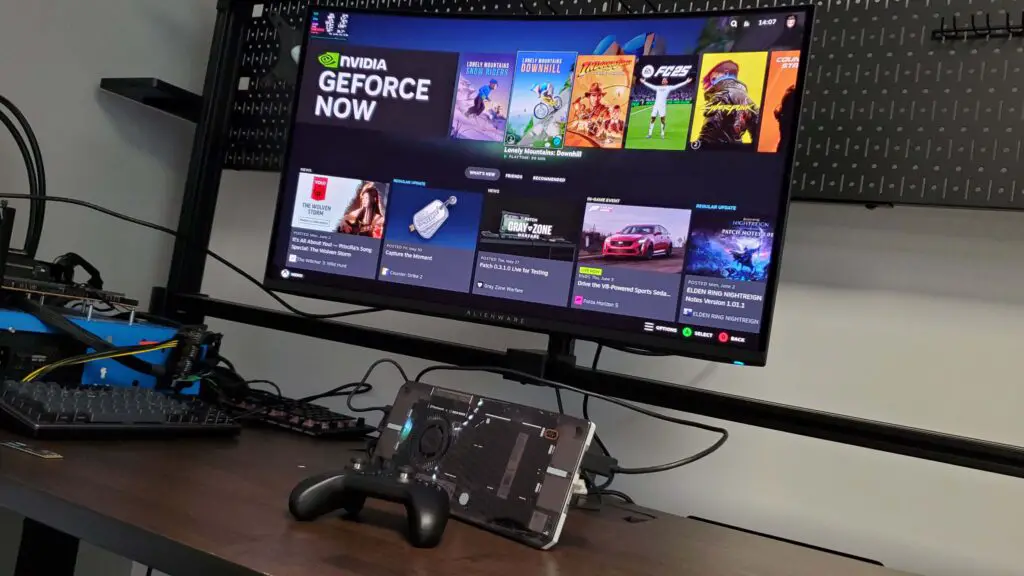
Extending the Reach: Third-Party Handheld Optimizations
One of the most impressive aspects of the 3.8.0 update is the focus on non-Valve hardware. TechTalesLeo notes that these improvements make SteamOS a powerful alternative for users tired of the overhead associated with standard mobile operating systems. The following table summarizes the key firmware and controller updates for various handheld gaming devices:
| Device Series | Key Update Feature | Technical Improvement |
|---|---|---|
| Lenovo Legion Go / Go 2 / S | Full Controller & RGB Support | Added charge limiting & firmware update support |
| ASUS ROG Ally Series | System Integration | TDP control, speaker audio, & SD card reliability |
| OneXPlayer X1 & F1 | Input Refinement | Native controller support & OLED color fixes |
| GPD Win 5 / Mini | Navigation | Improved controller mapping & power button logic |
| MSI Claw | Storage Stability | Enhanced SD card reliability and performance |
Latency is the enemy of any serious gamer. Valve has addressed this by reducing handheld controller input latency from a standard 5-8ms down to a staggering 100-500us. Furthermore, the update introduces “Seamless Boot” and advanced color vibrance controls for AMD Z2E APUs, solving long-standing issues like internally rotated displays and washed-out colors on third-party 3D gaming devices.
Modernizing the Stack: Wayland and KDE Plasma
For the developers and power users in our community, the most significant under-the-hood change is the transition to Wayland by default. Wayland is a modern display server protocol that replaces the aging X11 system, offering a more secure and efficient way to handle screen rendering. This move is essential for future-proofing the OS as digital innovation continues to push hardware limits.
Accompanying this is an update to KDE Plasma, the desktop environment of SteamOS. This upgrade brings native support for HDR (High Dynamic Range) and VRR (Variable Refresh Rate) on external displays, as well as per-display scaling. Whether you are coding on the go or docking for a high-fidelity gaming session, these enhancements ensure a smooth, professional-grade interface.
The Digital Tech Explorer Verdict: Is It Time to Switch?
The SteamOS 3.8.0 Preview represents a major milestone in making Linux-based gaming accessible to everyone. By resolving historical friction points—such as audio driver compatibility and screen rotation on mobile platforms—Valve is making a compelling case for users to ditch traditional Windows installs on handhelds.
However, as TechTalesLeo often highlights, the best tech is the tech that works for your workflow. While SteamOS is rapidly maturing, alternatives like Bazzite continue to offer specialized features for power users. Additionally, Microsoft is currently developing a handheld-friendly version of Windows to compete in this burgeoning market. At Digital Tech Explorer, we recommend this update for any enthusiast looking to squeeze every drop of performance and customization out of their portable hardware.
Disclaimer: All content on Digital Tech Explorer is for informational and entertainment purposes only. We do not provide financial or legal advice. Some links may be affiliate links, meaning we may earn a commission at no additional cost to you.