
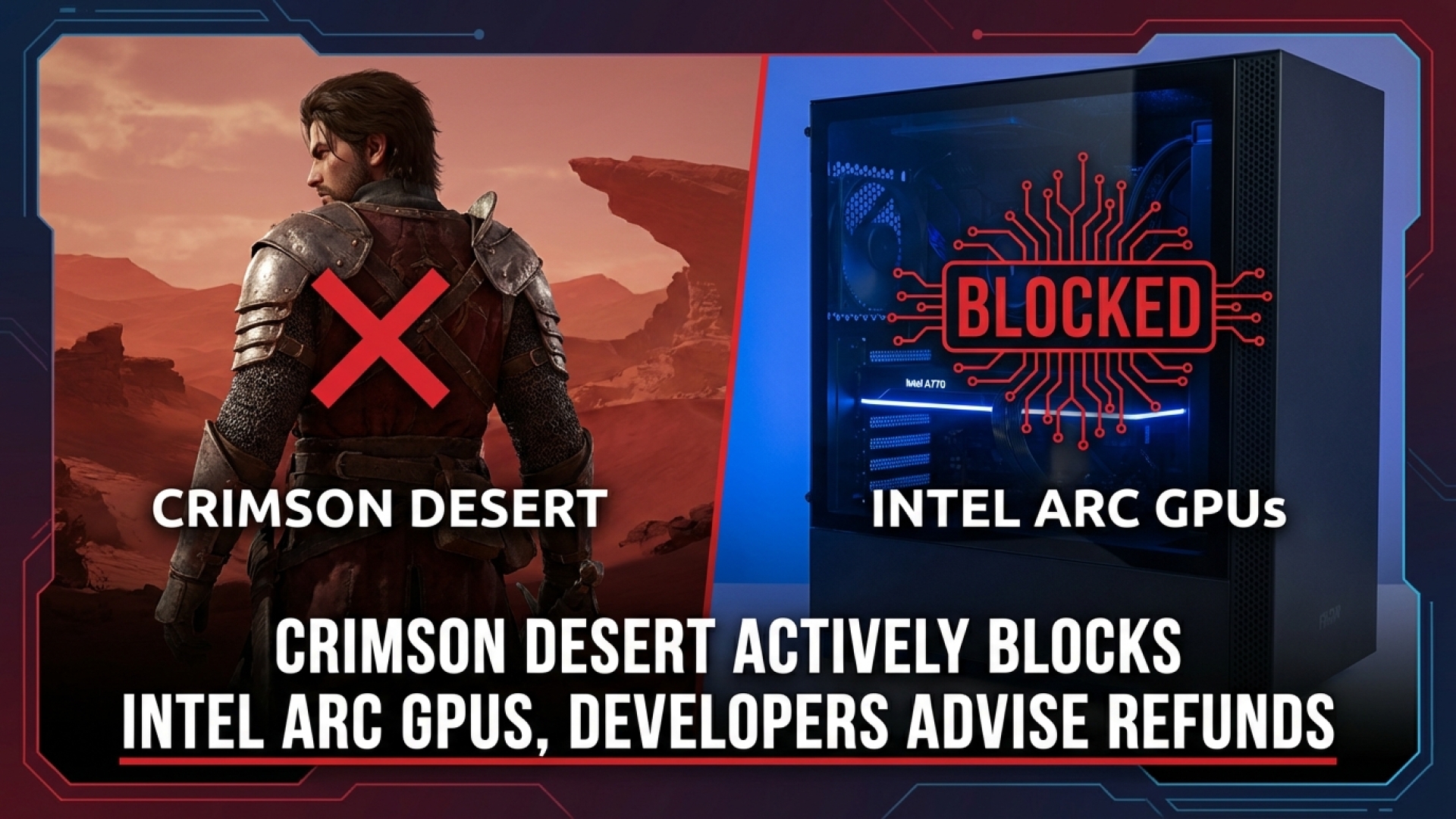
At Digital Tech Explorer, we keep a close eye on how new software interacts with evolving hardware. Usually, when a game lacks official optimization for a specific component, players expect a few frame drops or graphical glitches. However, Crimson Desert has introduced a far more drastic hurdle: a hard block for users equipped with Intel Arc graphics cards. Rather than attempting to run the software, the game actively prevents launch, leaving Intel Arc owners with an unplayable product and a firm suggestion to seek a refund.

The Crimson Desert Blockade: Why Intel Arc Users Are Logged Out
According to the latest updates on the Crimson Desert FAQ, Pearl Abyss has explicitly stated that the game does not support Intel’s GPU lineup. This isn’t just a recommendation for a better experience; the application is coded to refuse execution on these systems. The developer’s current stance is clear: affected players should immediately review the refund policies of their respective digital storefronts.
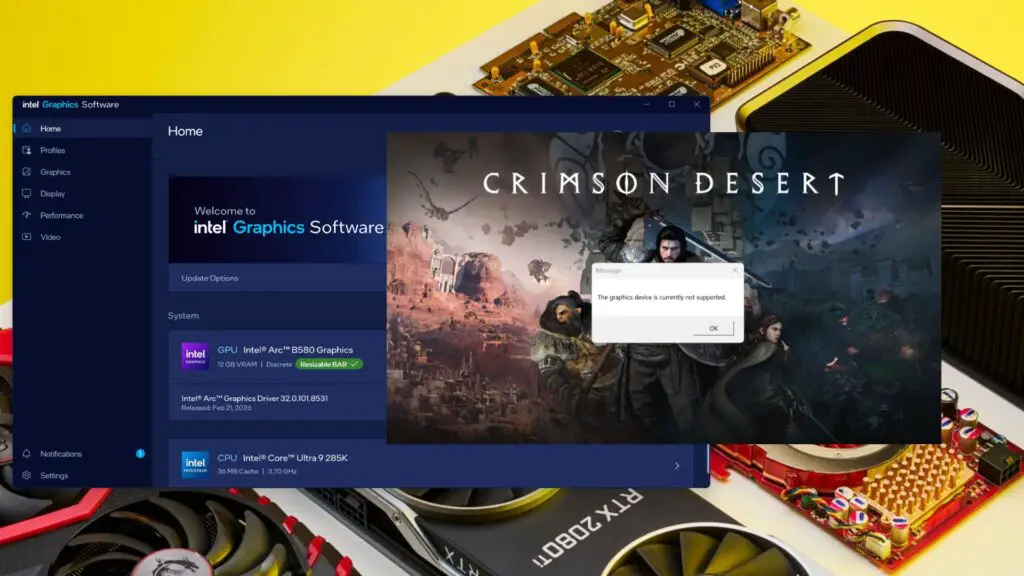
This development has sparked significant pushback in the gaming community. Transparency is a core value here at Digital Tech Explorer, and many users feel Pearl Abyss fell short in this regard. The specific mention of Intel Arc incompatibility was absent from the FAQ during the pre-order phase, leading many early adopters to buy a game they literally cannot open. Discussions on Reddit highlight a growing frustration with what appears to be a total exclusion of a specific hardware brand.
Navigating Refund Policies
For those caught in this hardware lock, securing a return of funds is the priority. Most major PC games platforms have standardized windows for these requests. If you are an Intel user who purchased the game, use the following guide to check your eligibility:
| Platform | Refund Window | Playtime Requirement |
|---|---|---|
| Steam | Within 14 days of purchase | Less than 2 hours |
| Epic Games Store | Within 14 days of purchase | Less than 2 hours |
It is worth noting that because the game will not launch, staying under the two-hour limit is easy. However, if you purchased the game weeks ago and only just attempted to play, you may need to file a manual support ticket explaining the hardware block to bypass the automated 14-day cutoff.
Market Dynamics and Developer Decisions
Why would a major studio block an entire line of graphics cards? From a technical perspective, it likely comes down to market share and optimization costs. According to the Steam Hardware Survey, Intel Arc usage remains a niche segment, hovering around 0.16%. Pearl Abyss may have decided that the resources required to stabilize the game for Intel’s architecture weren’t justifiable, choosing to block access rather than risk a flood of negative reviews due to poor performance.
Curiously, the game has been optimized for other specific ecosystems, including Mac and the ASUS ROG Ally. On the official Discord, moderators confirmed that Intel Arc support is simply not on the roadmap for the foreseeable future. This leaves the 3D gaming community wondering if other developers might follow this trend of excluding smaller hardware players to save on development time.
Cloud Gaming: A Potential Workaround
If you are an Intel user determined to experience the world of Crimson Desert without swapping your hardware, AI-accelerated cloud services might be the answer. By using the GeForce Now service, you can stream the game from NVIDIA-powered servers. This bypasses your local GPU limitations entirely, though it does require a high-speed internet connection and an additional subscription fee.
For more in-depth analyses of hardware compatibility and the latest 2024 releases, stay tuned to Digital Tech Explorer. We bridge the gap between complex tech and everyday usability to keep you ahead of the curve.