
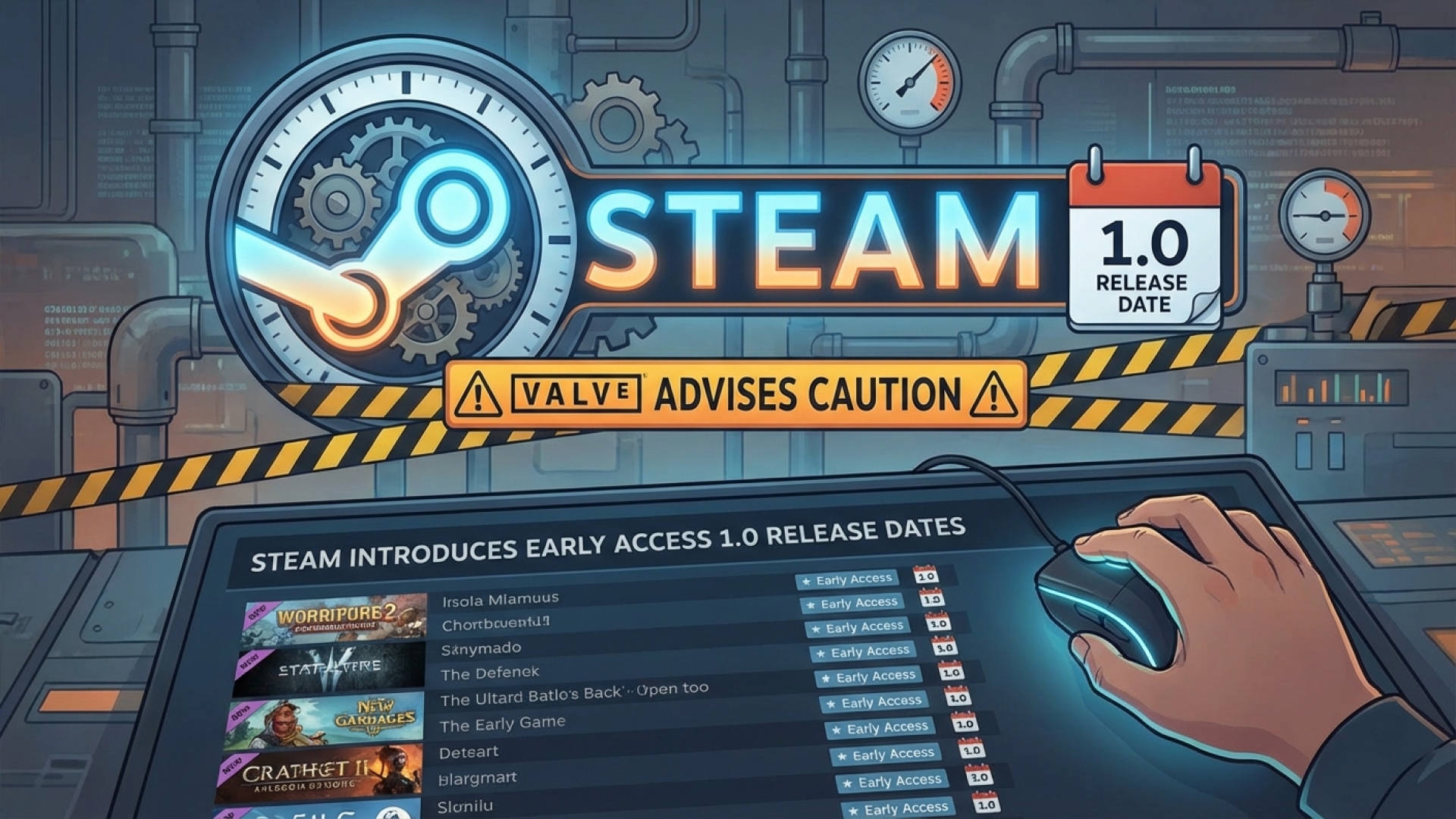
In the world of software development, a firm release date is often the ultimate punchline. As any seasoned developer knows, the journey from early access to a 1.0 launch is rarely a straight line. Steam has recently introduced a feature designed to bring some clarity to this process: developers can now display their planned 1.0 release date directly on their store pages. However, in a move that reflects the unpredictable nature of digital innovation, Valve is simultaneously advising creators to exercise extreme caution before using it.
Steam’s New Early Access Release Date Feature
Publishers and developers managing early access titles on Steam now have the tools to define a planned launch window. This range is flexible, allowing for anything from a vague “2025” to a specific day, month, and year. Valve explains that this mirrors the “Coming Soon” functionality, giving studios the agency to share as much—or as little—as they feel comfortable with.
While developers have always been able to mention dates in their product descriptions, this official field integration is significant. Dates entered here will appear prominently within the blue Early Access banner and will automatically populate a user’s personal release calendar, making the information much more visible to the average gamer.
Release Window Options
To help developers understand how these options appear to the community, here is a breakdown of the new visibility settings:
| Precision Level | Display Format | Best Use Case |
|---|---|---|
| Broad | Year only (e.g., 2025) | Early development phases with long-term goals. |
| Quarterly | Year and Quarter (e.g., Q3 2025) | Mid-stage development with a clear roadmap. |
| Specific | Exact Date (e.g., Oct 15, 2025) | Final polish stage, near-certainty of 1.0 readiness. |
Valve’s Cautionary Stance
Despite the utility of this feature, Valve is surprisingly hesitant to see it widely adopted. “Just because this feature exists, does not mean you should or must use it,” the company stated. They acknowledge that Early Access is inherently “challenging and unpredictable,” and that it is perfectly standard for a studio to pivot or realize the software needs more time in the oven before hittting 1.0 status.
Building Trust Through Transparency
At Digital Tech Explorer, we often discuss the importance of managing expectations in the tech world. Setting an overly ambitious date and missing it can lead to a significant loss of community trust. Valve echoes this sentiment, advising developers to wait if there is any doubt. “Setting a specific calendar date can cause confusion or disappointment if you end up missing that date.”
Maintaining a healthy relationship with your player base is a cornerstone of a successful Early Access campaign. By providing this feature but warning against its misuse, Valve is placing the responsibility of reputation management squarely on the developers. For the tech enthusiast, this means that while release calendars may become more detailed, we should still take those 1.0 dates with a healthy dose of skepticism until the “Download” button is live.

Stay ahead of the curve with more insights on PC Gaming, the latest 2024 Releases, and emerging AI Trends in software development. For more deep dives into the tools shaping the future of tech, visit our Author Page.