
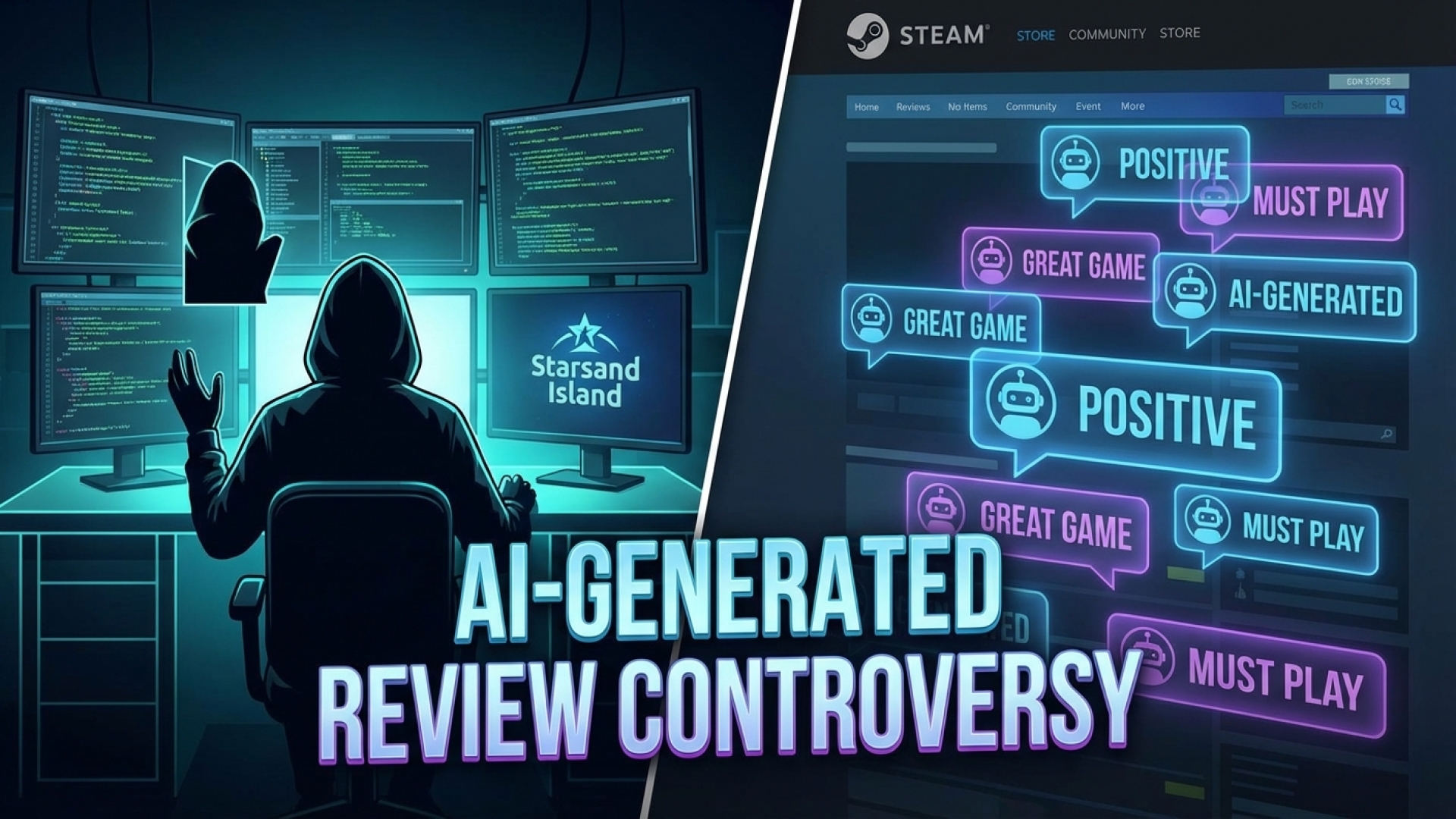
At Digital Tech Explorer, we closely monitor the intersection of software integrity and user experience. Recently, a highly unusual situation has unfolded for the developers of the new farming sim, Starsand Island. Seed Sparkle Lab has publicly denied involvement in a wave of suspicious positive Steam reviews, labeling the influx as an “overpraise attack”—a rare phenomenon where artificial engagement is used to potentially trigger platform penalties or obscure genuine criticism.

The Rocky Launch of Starsand Island
Scheduled for a February 11 release, Starsand Island initially garnered positive attention for its aesthetic and mechanics. However, as TechTalesLeo observes, the narrative quickly shifted from gameplay to controversy. Despite early praise for its demo, the full early access launch was marred by several technical and ethical hurdles:
- Unexpected Anti-Cheat: The inclusion of kernel-level anti-cheat software in a primarily single-player experience.
- Distribution Failures: Kickstarter backers reported significant delays in receiving their promised game keys.
- Day-One Monetization: The release of early access DLC priced at nearly half the cost of the base game.
These issues created a disconnect between the developer and its community, setting the stage for the review controversy that followed.
Deconstructing Allegations of Fake Positive Reviews
The situation escalated when content creator Josh’s Gaming Garden identified highly suspicious patterns within the game’s Steam reviews. Investigation into the sudden surge of positivity revealed approximately 100 accounts that appeared to be part of a coordinated bot network. This type of digital manipulation is a growing concern for PC games and digital storefronts alike.
The following table outlines the specific “red flags” identified in the suspicious review activity:
| Suspicious Metric | Observed Pattern |
|---|---|
| Account Level | The majority of reviewers were exactly Steam Level 4. |
| Playtime Consistency | Most accounts showed between three and five hours of playtime. |
| Shared Library | Reviewers frequently shared identical lists of recently played games. |
| Content Style | Reviews used unusual phrasing, such as “The scenery is so Chinese!” or AI-like scripts. |
The unnatural phrasing and synchronized posting times suggested either a sophisticated marketing attempt gone wrong or a targeted effort by a third party to damage the game’s reputation through “malicious praise.”

Seed Sparkle Lab Denies Involvement
Addressing the community via Discord, Seed Sparkle Lab distanced themselves from the artificial boost. The developer admitted that while they were initially happy to see positive feedback, they quickly grew suspicious of the simultaneous posts and minimal playtime associated with the reviews.
In a formal statement, the developers questioned if the activity was a calculated “overpraise attack.” They noted the high cost associated with such an operation, as each review requires a purchase of the game, and claimed that some of these suspicious accounts immediately requested refunds after posting.
“We simply want to focus on building a good product and giving the players who truly like our game a better experience,” the developer stated. “So, to whoever may be behind this, we kindly ask you to stop. Please let us focus on making our game in peace. We pose no threat to anyone.”
Current Implications for the Gaming Community
As of today, the majority of these Steam reviews remain live. With the game currently sitting at a 91% positive rating across over 1,700 reviews, the data is undeniably skewed. At Digital Tech Explorer, we believe transparency is paramount in software evaluation. This incident highlights the vulnerabilities in user-driven rating systems and the lengths to which “review manipulation” can go in the modern gaming industry.
Whether this was a misguided marketing strategy by an external partner or a deliberate attempt to sabotage the game’s standing with Steam’s anti-fraud algorithms, it serves as a cautionary tale for developers and consumers alike. For more insights on AI in gaming and the latest hardware trends, stay tuned to our ongoing coverage of the 2024-2025 release cycle.