
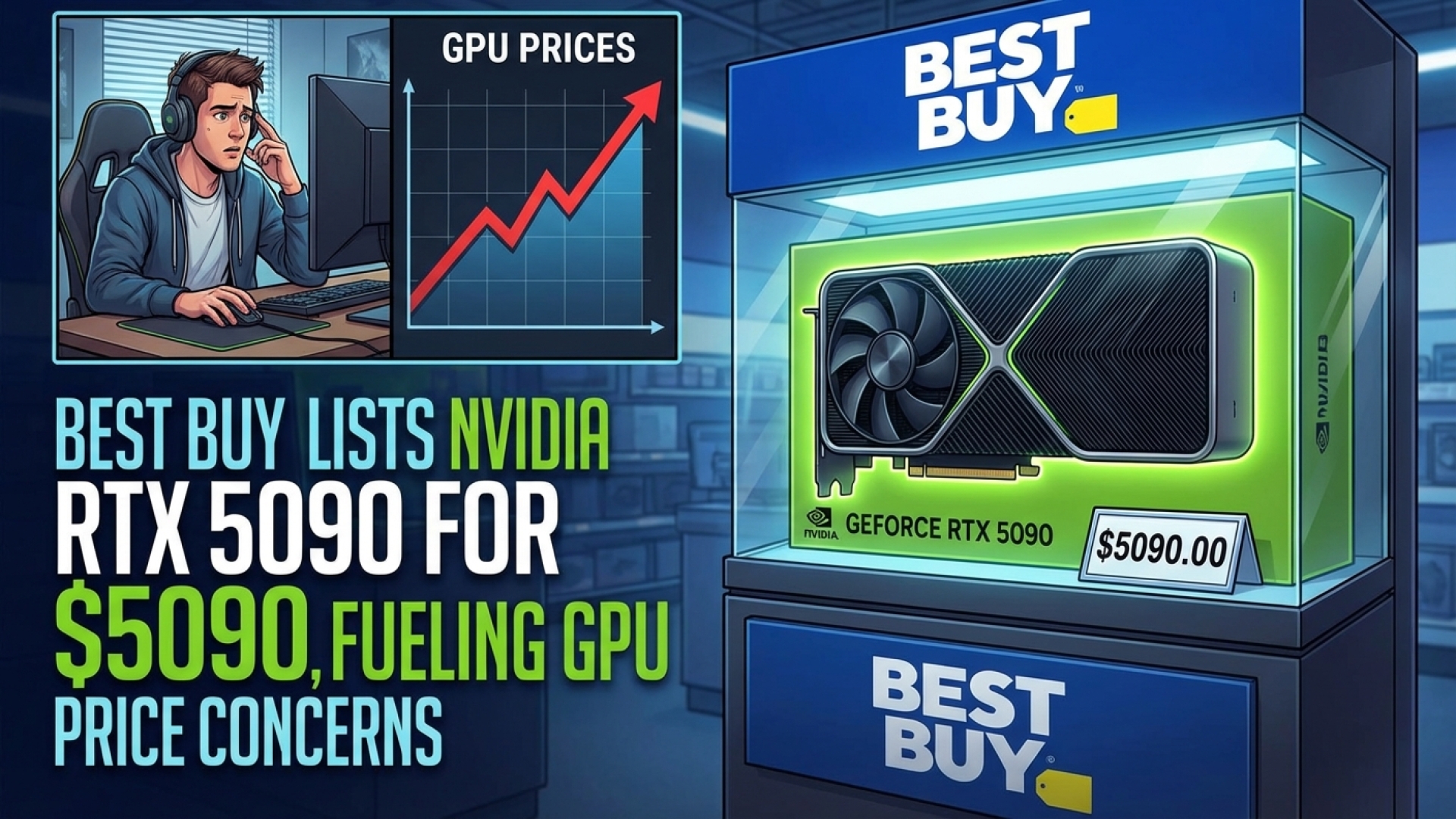
As someone who has navigated the evolving landscape of digital innovation for years, I’ve seen my share of pricing anomalies. But this latest development feels like a script from a tech-dystopia novel: graphics cards with price tags that actually match their model numbers. It is a trend that no enthusiast wants to see, yet here we are at Digital Tech Explorer, tracking a milestone that feels more like a warning shot than a celebration.
The MSI Nvidia GeForce RTX 5090 32G LIGHTNING Z Liquid Cooled Graphics Card has officially surfaced on Best Buy with a staggering price of $5,090.99. It appears that the allure of that extra $0.99 was too strong to resist, even for a price point that looks like an intentional gag.
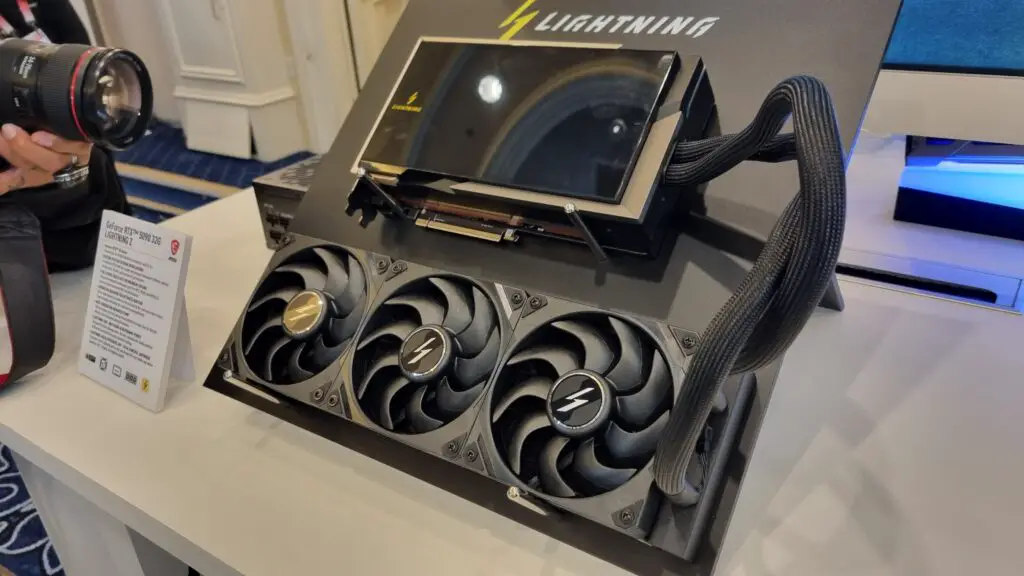
The RTX 5090’s Shocking Price Tag
At first glance, it’s easy to hope this is just a placeholder. Currently, the MSI card is listed as sold out, which sometimes indicates a retailer using a “dummy” price until stock stabilizes. However, the broader market reality suggests otherwise. The Gigabyte Nvidia GeForce RTX 5090 WINDFORCE 32G is currently listed for $5,498.75—and that card is in stock. When five-thousand-dollar GPUs become “available to buy,” the joke about the MSI card’s price being a placeholder begins to lose its punch.
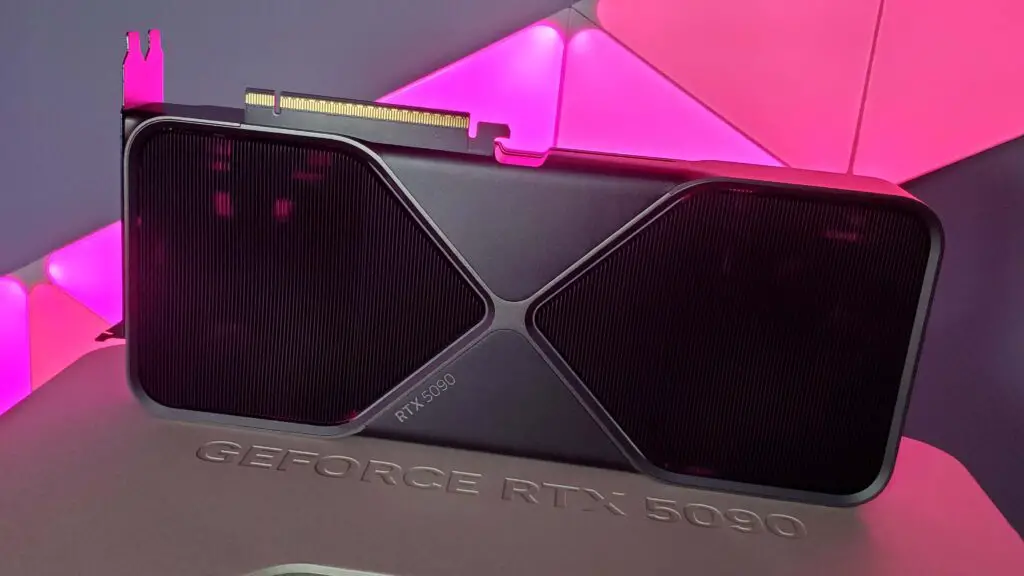
Current RTX 50-Series Market Overview
To put this into perspective for our fellow developers and tech enthusiasts, here is how the current high-end landscape looks at major retailers:
| GPU Model | Estimated Retail Price | Status |
|---|---|---|
| MSI RTX 5090 LIGHTNING Z (Liquid Cooled) | $5,090.99 | Out of Stock |
| Gigabyte RTX 5090 WINDFORCE 32G | $5,498.75 | In Stock |
| Asus Prime RTX 5080 16GB | $1,300.00+ | Limited Availability |
| Gigabyte RTX 5060 Ti 16GB | $520.00+ | Available |
A Worrying Precedent for Future GPUs
This pricing strategy sets an uncomfortable precedent. If we follow this logic to the next generation, should we prepare for an RTX 6090 to cost $6,090? Or perhaps an AMD Radeon RX 9070 for $9,070? While that sounds absurd, the hardware world is increasingly leaning into these premium brackets. The brief window where GPU prices normalized relative to MSRP feels like a distant memory, replaced by a “new normal” where enthusiast-grade hardware is priced as a luxury asset.
AI Acceleration and the Broader Market Reality
At Digital Tech Explorer, we focus on the intersection of hardware and real-world utility. The uncomfortable truth is that the AI industry is driving a massive surge in hardware demand. As corporations funnel billions into machine learning and AI acceleration, consumer-grade silicon is being swept up in the wake. This high demand, coupled with the sophisticated cooling requirements of cards like the MSI Lightning Z, makes the MSRP a secondary concern for manufacturers.
Currently, finding any high-performance card at its original MSRP is a challenge. Even the mid-range is feeling the heat; a 5060 Ti 16 GB graphics card now starts around $520. While we strive to bring you the best tech stories and product analyses, it’s hard to ignore the “ouch” factor in the current market. For now, staying ahead of the trend might mean holding onto your current rig a little longer while we wait for the pricing tide to turn.