
The Future of AI Upscaling: Mark Cerny Unveils the Secrets Behind Project Amethyst
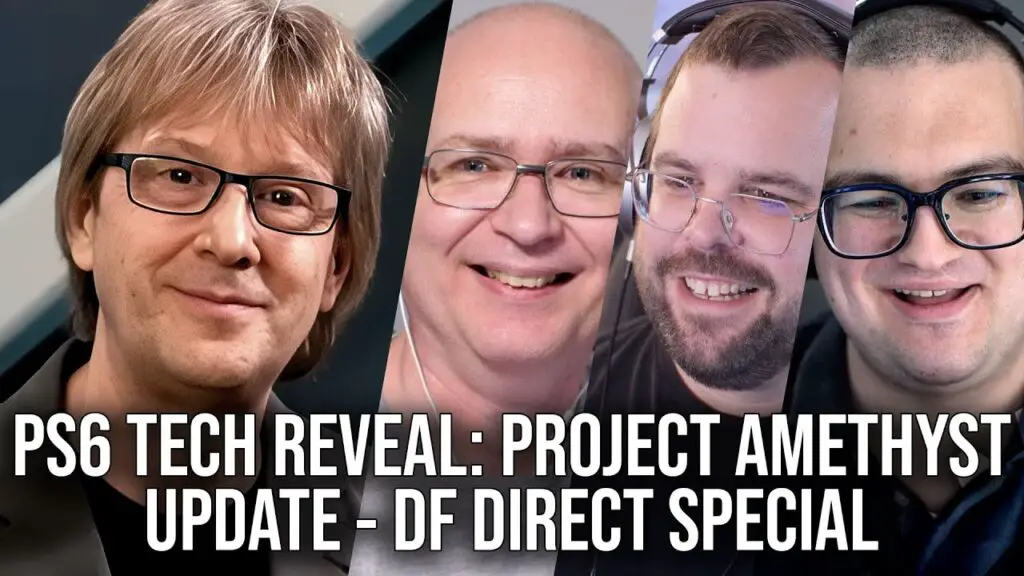
In a recent deep-dive interview with Digital Foundry, Sony’s Lead System Architect, Mark Cerny, pulled back the curtain on the technological synergy driving the next generation of gaming. The conversation focused on the PlayStation 5 Pro’s PSSR (PlayStation Spectral Super Resolution) and its relationship with AMD’s “Project Amethyst.” For tech enthusiasts and developers alike, these revelations provide a fascinating look at how console innovation is influencing the broader PC gaming landscape.
A Shared DNA: PSSR and FSR Redstone
One of the most significant takeaways from Cerny’s interview is the confirmation of a shared architectural foundation between Sony and AMD. While many suspected a connection, Cerny explicitly stated that PSSR and AMD’s FSR Redstone are built upon a co-developed core algorithm.
This collaboration suggests that the advancements seen on the PlayStation 5 Pro aren’t just isolated console features; they are part of a larger evolution in AI-driven upscaling. Cerny also hinted that frame generation libraries—based on the same co-engineered tech—will likely debut on PlayStation platforms in the near future, bringing console performance even closer to high-end PC capabilities.
Under the Hood: INT8 vs. FP8 Implementation
At Digital Tech Explorer, we love diving into the “why” behind the hardware. While the core algorithms are shared, the actual implementation differs based on the specific math processors in the silicon. Cerny highlighted a critical technical distinction: FSR Redstone utilizes 8-bit floating point (FP8), whereas PSSR leverages 8-bit integer (INT8) operations.
This divergence is a direct result of the PS5 Pro’s specialized matrix math implementation. While PC architectures like RDNA 4 might handle these operations differently, Sony has optimized PSSR to extract every ounce of performance from the console’s unique hardware configuration.
Hardware Performance Comparison: TOPS Benchmarks
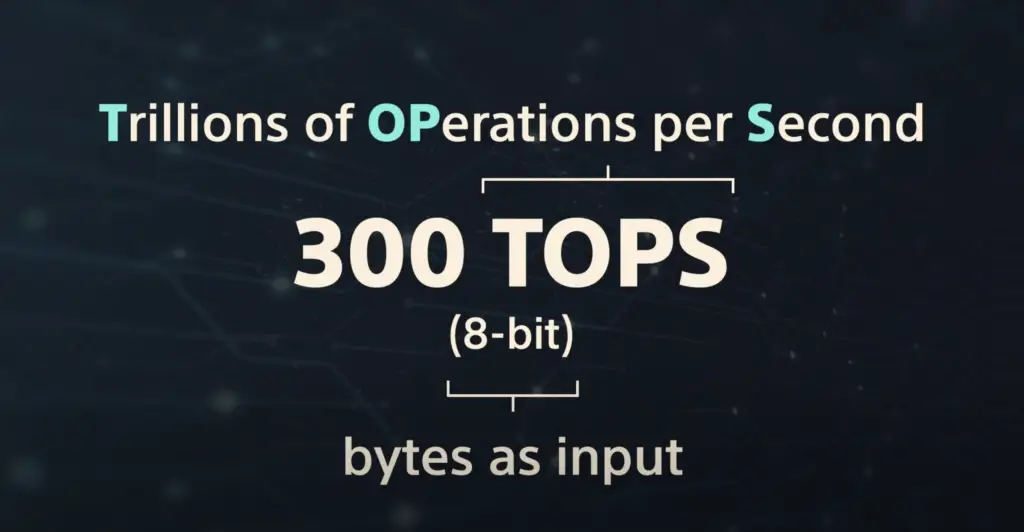
To understand why the PS5 Pro is such a leap forward, we have to look at the TOPS (Tera Operations Per Second) performance. The PS5 Pro’s dedicated hardware for INT8 is remarkably powerful compared to current consumer-grade PC GPUs.
| Hardware Platform | Upscaling Tech | Format | Peak Performance (TOPS) |
|---|---|---|---|
| PlayStation 5 Pro | PSSR | INT8 | 300 TOPS |
| AMD Radeon RX 7900 XTX | FSR / Generic | INT8 | 123 TOPS |
| AMD Radeon RX 7800 XT | FSR / Generic | INT8 | 75 TOPS |
This 300 TOPS benchmark for the PS5 Pro explains why porting PSSR directly to older PC hardware is a challenge. The sheer throughput available for machine learning tasks on the console allows for a level of image reconstruction that traditional GPUs struggle to match without dedicated AI tensor cores.
The Path Forward for Older Hardware
Despite the high hardware requirements, the community remains resourceful. Recent FSR 4 source code leaks revealed an INT8 codepath, sparking hope for older AMD hardware. Tools like “Optiscaler” are already being updated to bring ML-based upscaling to RDNA 2 cards, potentially extending the life of GPUs like the RX 6000 series.
As Digital Foundry noted, the visual fidelity provided by machine learning is a “transformative” step for gaming. Whether you are a developer looking to optimize your next title or a gamer deciding between a console upgrade and a new PC GPU, the convergence of Sony and AMD’s research is shaping the future of how we play.
About the Author: TechTalesLeo is a dynamic storyteller and tech enthusiast who brings technology to life through captivating narratives. With a background in digital media and innovation, Leo focuses on bridging the gap between complex engineering and everyday usability. Follow more of Leo’s insights on the author page.
Disclaimer: All content on Digital Tech Explorer is for informational and entertainment purposes only. We do not provide financial or legal advice.
Affiliate Disclaimer: Some of the links on Digital Tech Explorer are affiliate links. This means we may earn a commission if you click through and make a purchase, at no additional cost to you. Our recommendations are based on thorough research and personal experience.