
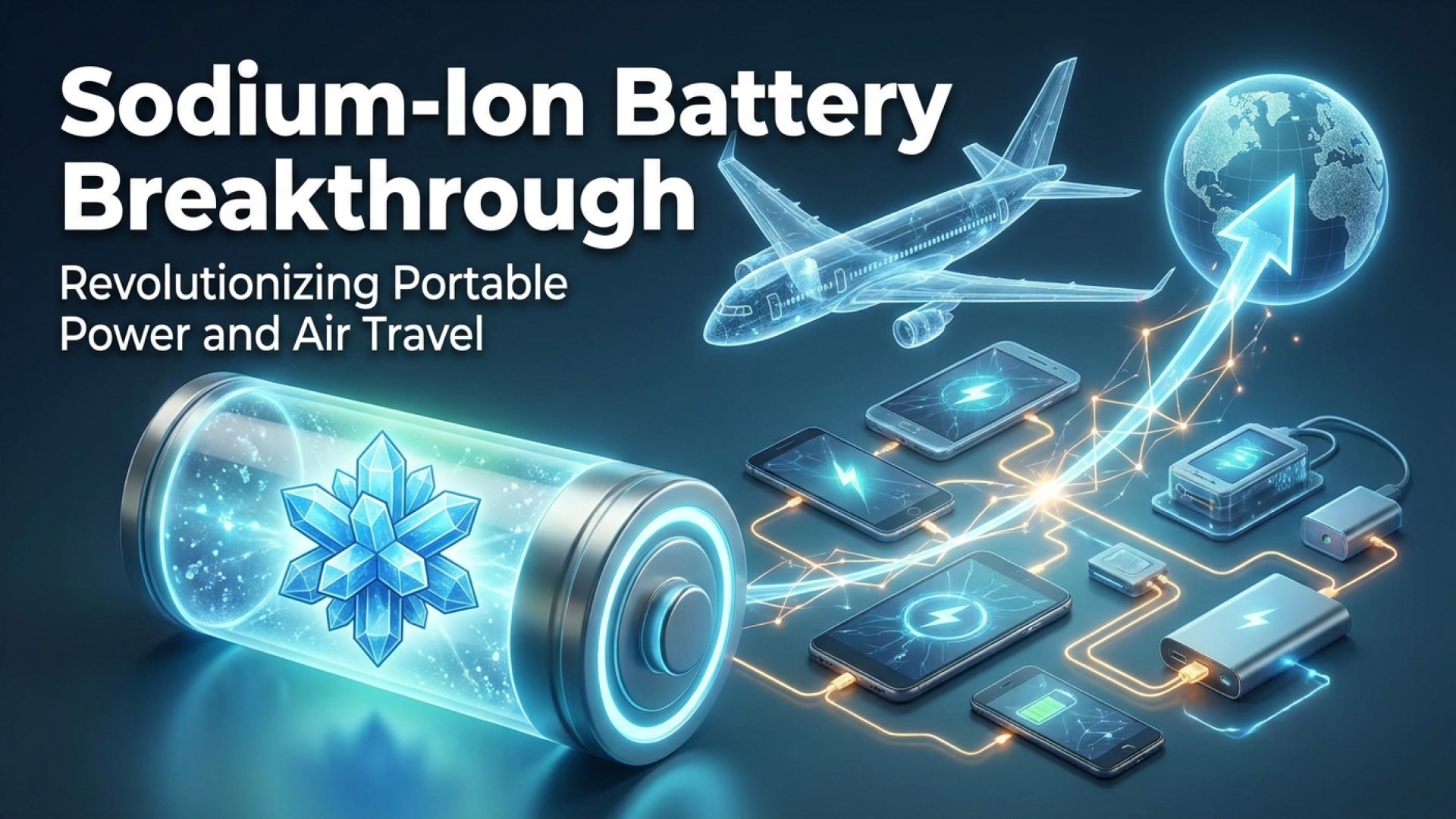
Lithium-ion batteries are so ubiquitous that you’re likely reading these words on a device powered by one right now. At Digital Tech Explorer, we’ve tracked their rise as the gold standard for laptops and smartphones due to their high energy density and fast charging. However, as any seasoned software engineer or tech enthusiast knows, they aren’t without flaws. They rely on lithium—a resource that must be mined from the Earth—and carry a notorious reputation for thermal runaway, or more simply, exploding. This makes them a liability in unmonitored environments, like an airplane’s cargo hold or even your bedside table. Fortunately, a significant breakthrough suggests we may finally be ready to move toward a safer, more sustainable alternative.
Enter sodium-ion batteries. As recently highlighted by Live Science, a pioneering experiment conducted by researchers at the Tokyo University of Science has yielded results that could redefine hardware standards for the next decade.
The Science Behind the Sodium-Ion Breakthrough
To understand why this matters, we have to look at the chemistry. Lithium-ion batteries utilize a graphite cathode to store charged ions. Sodium ions, by contrast, require “hard carbon.” Historically, this has been a bottleneck; sodium ions frequently became “jammed” when trying to navigate the porous structure of the carbon material, leading to inefficient charging and poor performance.
In my early days studying engineering, I remember how the complexities of ion transport could make your head spin—so much so that I briefly detoured into film studies before the allure of digital innovation brought me back. Essentially, as ions enter the storage part of a battery, the accumulation of charge creates a repelling effect. This is exactly why your smartphone hits 50% in a flash but crawls toward that final 100%. If this repelling effect is too strong, the battery simply stops accepting a charge.
The scientists in Tokyo solved this by combining hard carbon with aluminum oxide. This hybrid material allows sodium ions to flow much more freely, effectively removing the “traffic jam” and making sodium-based storage a viable reality for mainstream electronics.
Why This Matters: Efficiency, Safety, and Sustainability
The shift to sodium offers three major advantages for the tech world:
- Abundance: Sodium is everywhere. We can extract it from seawater via electrolysis, making it far more sustainable and cheaper than lithium mining.
- Charging Efficiency: Sodium ions require less energy to cluster together, potentially leading to faster “top-off” times compared to current tech.
- Superior Safety: Unlike their lithium counterparts, sodium-ion batteries are significantly less prone to catching fire if damaged. This could revolutionize travel safety, finally allowing high-capacity batteries to be handled with less risk in aviation and shipping.
The Road Ahead
While we aren’t swapping out our laptop batteries quite yet, the foundation is laid. For those who want to dive deeper into the technical specifications, you can explore the full academic paper or read the official press release from the Tokyo University of Science.
Future-Proofing Your Setup: Essential Hardware for 2026
As we look toward new battery tech, it’s also time to look at the current state of gaming and professional hardware. If you are planning a build this year, these are the components we recommend for peak performance and reliability.
| Component Type | Recommended Product |
|---|---|
| CPU | AMD Ryzen 7 9800X3D |
| Motherboard | MSI MAG X870 Tomahawk WiFi |
| RAM | G.Skill Trident Z5 RGB 32 GB DDR5-7200 |
| Storage (SSD) | WD_Black SN7100 High-Performance SSD |
| Graphics Card | AMD Radeon RX 9070 |
Affiliate Disclaimer: Some of the links on Digital Tech Explorer are affiliate links. This means we may earn a commission if you click through and make a purchase, at no additional cost to you. Our recommendations are always based on thorough research, real-world testing, and our commitment to transparency.
For more insights on emerging tech and AI acceleration, stay tuned to Digital Tech Explorer, where we bridge the gap between complex engineering and everyday usability.