
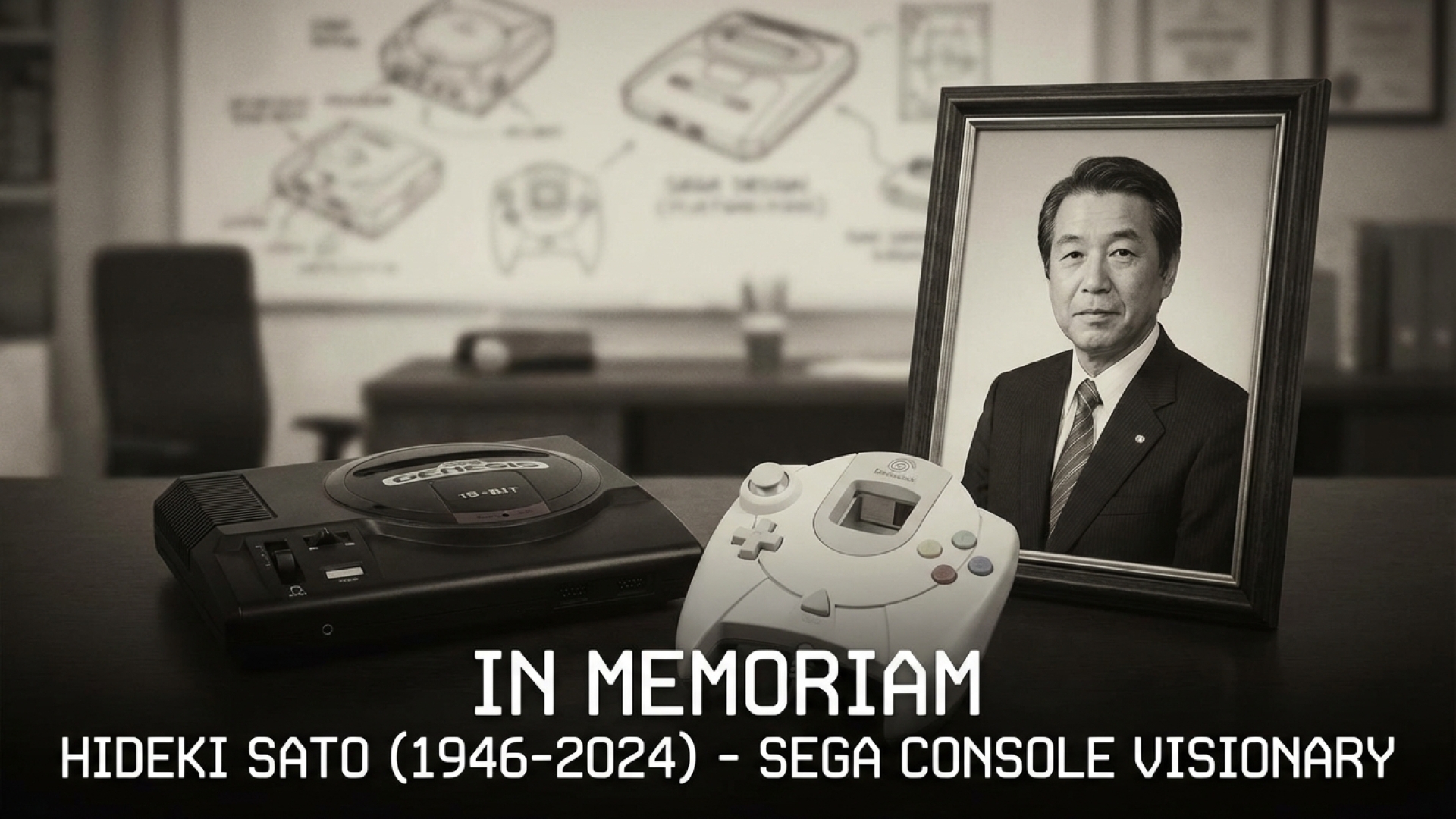
The tech world pauses to honor the legacy of Hideki Sato, a visionary architect of digital innovation and a titan in the history of interactive entertainment. Sato, the former Sega president and lead engineer who defined an entire era of gaming hardware, has passed away at the age of 77. His career at Sega, which began in the 1970s, helped transform the company from an arcade pioneer into a household name through classics like MonacoGP, Turbo, and Star Jacker.
The Engineer of a Golden Era
As a storyteller of tech history, I find Sato’s influence unparalleled. He led the engineering teams for every Sega home console released between 1983 and 2001. His work represented the first major challenge to industry monopolies, pushing the boundaries of what home hardware could achieve. Under his guidance, Sega developed a lineage of systems that remain legendary among enthusiasts today.
| Console System | Release Year | Impact & Innovation |
|---|---|---|
| SG-1000 | 1983 | Sega’s first foray into the home console market. |
| Master System | 1985 | Brought high-quality arcade ports to the living room. |
| Mega Drive/Genesis | 1989 | Defined the 16-bit era with “blast processing” and edge. |
| Saturn | 1994 | A powerhouse for 2D gaming and early 3D exploration. |
| Dreamcast | 1999 | The first console to offer built-in internet for mass-market online play. |
Navigating a Corporate Metamorphosis

Following the loss of Isao Okawa in 2001, Sato stepped into the role of company president. It was a period of immense pressure; Sega was facing a pivotal crossroads. Sato was the steady hand that navigated the company away from the hardware business he helped build, ensuring Sega’s survival as a software-focused entity. He remained president until 2003, eventually leaving the company in 2008 following the merger with Sammy.
The Dreamcast: A Vision Ahead of Its Time
At Digital Tech Explorer, we often analyze how emerging trends shape the future. The Sega Dreamcast was perhaps the ultimate example of this. Despite its short commercial lifespan, the machine featured groundbreaking tech: the Visual Memory Unit (VMU), which acted as a secondary screen, and a built-in modem that pioneered the console MMO genre with Phantasy Star Online. Sato’s forward-thinking approach laid the groundwork for the connected gaming ecosystems we take for granted today.
A Lasting Legacy in Software

Because of Sato’s leadership during those turbulent transition years, Sega evolved into a premier third-party publisher. From the sprawling narratives of the Like a Dragon (Yakuza) series to the high-speed thrills of Sonic the Hedgehog, his influence is woven into the DNA of modern gaming. Hideki Sato didn’t just build consoles; he built the foundation for how we play today.
For more insights into tech history and product reviews, stay tuned to Digital Tech Explorer.