
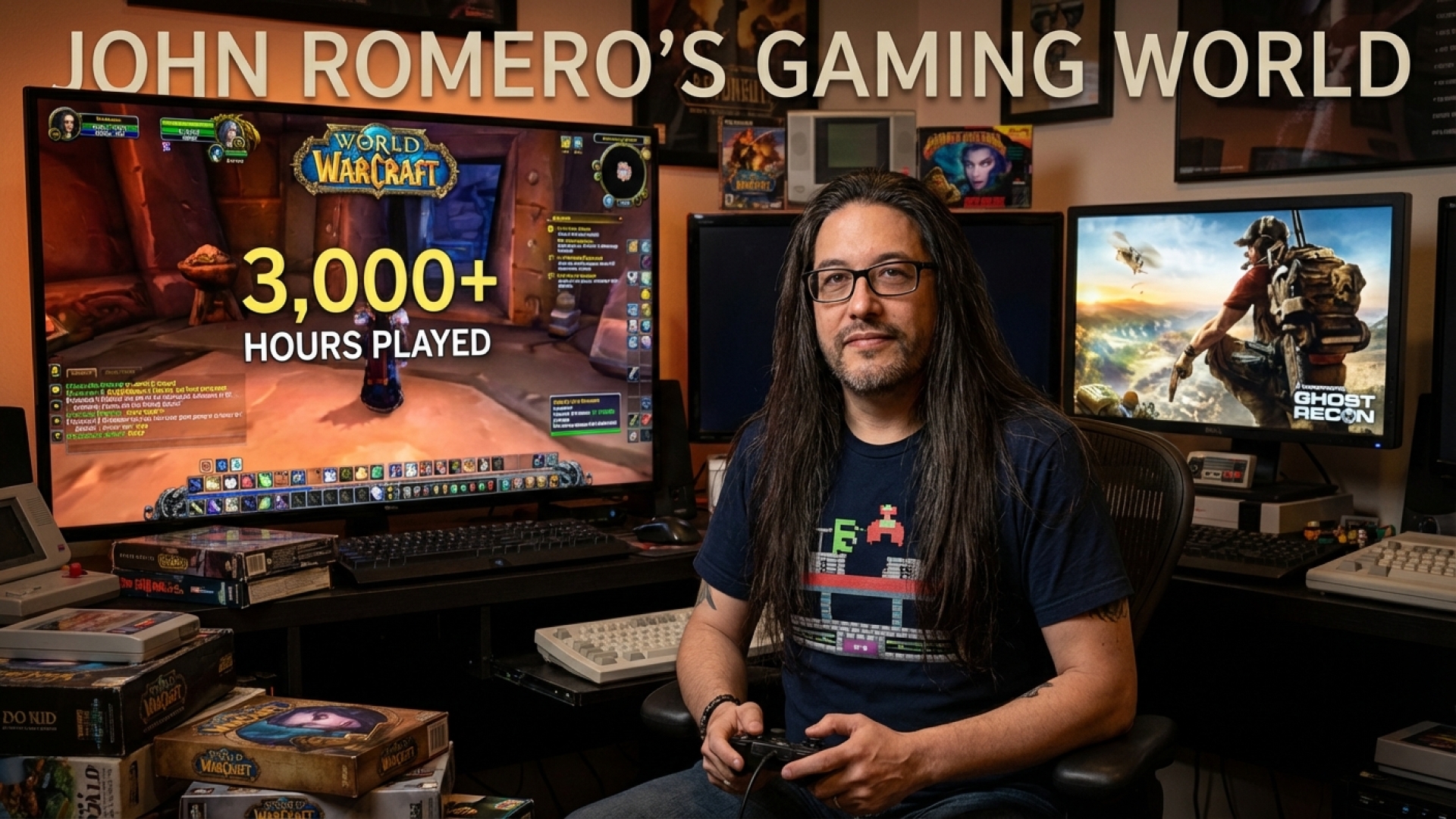
At Digital Tech Explorer, we love diving into the workstations of the minds that built our industry. In this edition of Disk Cleanup, our resident storyteller TechTalesLeo sits down with a true titan of PC games: John Romero. As the co-creator of Wolfenstein 3D, Doom, and Quake, Romero’s influence on software engineering and level design is unmatched. We explore his current habits, his 3,000-hour MMO obsession, and the tactical shooters he refuses to delete.
John Romero’s career spans the evolution of the GPU and modern hardware, yet his tastes remain deeply rooted in innovative design. “I keep my eye on the indie scene a lot; that’s where a lot of really great ideas come from,” he explains. Currently, Romero is balancing his time between legacy projects—like Hellion, a new Doom 2 WAD—and a major unannounced FPS project at Romero Games.

The Current Rotation: Arc Raiders
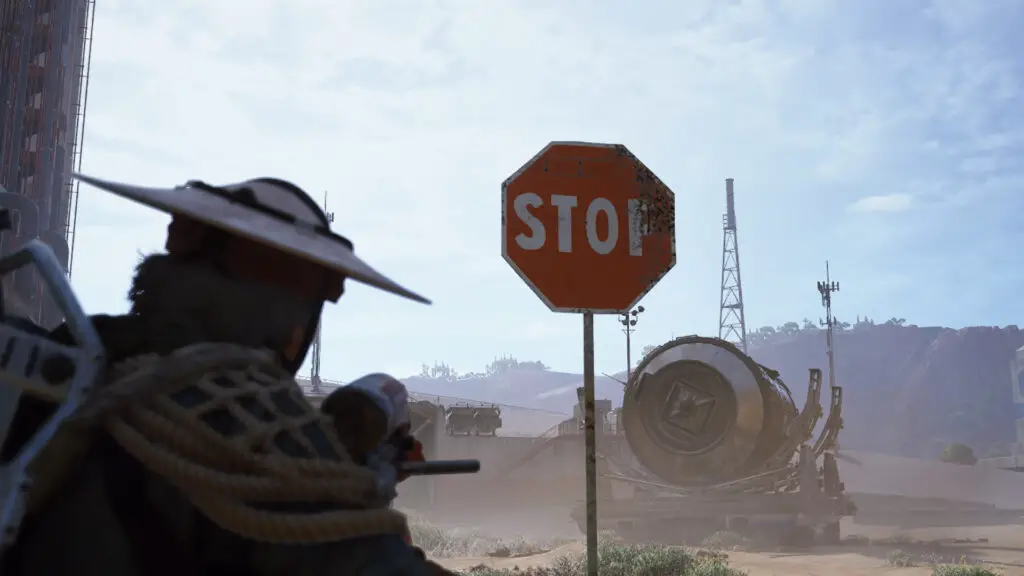
Romero’s current daily driver is Arc Raiders. Eschewing the standard gaming tropes of pure PvP, he is drawn to its heavy PvE focus. The game tasks players with surviving against “Arc bots” within a high-pressure environment where exits gradually close.
From a developer’s perspective, Romero finds the server-side matchmaking fascinating. The game utilizes a behavioral algorithm: players who prioritize survival over aggression are matched with similar peers, while “hostile” players are funneled into high-conflict servers. It is a masterclass in using AI-driven systems to curate player experience.
The Addictive Design of Balatro
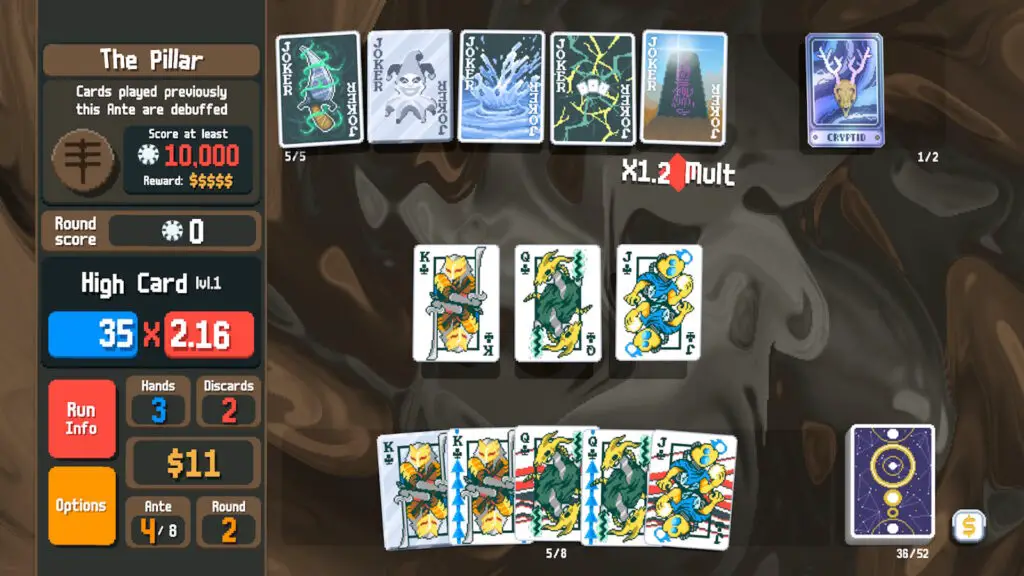
Before Arc Raiders, Romero fell down the Balatro rabbit hole. He views the poker-themed roguelike as a “meta-idea”—a perfect example of how a solo developer can disrupt the market through pure design excellence. He draws a direct line between Balatro and Minecraft, noting how both titles prove that complex, engaging systems don’t require massive studios to succeed.
Legacy Code: Dodge ‘Em (1982)
When looking at the oldest software on his machine, Romero looks back to his own roots. Currently installed is Dodge ‘Em, a title he developed in 1982. He describes it as a primitive learning exercise in sound effects and joystick input. “It’s not a good game,” he admits, noting how the entire program would freeze whenever the player fired a shot—a quirk of early 8-bit development limitations.
The 3,000-Hour Deep Dive: World of Warcraft
For Romero, World of Warcraft wasn’t just a hobby; it was a five-year case study in systems design. Clocking over 3,000 hours, he treated the MMORPG as a laboratory.
He maintained five “main” characters with top-tier raid gear and another five specialized alts. By playing six hours a day (and more on weekends), he deconstructed how Blizzard optimized player retention and leveling loops. For Romero, studying these battle-tested systems is essential for any developer looking to understand the psychology of engagement.

The Permanent Resident: Ghost Recon Breakpoint
While many gamers cycle through titles, Ghost Recon: Breakpoint has earned a permanent spot on Romero’s SSD. He has been a devotee of the franchise since the 2001 original, which he loved for its lethal, “one-shot-and-you’re-out” realism.
He praises Breakpoint for its massive open-world scale and tactical depth. His commitment is quantifiable: his exploration stat for the game currently sits at an impossible 100.7%. The randomization of enemy AI and tactical variety keeps the experience fresh, even after two decades of playing the series.
Software He Can’t Live Without: In Your Face
For a developer working on a 49-inch ultrawide monitor, standard Windows notifications are useless—they get lost in the periphery. Romero relies on In Your Face, a productivity app that takes over every connected screen to display calendar alerts. It acts as a full-screen “alarm” that ensures he never misses a meeting or a coding milestone, bridging the gap between his mobile, Mac, and PC environments.
The Developer’s Desktop: Digital Minimalist
Despite the thousands of assets involved in game production, Romero’s desktop is a fortress of order. His primary monitor features only a handful of folders on the right side, while his secondary screen remains entirely empty.
He categorizes everything—PDFs, music, developer screenshots—into expanding directories. “If I saw the thousands of files lurking ‘under the hood,’ I would organize the hell out of it,” he says. It’s a philosophy that mirrors his approach to code: clean, efficient, and purposeful.
About the Author: TechTalesLeo is a dynamic storyteller at Digital Tech Explorer, specializing in bridging the gap between high-level digital innovation and everyday usability. With a background in web development and emerging tech trends, Leo brings a unique perspective to product analysis and industry interviews.
Disclaimer: All content on Digital Tech Explorer is for informational and entertainment purposes only. We do not provide financial or legal advice. Some of the links on Digital Tech Explorer are affiliate links. This means we may earn a commission if you click through and make a purchase, at no additional cost to you.