
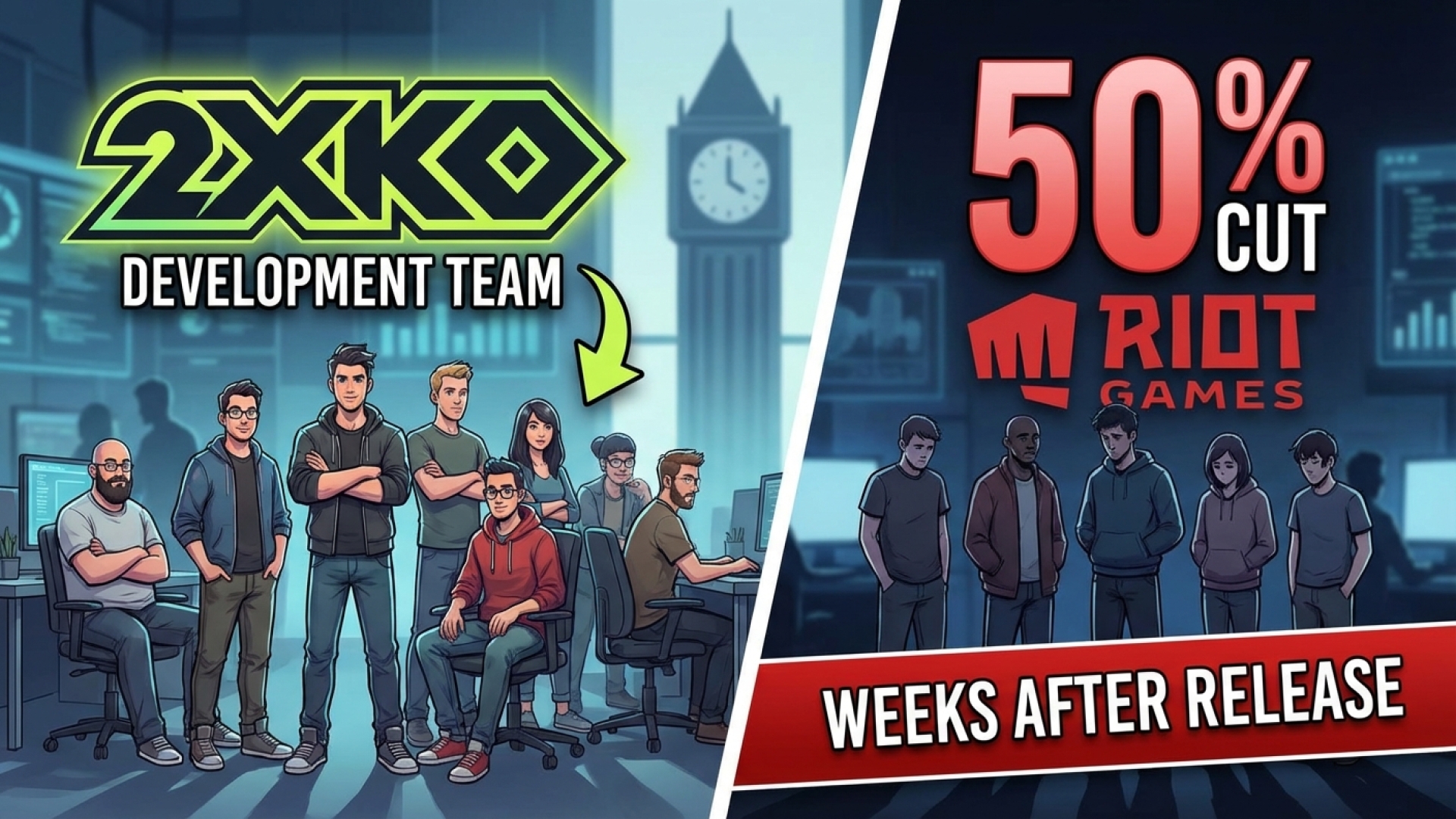
Just weeks after the official launch of its highly anticipated 2v2 fighting game 2XKO, Riot Games has sent shockwaves through the industry by announcing a significant reduction in its development team. Impacting nearly half of the staff dedicated to the title, this move underscores the volatile nature of modern game development and continues Riot’s broader corporate “refocusing” strategy.
A Sudden Leaner Approach for 2XKO
Executive producer Tom Cannon revealed the changes in a recent announcement, acknowledging that while the game has found a dedicated core, the initial momentum didn’t justify the original team size for the long term. Approximately 80 roles are being eliminated, representing nearly 50% of the 2XKO development team. In a show of internal support, Riot has stated that affected developers will have the opportunity to apply for other open positions within the company.
Despite the severity of these Riot Games layoffs, the competitive roadmap remains intact. Digital Tech Explorer has confirmed that plans for the 2XKO 2026 Competitive Series are moving forward. Cannon emphasized that a “smaller, focused team” is now tasked with implementing key gameplay improvements, ensuring the title remains a priority within Riot’s fighting game community (FGC) aspirations.
The Strategy Behind the Shift
At Digital Tech Explorer, we’ve tracked Riot’s shifting business model closely over the last two years. These cuts are not isolated incidents but part of a macro-level “refocusing” process. CEO Dylan Jadeja previously noted that the company had over-extended itself with “big bets” since 2019 that didn’t yield expected returns, leading to the closure of the Riot Forge program and a massive reduction of 530 employees earlier in 2024.
While 2XKO sees a reduction, Riot is doubling down on its flagship title. Co-founder Marc Merrill indicated that the League of Legends development team is actually projected to grow. This shift suggests Riot is prioritizing “high-impact” projects with proven longevity over experimental expansions.
Riot Games Corporate Adjustment Timeline
| Date | Action Taken | Primary Impact |
|---|---|---|
| Early 2024 | Workforce Reduction | 530 employees laid off; Riot Forge closed |
| October 2024 | Structural Realignment | Additional layoffs focused on core optimization |
| January 2025 | 2XKO 1.0 Launch | Official release of the 2v2 fighting game |
| February 2025 | 2XKO Team Reduction | 80 roles cut to “right-size” development |
| Late 2025 | League of Legends Overhaul | Anticipated “next phase” for Riot’s flagship MOBA |
From Project L to a Precarious 1.0
The journey for 2XKO (formerly known as Project L) has been a long one, spanning nearly a decade of development. The project gained steam following Riot’s acquisition of Radiant Entertainment in 2016. Since then, the fighting game community has watched with bated breath as Riot attempted to merge high-fidelity combat with the massive League of Legends universe.
The game transitioned from a closed beta to early access in late 2025, reaching its 1.0 version on January 20. Because 2XKO is managed via the Riot Client rather than Steam, public player counts remain a mystery. However, a massive team reduction just 20 days after a full release is a clear indicator that the initial player acquisition or monetization metrics may have fallen short of internal targets.
As TechTalesLeo, I believe this reflects a broader trend in the tech and gaming sectors: a move away from “growth at all costs” toward sustainable, leaner operations. For the fans of 2XKO, the hope remains that this “focused team” can deliver the content depth needed to keep the competitive scene thriving through 2026 and beyond.