

At Digital Tech Explorer, we often discuss how automation and AI are reshaping the global workforce. As a storyteller and tech enthusiast, I’ve decided to take a proactive approach to this looming digital shift: I’m auditioning for a new career through the medium of simulation. This week, my digital journey led me to Ranger’s Path: National Park Simulator, an Early Access open-world title that promises the serene life of a park ranger but delivers something much more mechanically complex.
The moment I stepped into the sprawling vistas of Faremont National Park, I realized my expectations of “watching trees grow” were wildly inaccurate. After donning the iconic uniform and grabbing my radio, I checked my inventory and was greeted not by binoculars or a bird-watching guide, but by a heavy-duty toolkit.

A saw, a hammer, a screwdriver, and a wrench. My first day was less about ecology and more about hardware maintenance. From repairing splintered benches to reconstructing fallen signage, the game paints a grim picture of park visitors. It seems the tourists in Faremont spend their time aggressively dismantling the infrastructure. Within an hour of manual labor, I found myself less enamored with nature and more frustrated by the digital NPCs leaving trash in their wake.
However, the technical simulation goes beyond human-made messes. Dynamic weather patterns cause trees to obstruct paths, and local wildlife—specifically mischievous raccoons—frequently upend trash receptacles. The core gameplay loop relies on a series of interactive minigames. Whether you are tightening screws or sawing logs, you’ll be timing clicks and mimicking physical motions with your mouse to ensure the park remains structural sound.
Interestingly, the game grants you what I like to call “Super-Tech Intuition.” Through a feature known as “Ranger Sense,” you can scan the environment to highlight problems, track poachers, or identify rare flora. It feels like a high-tech HUD integrated directly into your ranger hat, bridging the gap between a traditional simulator and an RPG-lite experience.
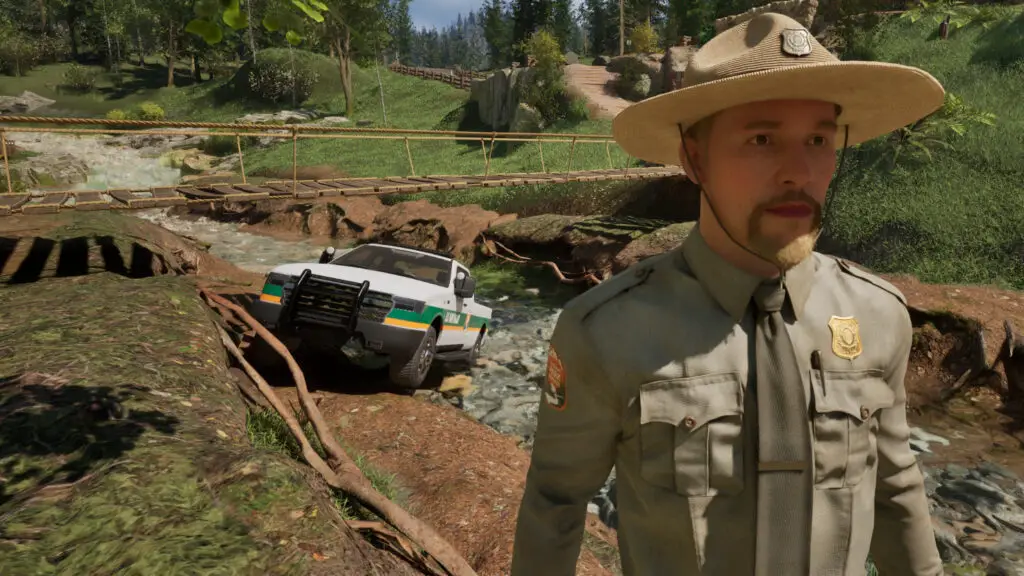
While the manual labor can feel repetitive, the scope of the world is where the game truly shines. My supervisor, a voice on the radio who contacts me with the frequency of a push notification, constantly updates me on missing hikers, bear sightings, and photography assignments. Faremont is surprisingly vast, requiring me to utilize the ranger truck to navigate the terrain effectively.
One of the most refreshing aspects of this simulation is the player agency. Unlike many job sims that penalize you for straying from the path, Ranger’s Path allows you to prioritize your own goals. When my boss asked me to find a lost hiker while I was busy tracking a rare owl at sunset, I simply declined. “It’s your decision,” she replied. In the world of digital innovation, I appreciate a “boss” that respects my workflow, even if my priorities—choosing bird photography over a rescue mission—are ethically questionable.
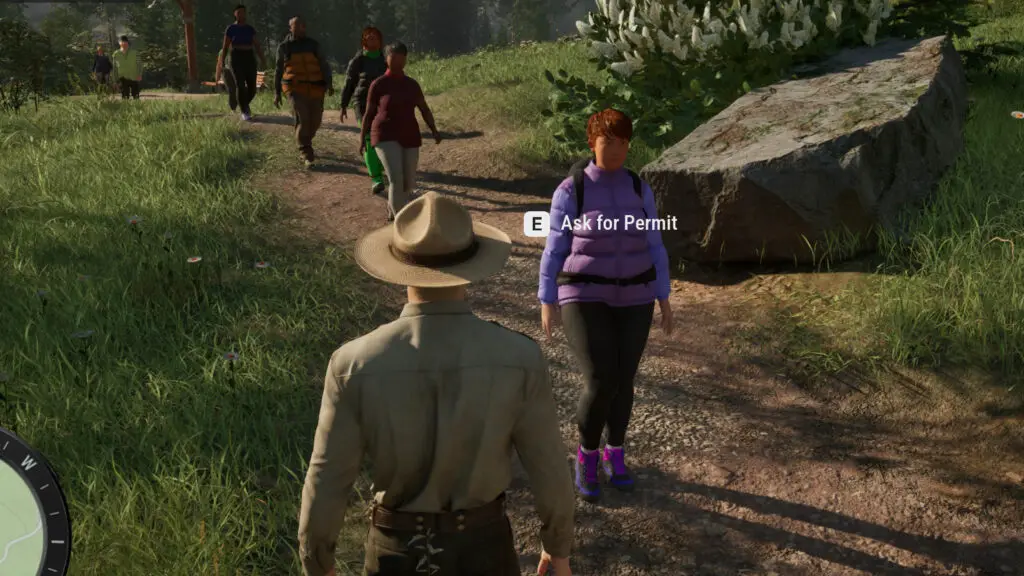
The game turns you into a wilderness bouncer, where the primary quest is enforcing digital order.
The real highlight, however, is the permit enforcement system. You can approach any visitor and demand to see their passes. If their permit is expired or they are camping in a restricted zone, you have the authority to issue fines or evict them from the park. For someone who values rules and order, watching a group of digital campers pack up their tents because they lacked the proper paperwork is immensely satisfying.
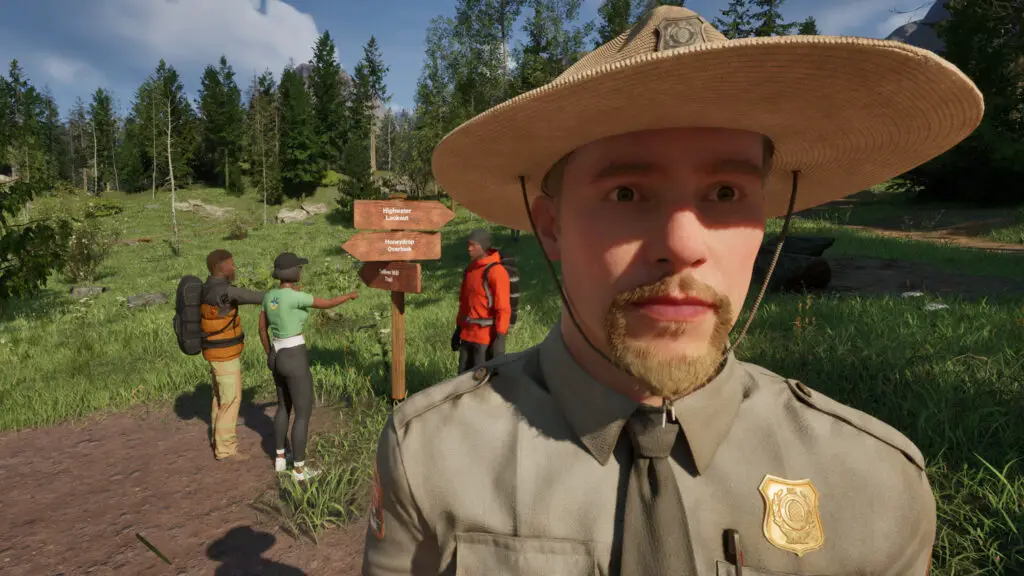
I’ve spent my recent sessions specifically patrolling fishing spots, hoping to catch an unpermitted angler in the act. Even though I haven’t caught my “Big Fish” yet, the dedication to maintaining the park’s integrity keeps me coming back to the trails every morning.
Performance Evaluation
| Feature | Rating | TechTalesLeo’s Take |
|---|---|---|
| World Design | 8/10 | Surprisingly vast and visually impressive for an indie sim. |
| Gameplay Mechanics | 6/10 | The repair minigames can feel repetitive over long sessions. |
| Simulation Depth | 7/10 | The permit and radio system create a realistic sense of duty. |
| Performance (PC) | 7/10 | Runs well on mid-range hardware with decent optimization. |
TechTalesLeo’s Final Verdict
Would I pursue this IRL? Sort of. The allure of nature and the power to enforce park rules is tempting. However, my real-world technical skills are better suited for coding than carpentry. I couldn’t fix a park bench if my life depended on it, and I’m fairly certain I don’t have the “hat-game” to pull off the ranger aesthetic.
Is the game worth your time? If you enjoy low-pressure, high-immersion simulators with a touch of manual labor, then absolutely. Ranger’s Path: National Park Simulator offers a unique perspective on the “job sim” genre, focusing on maintenance and authority in a beautiful digital wilderness. You can find it now on Steam to start your own journey into the wild.
For more tech stories, gaming reviews, and insights into the latest digital trends, stay tuned to Digital Tech Explorer.