
The digital storefront landscape is witnessing a sharpening conflict as indie publisher Santa Ragione ramps up its critique of the Epic Games Store. At the heart of the dispute is the controversial art game Horses, which was abruptly delisted following a disagreement over content ratings. For those of us following gaming industry trends, this case serves as a high-stakes example of how platform policies and automated systems can clash with artistic intent.
Recent comments from Steve Allison, VP and General Manager of the Epic Games Store, have only added fuel to the fire. Santa Ragione claims his statements are “provably incorrect,” highlighting a significant breakdown in communication between the storefront giant and independent creators. This friction raises critical questions about how PC games are moderated in an era of shifting digital standards.
The Rating Rift: Epic’s Internal Review
According to Epic’s narrative, Horses initially utilized a self-publishing route, securing an “M” rating via the International Age Rating Coalition (IARC). This allowed the game to be listed initially. However, Allison noted that Epic’s internal “trust and safety team” eventually conducted a secondary review. This internal audit escalated the title to an Adults Only (AO) rating—a classification Epic generally avoids, with rare exceptions for titles involving blockchain or AI-driven content moderation frameworks.
While Allison expressed a professional “love” for the studio, citing their history of collaboration, he maintained that the removal was a matter of upholding policy “to the letter of the law.” He suggested that external pressures on payment processors like Visa and Mastercard, which have previously influenced content delistings on other platforms, play a background role in these strict enforcement measures.
Santa Ragione Claims “Ghosting” and Inconsistency
The response from Santa Ragione has been swift and transparent. In a public statement on Bluesky, the publisher accused Epic of making false claims regarding the game’s content while refusing to provide the specific IARC certificate that justifies the AO rating. Without this documentation, the developers are unable to utilize the standard appeal process.
The publisher further pointed out a glaring inconsistency: Horses features pixelated censorship for its most disturbing scenes, yet it remains delisted. Meanwhile, major 2024 releases and established hits like Cyberpunk 2077 or Baldur’s Gate 3—which feature high-fidelity, uncensored adult content—continue to thrive on major storefronts. This discrepancy suggests that the “trust and safety” logic may be applied unevenly across the industry.
Content Analysis: The Surreal World of Horses
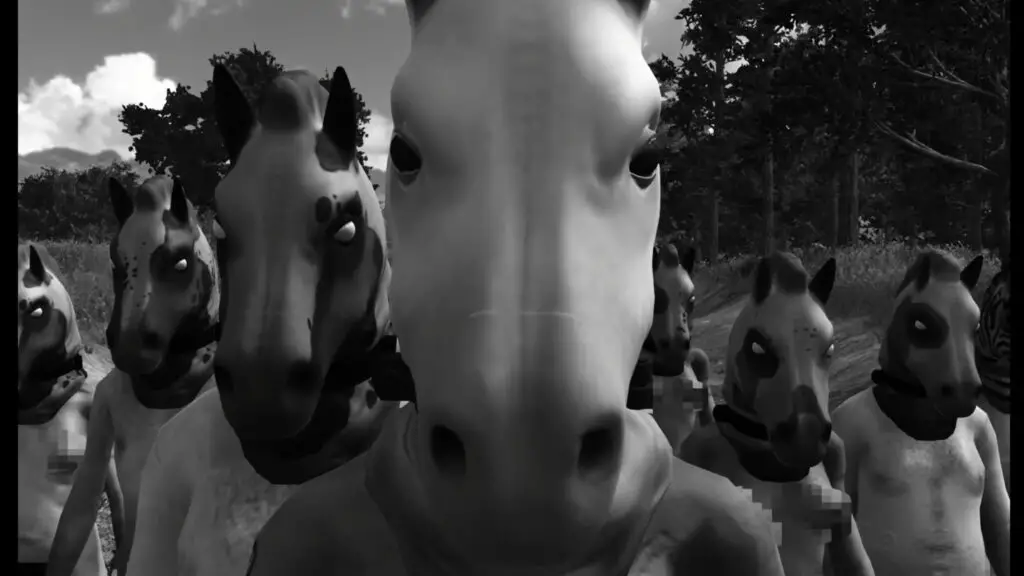
As a storyteller at Digital Tech Explorer, I find the narrative of Horses particularly striking. It is a surrealist exploration set on a rural Italian farm, where individuals in horse masks are treated as livestock. Drawing heavy inspiration from Pier Paolo Pasolini’s Salò, the game uses uncomfortable imagery to explore themes of power and subjugation. Despite the disturbing subject matter, the developers utilized pixelation to mask explicit violence, aiming for artistic provocation rather than gratuitous pornography.
Where to Find “Horses” Now
While the Epic Games Store and Steam have closed their doors, the game has found sanctuary on platforms that prioritize developer autonomy and artistic expression. For those interested in exploring this polarizing title, the following table outlines current availability:
| Platform | Availability Status | Notes |
|---|---|---|
| Epic Games Store | Delisted | Cited AO rating and content guidelines. |
| Steam | Delisted | Removed shortly after Epic’s decision. |
| GOG.com | Available | GOG expressed pride in hosting the title. |
| Humble Store | Available | Remains a top-selling new release. |
The Bigger Picture for Indie Developers
The saga of Horses is a cautionary tale for the modern developer. It highlights the vulnerability of indie studios when faced with the opaque decision-making processes of massive digital distributors. As tech enthusiasts, we must value transparency; when a platform “ghosts” a creator, it undermines the trust necessary for a healthy digital ecosystem.
Regardless of how one feels about the game’s disturbing themes, its journey is a genuine attempt to push the boundaries of what video games can communicate. As the industry evolves, the dialogue between creators and distributors must become more open to ensure that art—no matter how uncomfortable—has a place to exist.
For more in-depth analyses of digital innovation and the latest in hardware, stay tuned to Digital Tech Explorer.