
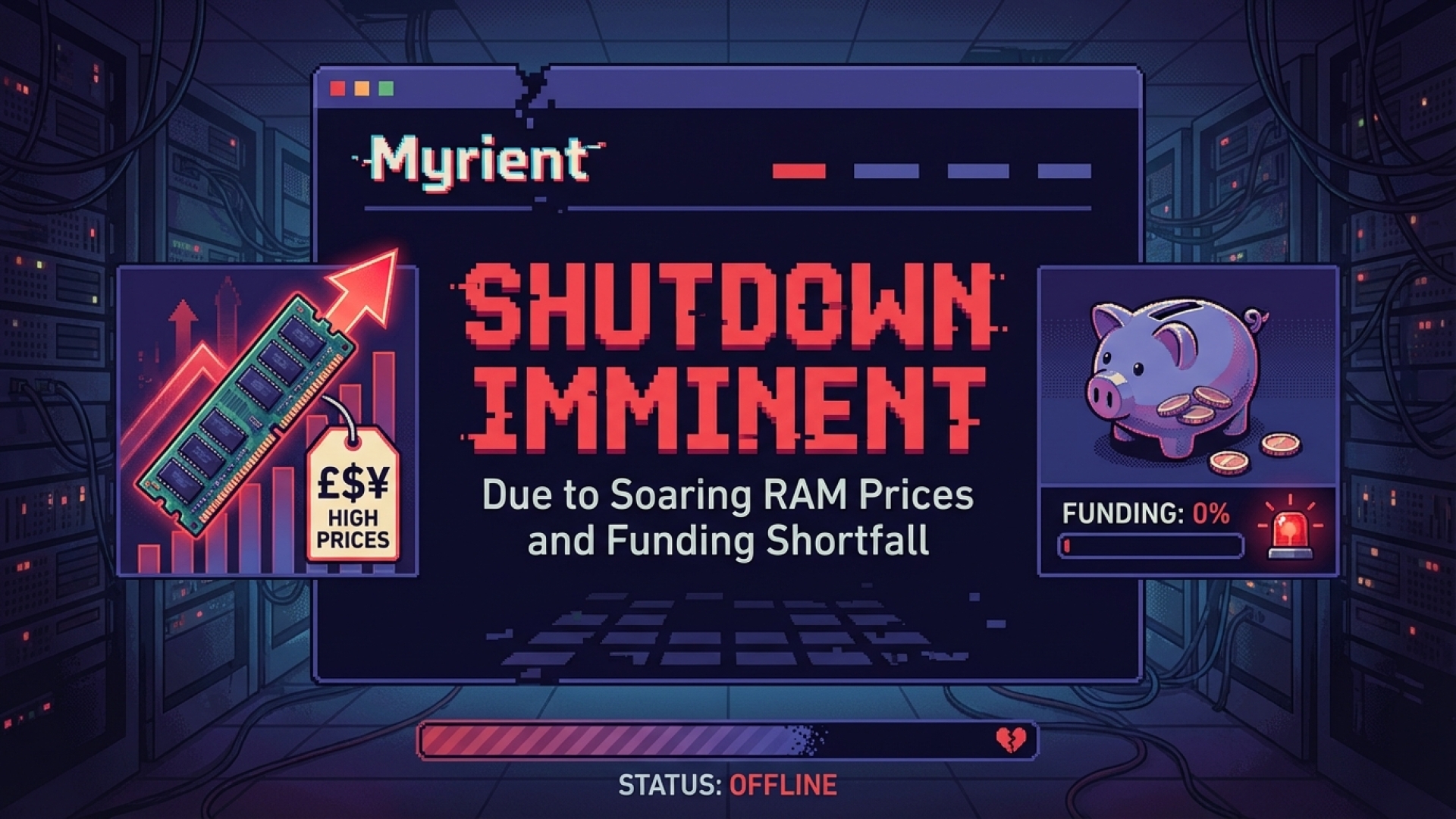
In an era where the “Stop Killing Games” movement is gaining massive global momentum, the digital archives we rely on to preserve history are facing an unexpected and formidable enemy. Myrient, a cornerstone of the gaming preservation community since 2022, has announced it will officially close its doors on March 31. While many expect legal battles to be the downfall of such sites, Myrient’s story is a modern cautionary tale of how the AI industry and rising hardware costs are reshaping the digital landscape.
The Financial Reality of Game Preservation
Operating a “game preservation service” that hosts hundreds of terabytes of data is a monumental task. Alexey, the solo operator behind Myrient, recently shared the unsustainable financial reality of the project via Discord and Telegram. Despite Digital Tech Explorer’s observation of rising traffic across the retro-gaming sector, user donations for Myrient failed to keep pace with operational costs.
Alexey revealed that he had been subsidizing the project with over $6,000 of his own money every month. For a platform built on the ethos of community access, this personal financial burden became impossible to maintain. At Digital Tech Explorer, we often see passion projects hit this “sustainability wall” when the cost of infrastructure outweighs the community’s financial support.
The AI Boom: An Unforeseen Threat to Retro Gaming

The most intriguing aspect of Myrient’s closure isn’t just a lack of funds, but why those costs spiked so dramatically. Alexey pointed directly to the global surge in RAM prices, fueled by the “extreme demand for AI datacenters.”
As the tech world pivots toward machine learning and massive AI clusters, the competition for high-performance memory modules has become fierce. This hardware squeeze has turned what was once an affordable hosting endeavor into a luxury. Below is a breakdown of the core pressures that led to this decision:
| Pressure Factor | Impact on Myrient |
|---|---|
| Hardware Costs | Surging RAM prices due to AI infrastructure demand. |
| Funding | Stagnant user donations despite a massive increase in site traffic. |
| Resource Abuse | Download managers bypassing limits and donation prompts. |
| Personal Deficit | Out-of-pocket expenses exceeding $6,000 monthly. |
Abuse of the System: The Role of Download Managers
Beyond the hardware crisis, Myrient faced internal exploitation. Specialized download managers were frequently used to circumvent the site’s protective measures and skip donation reminders. More frustratingly, some of these third-party tools were behind their own paywalls, essentially profiting from Myrient’s free archives without contributing a cent back to the server costs.
This “egregious and abusive usage” drained bandwidth and resources, further accelerating the site’s financial decline. It serves as a reminder to the tech community that even “free” services have real-world costs that must be respected to survive.
A Unique Demise in the Digital Age

The landscape for PC games and retro console archives is notoriously volatile. Usually, when a site like this vanishes, it’s the result of a “cease and desist” letter from a major publisher. Myrient’s departure is different—it is an economic casualty of the 2024 tech shift toward artificial intelligence.
While the legality of “abandonware” remains a gray area, the loss of such a massive repository is a blow to digital historians. It highlights how emerging technologies can have a “butterfly effect” on unrelated niches, where the hunger for AI chips and memory inadvertently starves the preservation of cultural artifacts like classic video games.
What Happens Next?
While Myrient is winding down, its sister site, hShop—which focuses on 3DS content—will remain operational. In a final act of support for the community, Alexey has stated that any donations received for Myrient after the March 31 deadline will be redirected to keep hShop running.
At Digital Tech Explorer, we believe this story is a wake-up call for developers and enthusiasts alike. As we push the boundaries of what is possible with new software, we must also consider the cost of maintaining the digital foundations that brought us here. Myrient’s legacy will be a reminder that in the world of technology, even the most dedicated “tales” can be cut short by the cold reality of market economics.