
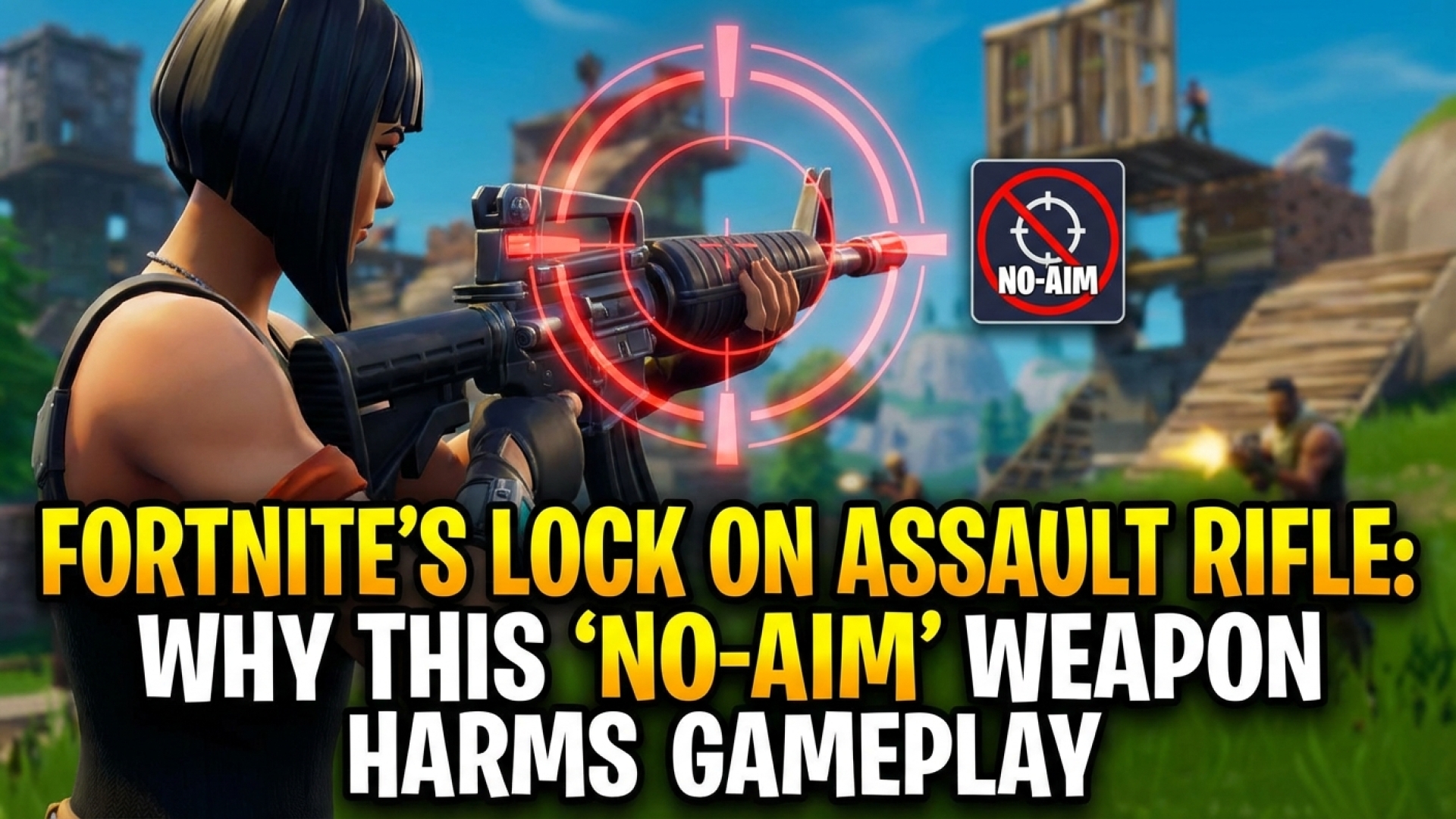
At Digital Tech Explorer, we’ve tracked the evolution of competitive gaming for years, and few titles undergo as much radical experimentation as Fortnite. Winning a Victory Royale is a high-stakes endeavor; when your crosshair sways and the final circle closes in, every shot counts. For many of us who have been playing since launch, that adrenaline rush in the final zone is why we keep coming back. It’s a testament to skill, positioning, and a bit of luck.
However, a recent addition has sparked a heated debate among developers and players alike. As TechTalesLeo, I’ve seen many digital innovations succeed, but the Lock On Assault Rifle feels like a rare misstep in game balance. It poses a fundamental question: what happens to a skill-based shooter when you remove the requirement to aim?
The Introduction of the Lock On Assault Rifle
Introduced to shake up the meta, the Lock On Assault Rifle commits two cardinal sins of game design: it feels underwhelming in your hands and infuriating to play against. While the concept of automated targeting sounds revolutionary for accessibility, the execution in a high-stakes Battle Royale environment leaves much to be desired.

Understanding the Mechanics: Low Risk, Low Reward
The mechanics of the rifle are straightforward yet flawed. By aiming in the general vicinity of an opponent, the weapon begins a four-stage locking process. Each stage, or “pip,” represents a three-round burst. A full lock-on guarantees a 12-round volley, but the technical trade-offs are significant.
To better understand why this weapon struggles to find a home in a professional loadout, let’s look at the base statistics:
| Stat Category | Technical Specification |
|---|---|
| Base Damage | 10 per bullet (Common rarity) |
| Lock-On Capacity | 4 Pips (12 bullets total) |
| Maximum Lock Damage | 120 Damage |
| Optimal Range | Mid-range finishing tool |
Despite the “aimbot” nature of the tracking, the damage output is mediocre. Inflicting only 120 damage with a full charge means a shielded opponent will survive the initial burst. By the time you attempt a second lock, a seasoned player has already built cover or responded with a higher-DPS weapon like the Deadeye Assault Rifle.
A Counter to Skill-Based Mobility
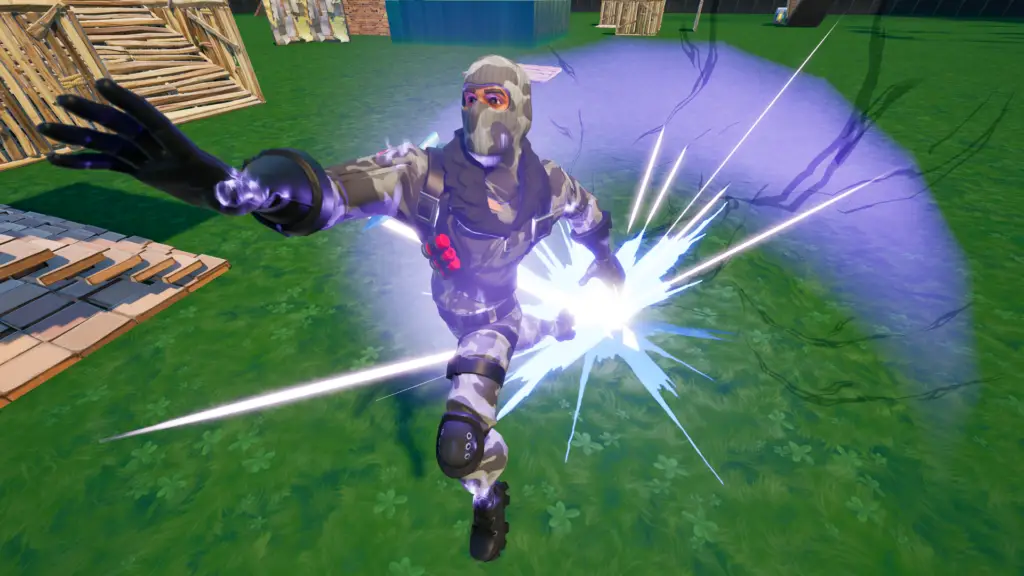
The design philosophy behind the Lock On rifle seems to target “combat fleeing.” Epic Games has often struggled with players using Shockwave Grenades or other mobility items to disengage instantly from a losing fight. This rifle serves as a hard counter, allowing players to track targets mid-air without needing the “flick-shot” precision typically required for such maneuvers.
However, this creates a vacuum of skill. Mobility items are designed to reward quick thinking and movement. By introducing a weapon that ignores the evasive efforts of a player, the “thrill of the escape” is neutralized. It feels less like a strategic tool and more like an artificial equalizer that punishes players for using the game’s mechanics effectively.
Impact on Player Strategy and “Third-Partying”
In our research at Digital Tech Explorer, we focus on how technology influences user behavior. In Fortnite, the Lock On rifle facilitates the most frustrating aspect of Battle Royales: third-partying. It allows a secondary player to sit on the sidelines, wait for two opponents to weaken each other, and then secure a kill with zero aiming effort just by maintaining a line of sight.
This encourages a passive, “camping” meta. Because the weapon isn’t viable in a face-to-face shotgun duel, it occupies an inventory slot specifically for opportunistic, low-skill attacks. This detracts from the dynamic, fast-paced building and editing that makes the game unique.
The Verdict: Time to Vault
The feedback from the Fortnite community has been loud and clear. While the intent might have been to help newcomers bridge the gap, the result is a weapon that is too weak to be a primary choice, yet too annoying to exist in a competitive ecosystem. It lacks the satisfaction of a well-earned headshot and the utility of a traditional rifle.
As we continue to explore the intersection of tech and gaming, it’s clear that some innovations are better left on the drawing board. The Lock On Assault Rifle is a fascinating experiment in automated gameplay, but for the health of the competitive scene, it belongs in the vault.
Digital Tech Explorer is committed to providing transparent, research-backed reviews of the latest in tech and gaming. All content is for informational and entertainment purposes.