
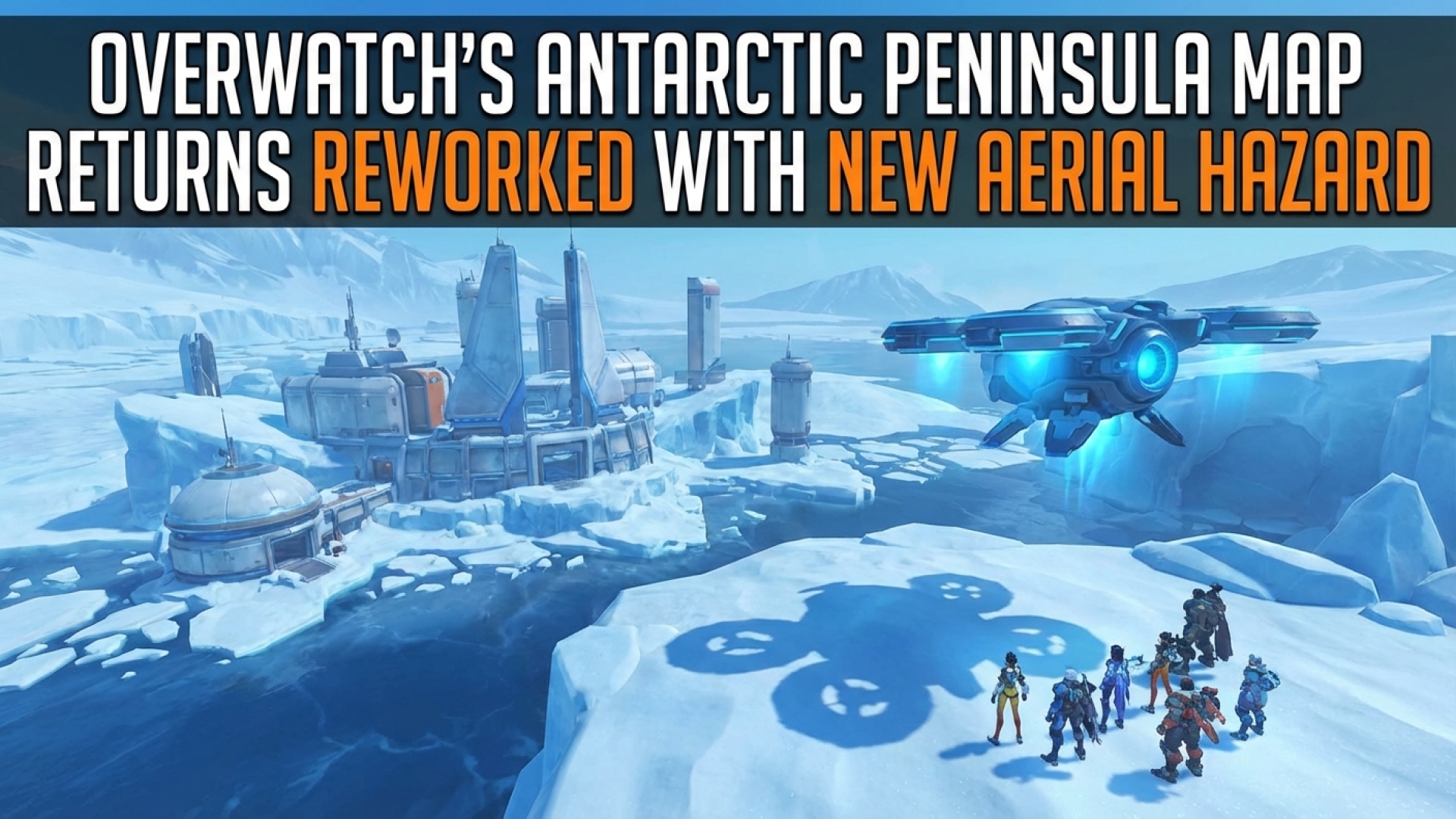
At Digital Tech Explorer, we closely monitor the evolution of competitive level design, and few updates are as technically significant as the recent overhaul of the Antarctic Peninsula map in Overwatch. After being sidelined in Season 20 to address structural flow issues, the map has returned with a series of surgical adjustments. These changes are designed to eliminate the “chokepoint fatigue” that plagued the original layout, offering a more nuanced experience for both casual players and esports professionals.

Architectural Evolution: Rebalancing the Arctic
The core objective of this rework was to dismantle the “meat-grinder” nature of the original map’s indoor sections. Blizzard’s level designers have focused on expanding engagement vectors, ensuring that no single team can dominate by simply holding one narrow corridor. By widening entry points and reconsidering vertical sightlines, the update fosters a dynamic environment where team synergy and tactical positioning outweigh raw brute force.
Our analysis at Digital Tech Explorer highlights three primary areas of transformation within the sub-maps:
| Sub-Map | Structural Modification | Technical Gameplay Impact |
|---|---|---|
| Sublevel | Widened objective entry points and redesigned staircase movement. | Reduces bottlenecking; allows for diverse team-push configurations. |
| Icebreaker | Shifted primary entry from the left high ground to the bottom and right-side open-air ports. | Neutralizes the defender’s high-ground advantage; encourages flanking. |
| Labs | Expanded back rooms and removed guardrails on vantage points. | Enhanced verticality and mobility for dive-comp strategies. |
By removing restrictive guardrails and opening the “Labs” section, the developers have effectively altered the map’s geometry to reward players who master 3D space. This aligns with the broader trend in modern gaming where static defenses are being replaced by high-mobility combat loops.

The Physics of Peril: The New Auto-Freeze Hazard
Beyond structural changes, the Sublevel map introduces a fascinating mechanical hazard: the auto-freeze effect. This isn’t just a cosmetic addition; it is a calculated limitation on vertical mobility. Players who attempt to navigate too high in designated zones will trigger an immobilization effect, resulting in a sudden drop back to the terrain.
As TechTalesLeo observes, this mechanic serves as a direct “nerf” to environmental dominance. Flying heroes—such as Pharah or the high-mobility Echo—must now recalibrate their flight paths. This technical hurdle forces aerial units to operate at lower altitudes, bringing them within the effective range of ground-based heroes. It introduces a high-stakes “risk vs. reward” layer to the verticality of the game, ensuring that the sky is no longer a safe haven from the heat of battle.
For those looking to stay ahead of the curve in 2024 releases and beyond, mastering these subtle environmental triggers will be the difference between a successful flank and a frozen failure. The Antarctic Peninsula rework isn’t just a map update; it’s a masterclass in how environment-driven mechanics can reshape a game’s meta.