
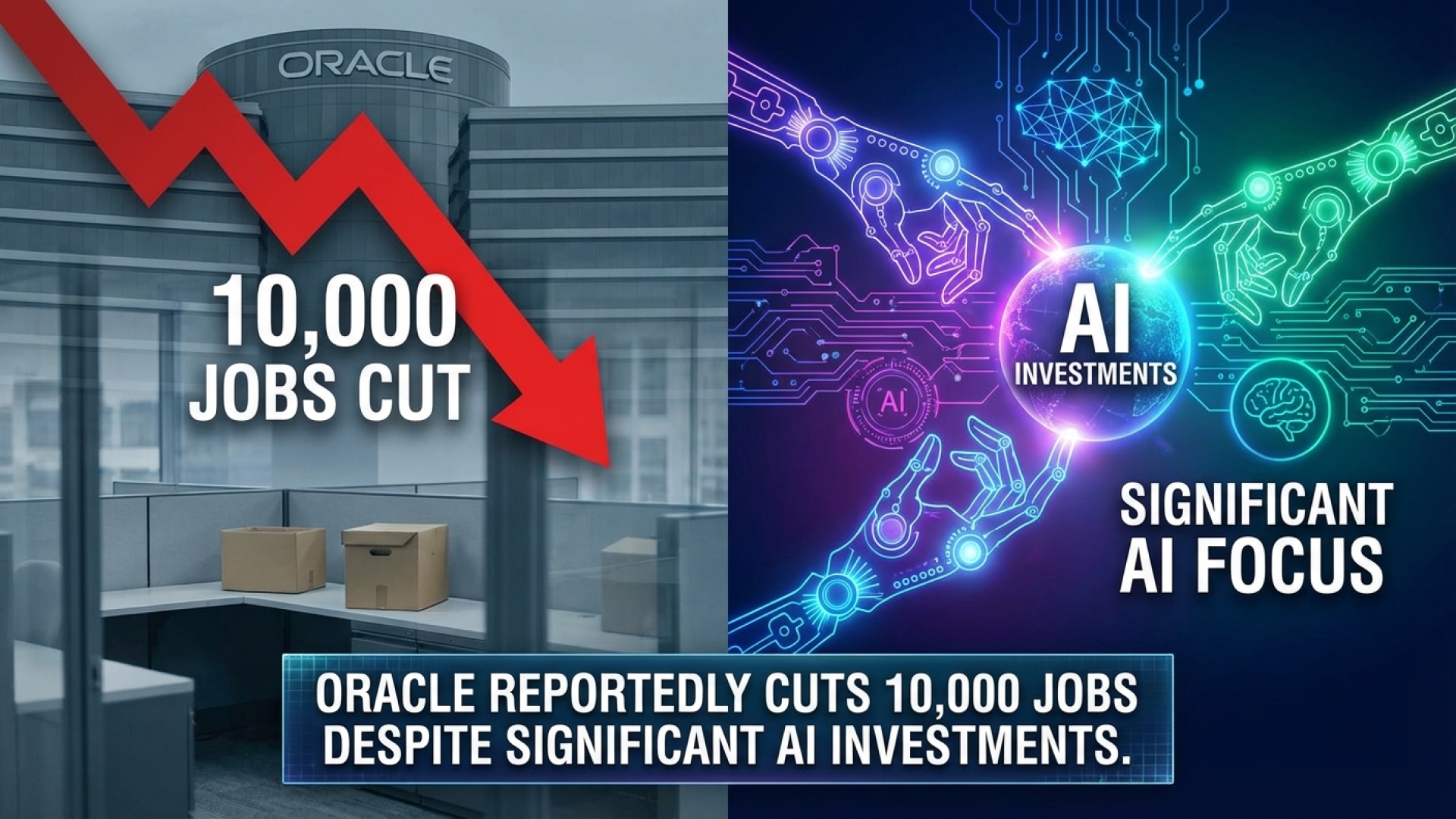
In a move that has sent shockwaves through the Silicon Valley ecosystem, global software powerhouse Oracle has reportedly initiated a massive workforce reduction, laying off approximately 10,000 employees. This strategic pivot comes at a paradoxical moment for the company; while Oracle is slimming down its traditional payroll, it is simultaneously funneling unprecedented capital into artificial intelligence, including a monumental partnership with OpenAI. At Digital Tech Explorer, we are tracking how these shifts reflect the broader volatility within the AI acceleration landscape.

Inside the Oracle Layoffs: A Shift in Talent Strategy
The scale of these job cuts suggests a significant restructuring of Oracle’s internal operations. Reports confirmed by employees indicate that the layoffs have hit high-level technical tiers particularly hard. The roles impacted include:
- Senior Software Engineers and Architects: The backbone of product development.
- Operations Leaders and Program Managers: The administrative and strategic engine of the firm.
- Technical Specialists: Niche experts across various software divisions.
Michael Shepherd, Senior Operations Manager at Oracle, highlighted a critical point for tech professionals: these layoffs were not performance-based. Instead, they reflect a structural realignment as the company maneuvers to stay competitive in an era dominated by machine learning and cloud-scale automation.
The AI Paradox: Trimming Personnel to Fund Infrastructure
As TechTalesLeo, I’ve observed that the narrative surrounding AI is often a double-edged sword. While some analysts view these layoffs as the “first creaky signs of struggle” within the AI bubble, others argue that Oracle is merely optimizing. The company is aggressively investing in GPU hardware and massive datacenter expansions to meet the insatiable appetite for AI processing power.
To fulfill its massive service contracts, Oracle is even looking beyond industry standard-bearers like Nvidia to source the AI chips necessary for its next-generation clusters. This diversification is essential for maintaining the hardware availability required for their $300 billion collaboration with OpenAI.
Analyzing the AI Market: Volatility and Growth
The broader market is currently a landscape of contradictions. While Oracle doubles down, other sectors are showing signs of hesitation. The table below summarizes the conflicting signals currently defining the AI industry:
| Event | Impact Type | Details |
|---|---|---|
| OpenAI Funding Round | Positive | Successfully secured $122 billion in new investment. |
| Oracle Partnership | Positive | $300 billion commitment to infrastructure and integration. |
| Disney Investment Withdrawal | Negative | Disney reportedly backed out of a $1 billion OpenAI deal. |
| Sora App Discontinuation | Negative | OpenAI paused its Sora video generation application. |
What This Means for Tech Enthusiasts and Developers
At Digital Tech Explorer, our mission is to help you stay ahead of these trends. The “Oracle 10,000” signifies a pivotal moment where human capital is being traded for computational capital. For developers and tech professionals, the message is clear: the industry is pivoting toward specialized AI infrastructure and high-efficiency cloud solutions. While the market signals are mixed, the sheer volume of capital—exemplified by OpenAI’s $122 billion funding—suggests that the AI revolution is far from over; it is simply entering a more disciplined, resource-intensive phase.
Disclaimer: All content on Digital Tech Explorer is for informational and entertainment purposes only. Some links may be affiliate links, meaning we earn a commission at no cost to you.