
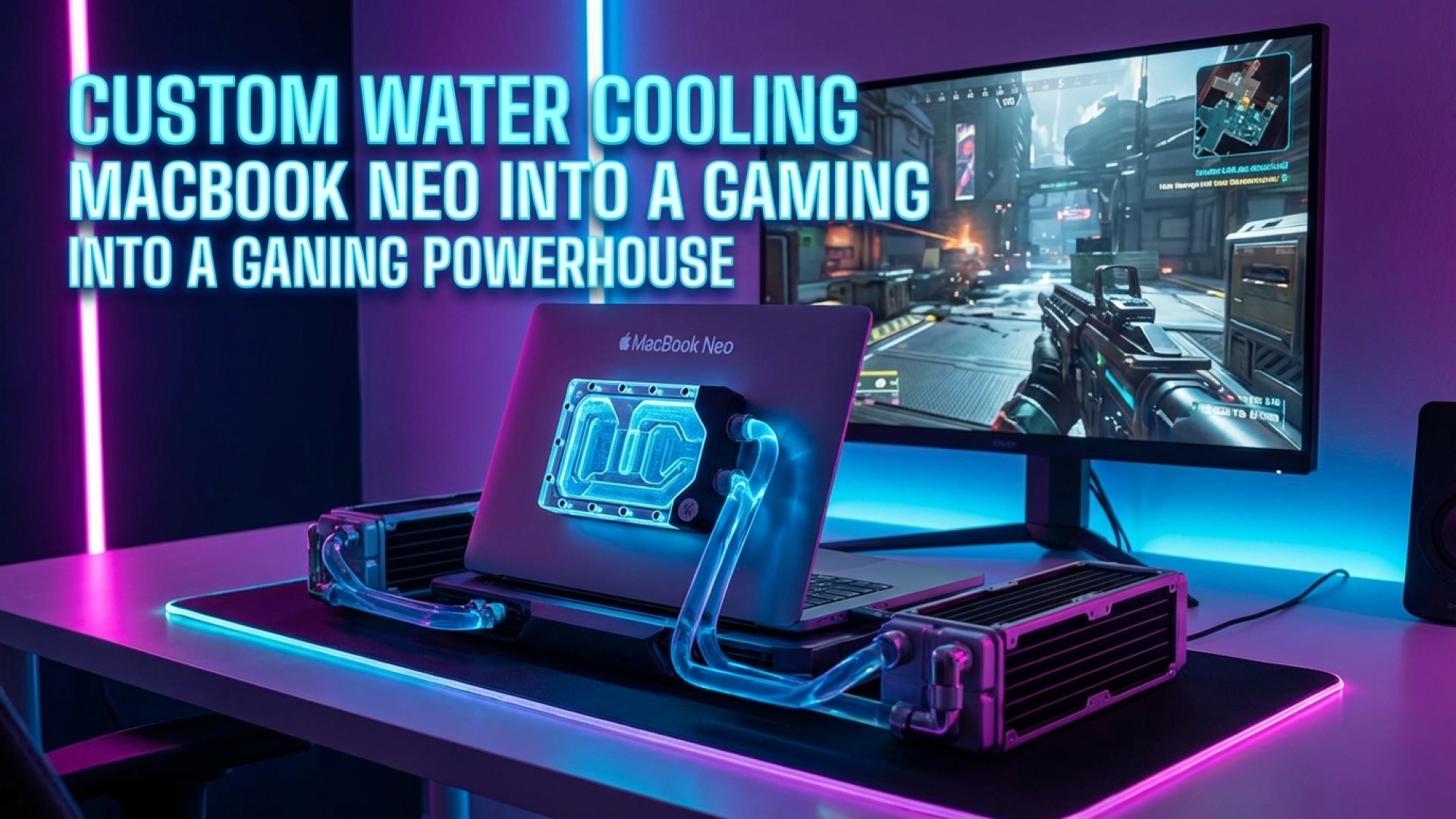
At Digital Tech Explorer, we love seeing hardware pushed to its absolute limits. While the Apple MacBook Neo wasn’t exactly designed for high-end gaming, that didn’t stop tech innovators Jakkuh and Zip Tie Tech from asking: exactly how much performance can we squeeze out of this entry-level machine? As it turns out, the answer involves a lot of water and a bit of automotive engineering.
The project began after Jakkuh noticed a significant thermal bottleneck. The MacBook Neo’s GPU frequently hit 105°C under almost any sustained load. To combat this, he collaborated with Zip Tie Tech to engineer a custom water-cooling loop specifically for the Neo’s architecture.
Why the MacBook Neo Needs a Cooling Overhaul
The MacBook Neo has made waves in the hardware community, largely due to its aggressive $599 price point. In an era of skyrocketing PC costs, this budget-friendly Apple laptop is a tempting entry point. However, the internal specs tell a different story. While the A18 Pro chip handles standard macOS tasks with ease, its performance in gaming scenarios is hampered by a lack of robust active cooling.
The First Step: A Simple Thermal Pad Swap
By default, Apple relies on a thin graphene pad to dissipate heat from the six-core A18 Pro. Before jumping into complex plumbing, the duo tested a simple fix: replacing the stock pad with a high-quality M.2 thermal pad. This minor adjustment yielded a 14% performance boost in 3DMark Solar Bay Extreme, proving that the silicon was indeed thermal throttling.
Engineering a Custom Water-Cooling Loop
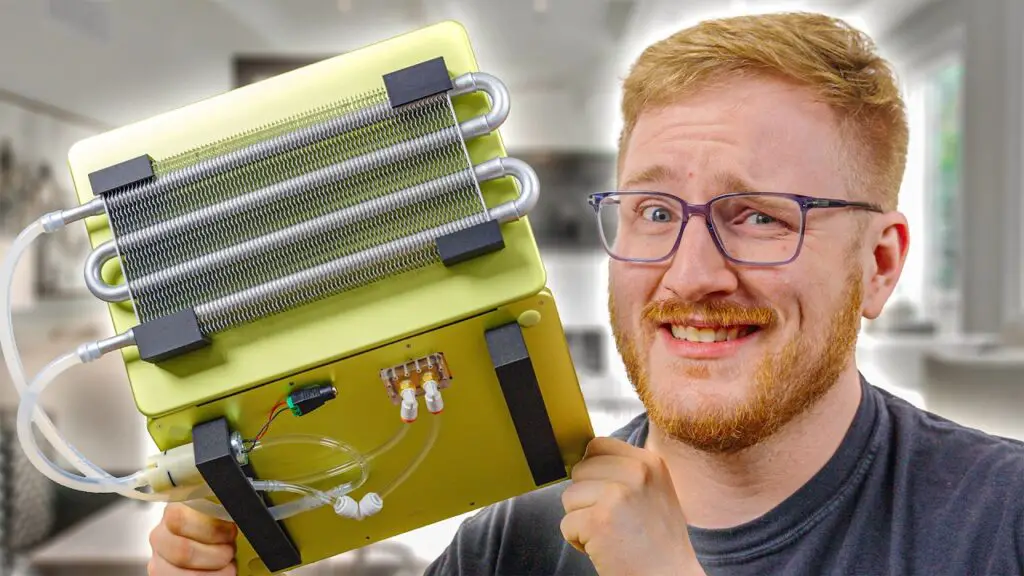
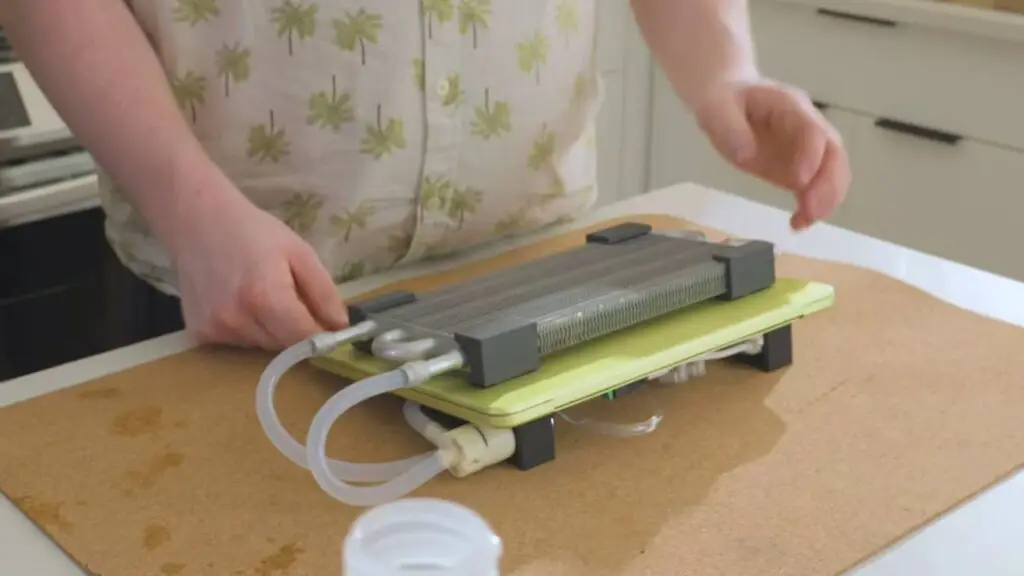
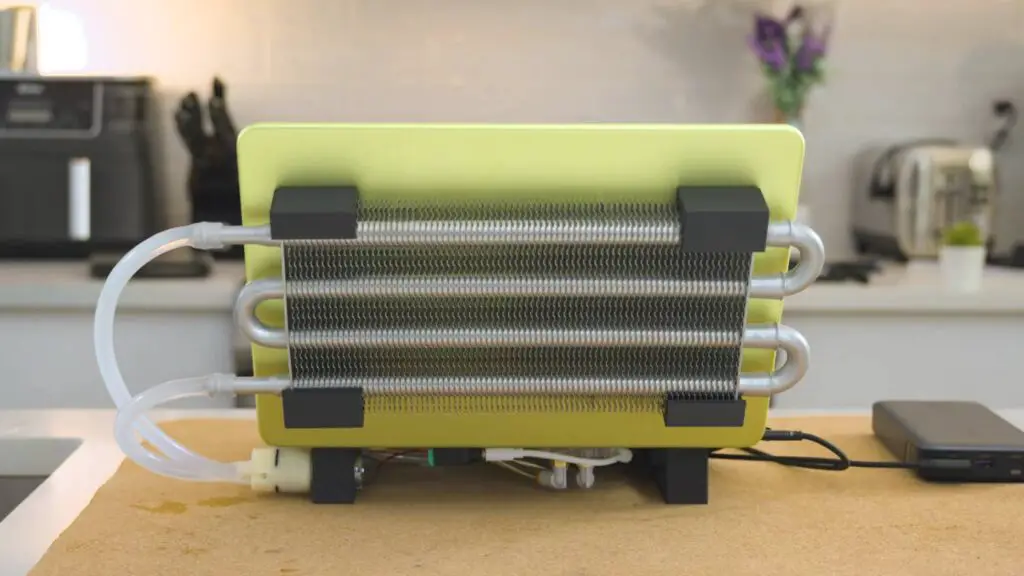
To go beyond simple pads, the team designed a semi-custom loop. This setup included a copper plate and an acrylic water block seated directly on the SoC. The cooling infrastructure utilized a smart home plant watering pump and—most surprisingly—a Hayden Automotive power steering oil cooler.
Precision Machining and Assembly
The fabrication process was a masterclass in DIY tech storytelling. Starting with 3D-printed prototypes, the team transitioned to CNC milling for the final components. This was necessary to ensure the water block and copper plate had perfect “minty contact” with the processor. They even milled custom fins into the copper plate to maximize heat transfer, despite the extra complexity.
Assembly required a steady hand and a custom-made O-ring to prevent leaks. To accommodate the new hardware, they had to mill a large hole into the MacBook Neo’s backplate and use a 3D-printed stand to manage the added weight and thickness. The final touch was mounting the pump and water block directly to the assembly, resulting in a unique, albeit bulky, “Franken-Mac.”
Performance Benchmarks: Breaking Records
While the setup is far from portable, the performance gains are undeniable. By removing the thermal ceiling, the A18 Pro was able to sustain higher clock speeds, outperforming even some of Apple’s higher-tier legacy laptops.
| Configuration | Cinebench Multi-Core | 3DMark Solar Bay Extreme |
|---|---|---|
| Base MacBook Neo | 1567 | 1257 |
| Thermal Pad Mod | 1819 | 1430 |
| Water-Cooled Mod | 1938 | 1450 |
| MacBook Air M1 | 1836 | N/A |
Is It a Viable Gaming Machine?
Despite setting a new world record for the A18 Pro’s GPU, the MacBook Neo still faces significant hurdles as a gaming platform. The 8GB of unified memory is a major bottleneck, as it must be shared between the CPU and GPU. Furthermore, while the A18 Pro chip shows incredible AI acceleration and single-core efficiency—even beating some x86 desktop chips—it is still fundamentally a mobile-first architecture.
For the tech enthusiasts at Digital Tech Explorer, this project isn’t about making a practical product; it’s about the spirit of innovation. It highlights that while macOS gaming compatibility is improving, the hardware is often capable of much more than the factory cooling allows. For now, the “Liquid Neo” remains a fascinating proof-of-concept for what happens when you ignore the warranty and reach for the CNC mill.
Disclaimer: All content on Digital Tech Explorer is for informational and entertainment purposes only. Modifications like those shown above will void your warranty and carry significant risks of hardware damage.