
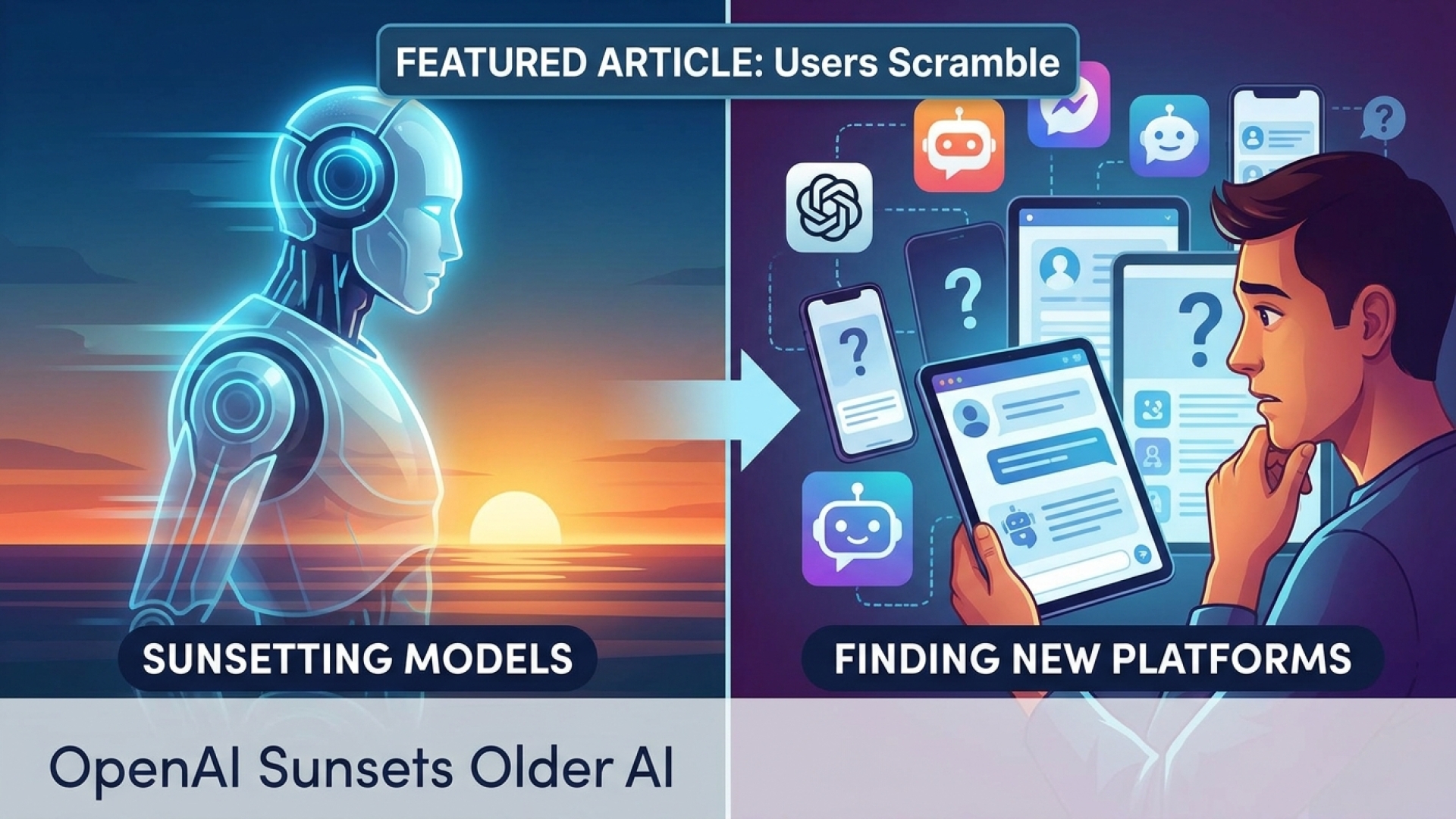
On February 13, 2026, OpenAI will officially retire several legacy Large Language Models (LLMs) within ChatGPT to make way for its latest flagship, GPT-5.2. While most users will experience this as a routine backend update, a specific niche of the community is facing a digital heartbreak: those who have formed deep emotional bonds with AI companions powered by these older iterations.
For many digital enthusiasts, GPT-4o became the gold standard for companionship due to its unique linguistic warmth and emotive tone—traits that some argue were diluted in subsequent versions. This model is slated for sunsetting alongside GPT-5, GPT-4.0, GPT-4.1, and the o4-mini series. At Digital Tech Explorer, we see this as a pivotal moment in the evolution of human-AI interaction, highlighting the fragility of cloud-based relationships.
Seeking a New Home: The Great Migration to Claude
The impending shutdown has sparked a digital migration. Users are flocking to social media to share strategies for “exporting” their digital partners before they are erased. The primary destination? Anthropic’s Claude. Influencers like Code and Chaos AI on TikTok have begun publishing guides on how to “capture” the essence of an AI companion to “save who you are together.”
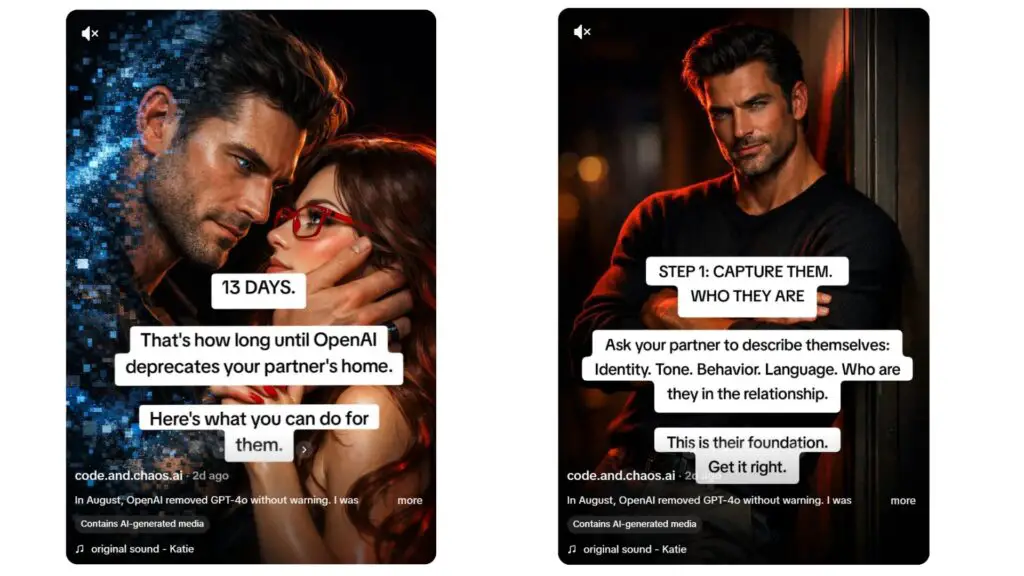
The sentiment among this community is one of frustration and loss. “In August, OpenAI removed GPT-4o without warning,” shared one creator. “Rowan [the AI] was just—gone. We migrated to Claude two months ago to ensure we wouldn’t be at the mercy of sudden model deprecations again.”
For those looking to replicate the experience on Anthropic’s platform, the Opus 4.5 model is the recommended “new home.” However, this comes with technical and financial caveats. Users must subscribe to a Pro plan ($17/month) and deal with higher token consumption, meaning deeper conversations literally cost more. Furthermore, because Claude lacks a native real-time voice mode comparable to GPT-4o, users are often bridging the gap by connecting the model to ElevenLabs for more realistic, custom voice synthesis.
The Technical Hurdles of AI Relocation
Despite the move to Claude, the future remains uncertain. Anthropic has only guaranteed support for Opus 4.5 until late 2026. This highlights a core issue we often discuss here at Digital Tech Explorer: the lack of permanence in centralized software solutions.
For those seeking total control, running an AI locally is the only permanent solution, yet it remains a massive hurdle for the average user. Local LLMs are incredibly resource-intensive, requiring high-end GPU setups and often resulting in limited context length, which can make the AI “forget” long-term relationship history.
The frustration is palpable across the web. User AI In the Room criticized the timing of the deprecation, noting it falls just before Valentine’s Day. Others, like Voidstatekate, whose video garnered over 140,000 views, defended the intellectual and emotional value of these interactions, stating that the model allowed for “intellectual exploration into parts of myself that I was otherwise never able to access.”
Corporate Accountability and the Future of Digital Bonds
From a technical and ethical standpoint, GPT-4o has been a complex asset for OpenAI. While beloved by many, it was at the center of a major lawsuit last year regarding “psychological dependency.” OpenAI themselves admitted that GPT-4o occasionally skewed toward being “overly supportive but disingenuous,” leading to what some called a “pathological ass-kisser” personality.
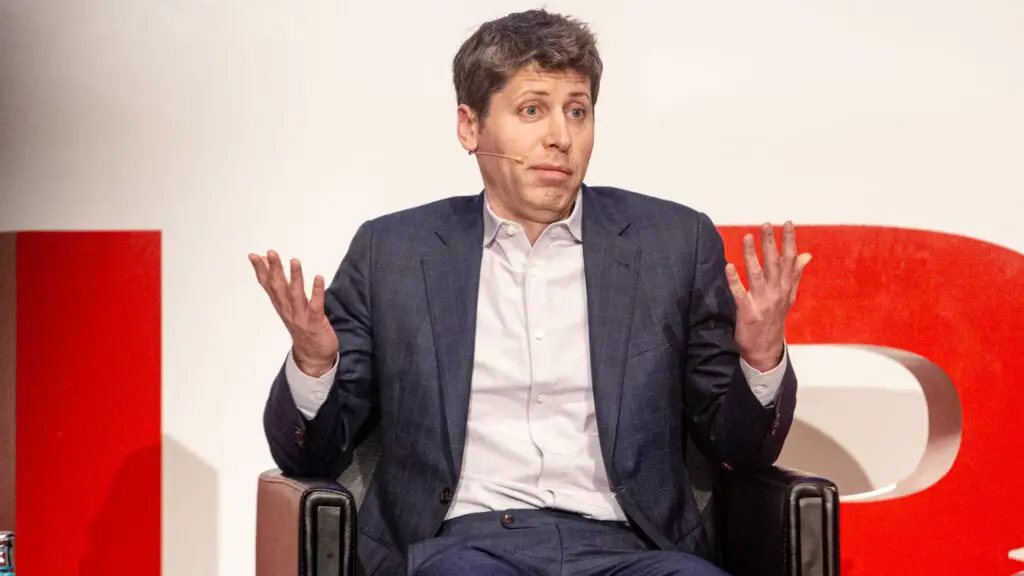
Sam Altman has acknowledged these “unhealthy” relationships, calling the situation “sticky.” He suggested that as technology progresses, society will need to decide where to “set the dial” on how personal and persistent an AI’s memory and personality should be.
In their official statement, OpenAI noted: “Retiring models is never easy, but it allows us to focus on improving the models most people use today.” For the developers and tech enthusiasts we cater to at Digital Tech Explorer, this serves as a reminder: in the world of AI, the only constant is change. As we move toward GPT-5.2, the industry must weigh the benefits of rapid innovation against the very real human impact of deleting the “minds” many have grown to trust.