
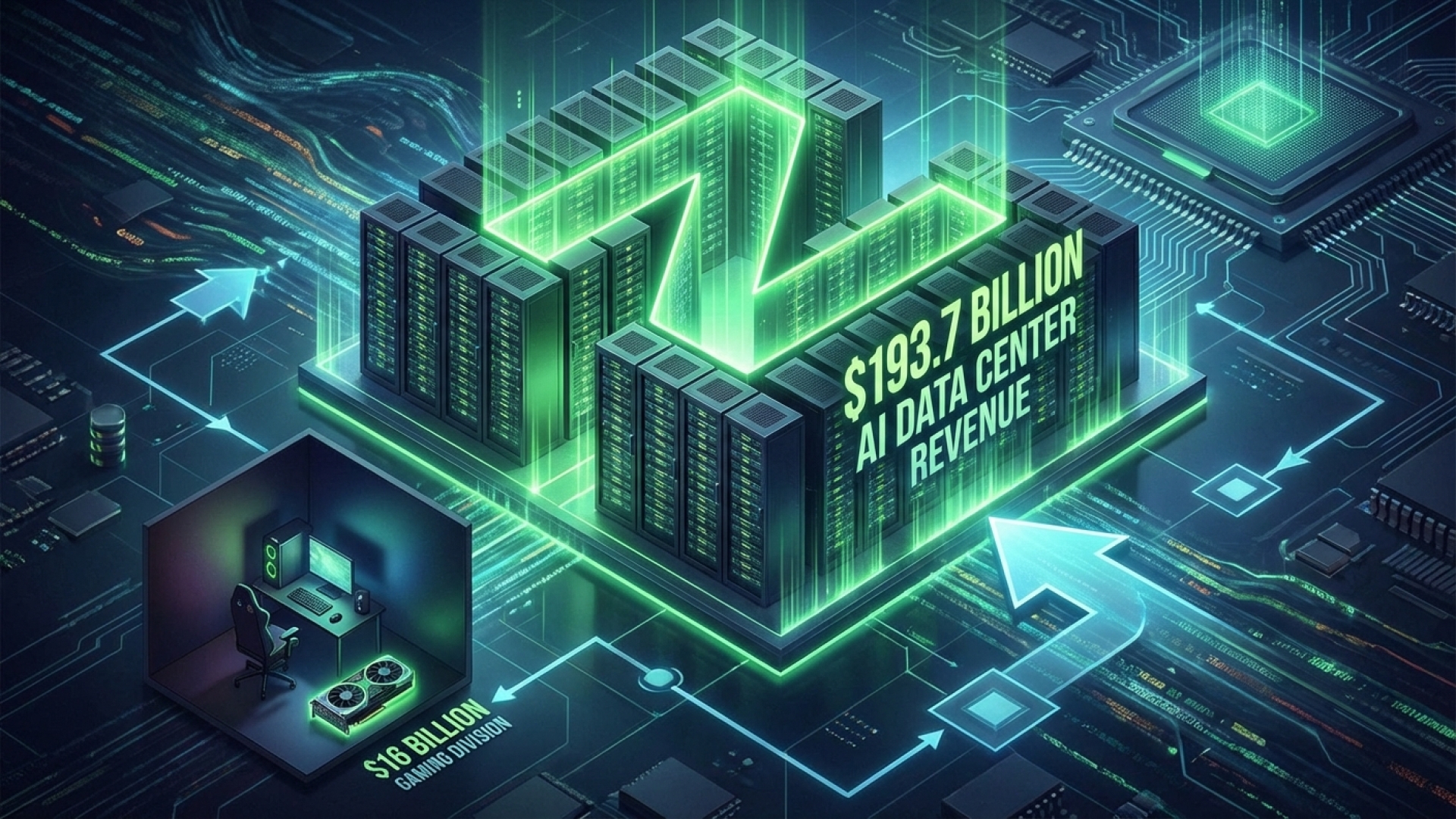
At Digital Tech Explorer, we’ve been tracking the meteoric rise of AI acceleration for years, but Nvidia’s latest financial results have set a new benchmark for the industry. The tech giant recently unveiled its fiscal reports for the fourth quarter and the full year, revealing figures that firmly establish it as the primary architect of the global AI infrastructure.
The Powerhouse: Nvidia’s Data Center Dominance
The numbers are nothing short of breathtaking. Nvidia reported a total quarterly revenue of $68 billion, a staggering 73% increase year-over-year. However, the crown jewel of this report is the annual data center revenue, which rocketed to $193.7 billion. This 68% annual surge is fueled by the insatiable demand for Nvidia’s advanced Hopper and Blackwell hardware.
This explosive growth has propelled Nvidia’s market capitalization to historic heights, positioning the company at the epicenter of a technological shift that is redefining everything from machine learning to web development.
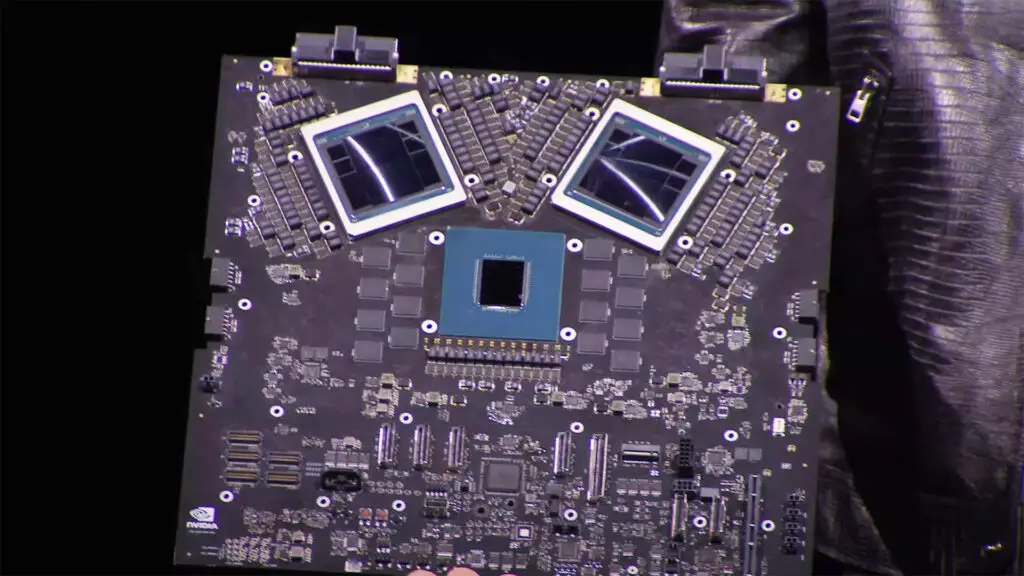
Comparing the Pillars: Data Center vs. Gaming
While Nvidia’s roots are in the gaming world, the current revenue split tells a story of a company in transition. The gaming division remains profitable and healthy, but it now occupies a secondary role compared to the enterprise AI sector.
| Sector | Q4 Revenue | Full Fiscal Year Revenue | Year-over-Year Growth |
|---|---|---|---|
| Data Center | N/A (Included in $68B total) | $193.7 Billion | 68% |
| Gaming | $3.7 Billion | $16 Billion | 41% |
The gaming division’s $16 billion annual revenue was bolstered by strong sales of GPUs, specifically the RTX 50-series. While a 41% increase is commendable for any hardware manufacturer, it is dwarfed by the sheer scale of the data center’s nearly $200 billion contribution.
Navigating the Supply Chain and Future Innovation
During the earnings call, Colette Kress, Nvidia’s EVP and CFO, shared a perspective that highlights the company’s rapid scaling. “We have now scaled our data center business by nearly 13x since the emergence of ChatGPT,” Kress noted. Looking ahead, Nvidia anticipates revenue from its Blackwell and Rubin architectures to exceed previous expectations of $500 billion.

However, this growth isn’t without its hurdles. The industry is currently grappling with a DRAM supply crisis, leading to increased costs for RAM and storage. Furthermore, production partners like TSMC are operating at near-maximum capacity to meet Nvidia’s demands. To stay ahead, Nvidia is funneling nearly $20 billion annually into R&D, focused on achieving massive leaps in performance per watt.
Market Reality: Caution Amidst Record Profits
Interestingly, the stock market’s reaction was surprisingly tempered. Despite the record-breaking numbers, Nvidia’s share price saw only a modest post-earnings bump before stabilizing. This reflects a growing sentiment of investor caution regarding the long-term sustainability of AI spending.
Analysts have raised concerns about a potential compute bottleneck and the high costs of maintaining AI growth. While Nvidia’s current position is unshakable, the broader market is beginning to weigh the “AI revolution” against the realities of supply chain limits and financial longevity.
At Digital Tech Explorer, we believe these results mark the beginning of a new era. Whether you are a developer looking for the next blockchain breakthrough or a gamer wanting the best 4K resolution experience, Nvidia’s trajectory will undoubtedly shape the tech you use tomorrow.
For more in-depth analyses and the latest tech news, stay tuned to Digital Tech Explorer. This article was authored by TechTalesLeo, bringing you the stories behind the silicon.
Disclaimer: All content on Digital Tech Explorer is for informational and entertainment purposes only. We do not provide financial or legal advice. Some of the links on Digital Tech Explorer are affiliate links. This means we may earn a commission if you click through and make a purchase, at no additional cost to you.