

In the world of indie PC games, few titles manage to strike a chord of pure nostalgia as effectively as Nutmeg. Evoking the spirit of “Roy of the Rovers” and the tactile joy of Panini sticker albums, this title is a heartfelt love letter to the late ’80s and early ’90s. As we track 2024 releases, Nutmeg stands out not just for its sports theme, but for its unique blend of deckbuilding mechanics and retro software aesthetics.
| Feature | Details |
|---|---|
| Genre | Sports Management, Deckbuilding |
| Platform | PC (Steam) |
| Theme | 90s Retro Football / Sticker Album Nostalgia |
| Key Mechanic | Card-based match resolution and squad building |
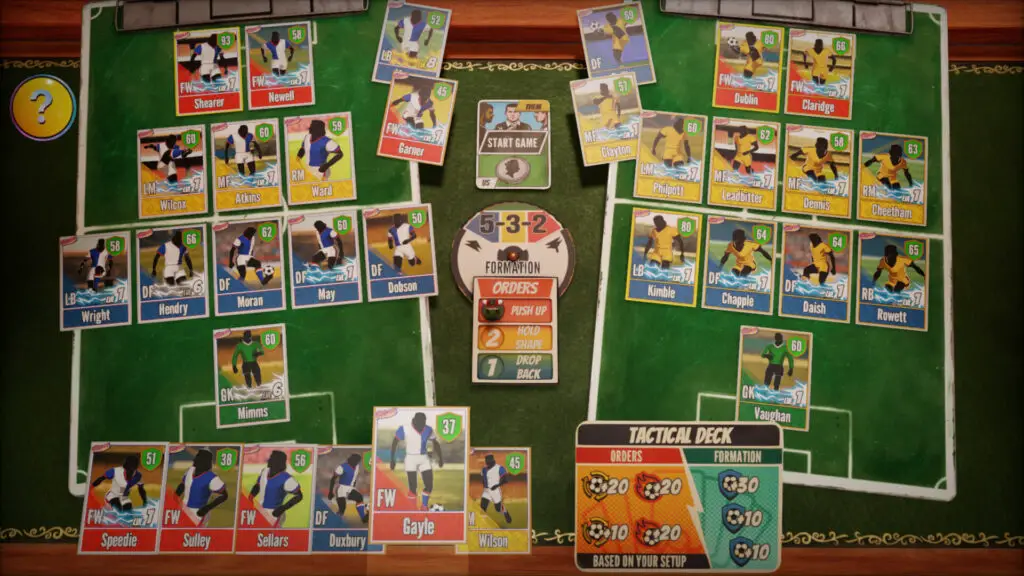
The dedication to its retro theme is embedded in every layer of the user interface. At Digital Tech Explorer, we often see developers struggle to balance aesthetics with usability, but Nutmeg leans heavily into its gimmick: players manage their squad, backroom staff, and transfer targets by flipping through the pages of a virtual sticker album. While some might find the use of silhouettes instead of player likenesses a bit odd, it mirrors the “close-enough” charm of classics like International Superstar Soccer. Most club and player names remain authentic, though you will encounter creative aliases like the “Mersey Blues” standing in for Everton.

Core Mechanics: Deckbuilding on the Pitch
At its core, Nutmeg is a strategic gaming experience where progress is divided between team card cultivation and tactical card deployment. Matches unfold in a left-to-right flow, with situations resolved over several card deals. Each turn describes on-pitch action—such as a “forward clash” or “loose ball”—presenting three possible outcomes with varying success percentages.
This is where strategy cards shine. Much like modern AI-accelerated simulations, the game requires calculating risks and rewards. You might hold a defensive “clearance” card, but it becomes useless when your striker is in the opposition box. While it doesn’t reach the mechanical complexity of Balatro, Nutmeg provides a satisfying loop where minor choices have significant weight. Executing a chain of plays from defense to offense to clinch a goal feels genuinely rewarding.
Managing the Squad and the “Cruft”
Nutmeg excels when focusing on the match-day fantasy: signing legendary players and assembling a dream team. The card variety is excellent, including cheeky references like the “Hand of God” card—a high-reward attacking play that carries a significant risk of a red card. However, the experience occasionally stumbles over its own subsidiary systems.
“I don’t recall Rivaldo and Alessandro del Piero queuing up to join Blackburn in the early ’90s, but with some juicy contracts, they were soon putting Grimsby to the sword.”
The “manager’s office” hub features a cluttered desk with an old PC, stadium blueprints, and even a games console. While atmospheric, these elements can feel like unnecessary distractions. Managing merchandise and calling the bank manager often feels like “cruft” that slows down the exhilarating core gameplay. Furthermore, the UI—though stylistically consistent with its blue-and-purple arrows—can feel clunky for a modern software product, requiring frequent menu navigation that lacks a certain fluidity.
From the First Division to the Premier League
In the game’s challenge mode, players can attempt to lead a team like Blackburn from the old First Division into the burgeoning Premier League era. Rebuilding a squad with digital incarnations of Alan Shearer or Tim Sherwood creates a compelling narrative arc. The game progresses in one-month chunks, where most matches are handled by coaching staff, leaving you to manage the high-stakes “broadcast” games.
A full season takes roughly two hours, making it an ideal “coffee break” simulator. There are minor immersion issues—such as commentary not always aligning with the card action—but as we often see in early builds of hardware and software alike, these are kinks that can be ironed out before full release.
Verdict: A Promising Tactical Simulation
Ultimately, Nutmeg is a game of two halves. The match-day mechanics and card-based strategy are brilliant, capturing the essence of a bygone era of gaming and sports culture. While the management “noise” outside of matches can occasionally distract, the core experience is a win for fans of nostalgic sports titles.
As we continue to explore the intersection of digital innovation and retro aesthetics at Digital Tech Explorer, Nutmeg stands as a testament to creative indie development. To paraphrase the legendary Brian Clough: Nutmeg looks great on paper, and fortunately, it plays quite well on the grass, too.
For more in-depth reviews and the latest in AI and digital trends, stay tuned to Digital Tech Explorer.